Dreaming of the Pyramids, Nile cruises, and ancient temples? Choosing the best time to visit Egypt can make all the difference. For most travelers, the ideal window is in the cooler months, roughly October through April, when days are warm, but not scorching, and skies are clear. During this period, Egypt’s famous sites are comfortable to explore, with mild nights perfect for sleeping. During peak winter (December to February), daytime temperatures stay around the mid-20s°C (70s°F), which is perfect for sightseeing. By contrast, summer months see intense heat, but also far fewer crowds and lower prices. In this blog, we break down the seasons and travel tips so you can pick the good time to visit Egypt that matches your plans.
October & April: Cool, Comfortable Peak Season
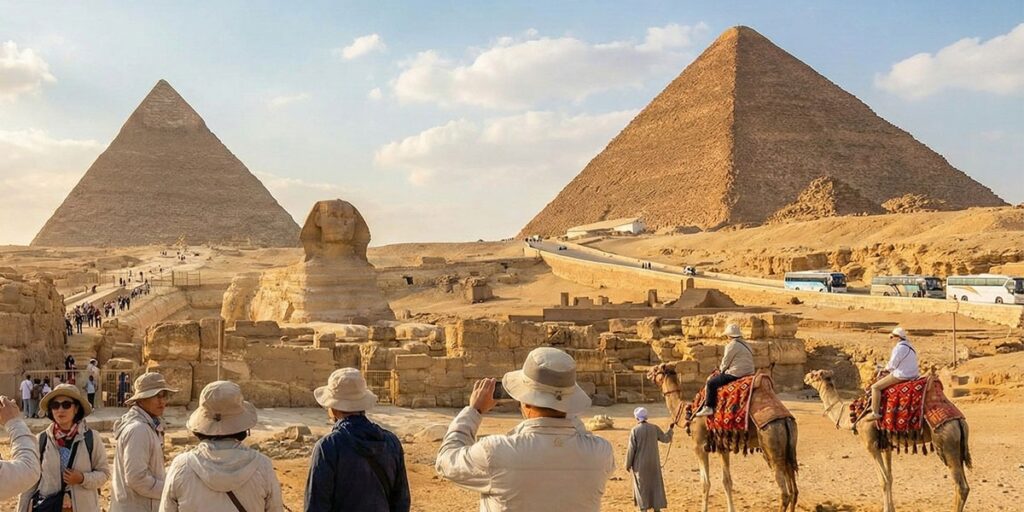
From late autumn through early spring, Egypt enjoys its best weather. Temperatures are pleasantly warm and dry: in Cairo and Luxor, high temperatures stay below 30°C (86°F), with nights cooling down significantly. Many guides agree this is the ideal travel window, “between October and April”, when you can explore the Pyramids, Sphinx and Valley of the Kings without wilting in the sun. Winter (December, February) is often cited as the best time to visit Egypt, since even southern cities are comfortable and northern coastlines see some rain.
This peak season means crowds, so book early. Around Christmas, New Year, and especially January, March, hotels and tours fill up as tourists flock in. On the plus side, Cairo and Luxor become magical under clear skies. If you visit between March and May (spring), you’ll catch blooming landscapes and local festivals (Coptic Easter, Sham el-Nessim). Spring days gradually warm up, watch for the Khamasin winds (short sandstorms) in April/May, but many travelers still find March, April a great shoulder season. In summary, the best time to go to Egypt for great weather is October through April, when sightseeing is most comfortable.
May & August: Summer Heat and Quiet Travel
Summer in Egypt (roughly June, August) brings the scorching desert heat. Daytime highs frequently exceed 35°C (95°F), often soaring over 40°C (104°F) in southern cities like Luxor and Aswan. This is the off-season for a reason. Many travelers avoid the blinding sun and instead lounge by Red Sea beaches or on air-conditioned Nile cruises. However, if you can handle the heat (and stay hydrated with sunscreen and water), summer travel has perks:
- Much fewer crowds
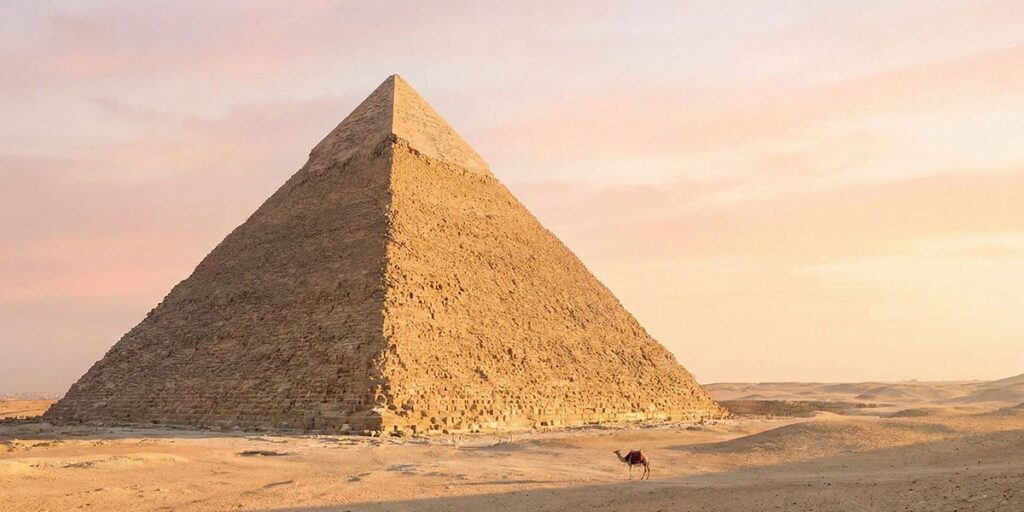
Iconic sites become nearly empty. You can tour the Valley of the Kings or the Great Pyramid early in the morning with barely another soul around.
- Lower prices
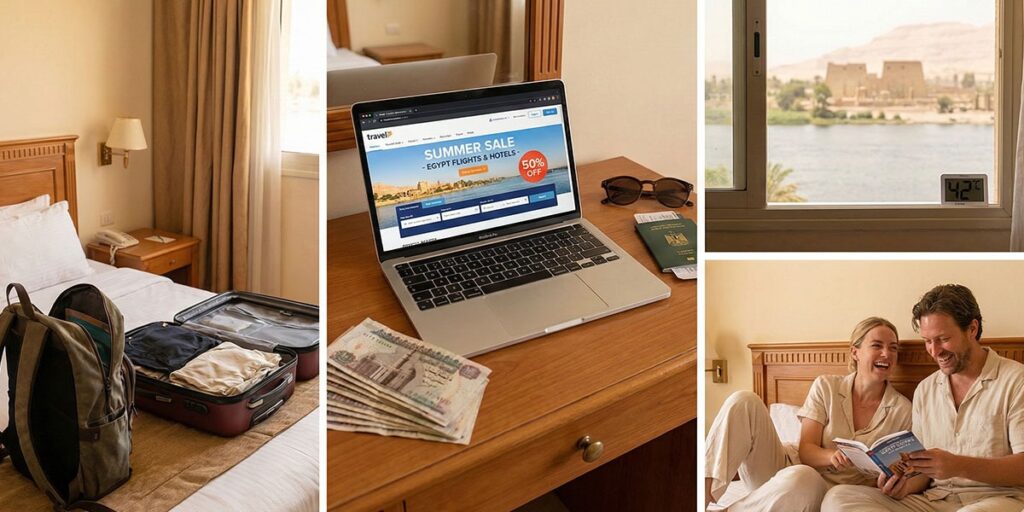
Flights and hotels often drop to budget rates. In fact, summer is generally the cheapest time to travel to Egypt. If you’re flexible and savvy (and willing to sweat), you can save a lot on accommodations and tours.
- Nile breeze relief
Even in summer, Nile river cruises and evening felucca rides offer cool relief from daytime heat. Diving and snorkeling are excellent in the Red Sea at this time.
The key is to plan around the peak sun: visit outdoor sites very early or late in the day, and relax indoors during midday. Most museums and major attractions open by 8 am in summer for this reason. So while summer isn’t the “best time to visit Egypt” for weather, it can be a smart choice if you want quiet temples and big savings.
September & Shoulder Seasons: Warm, Not Hot
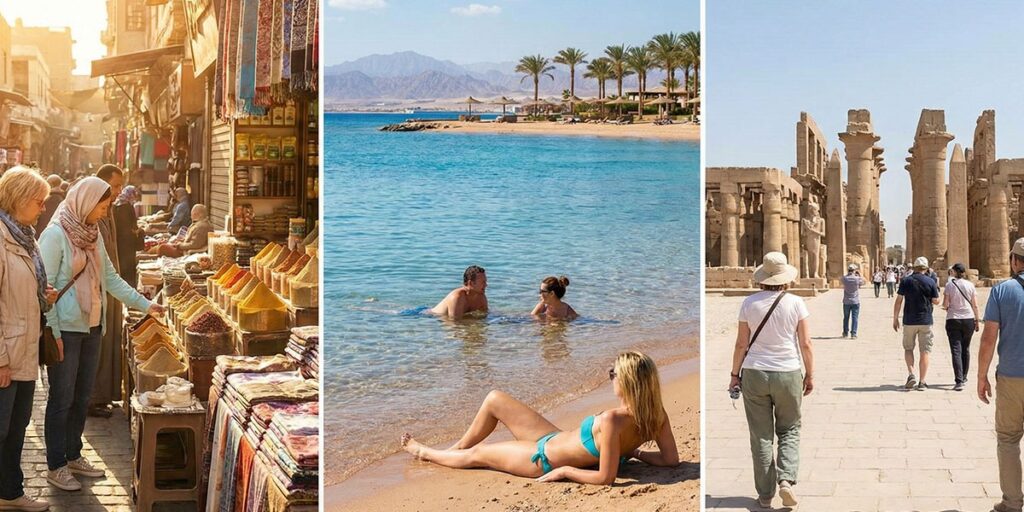
September and early October mark the transition out of summer. Early September can still feel hot (especially in the south), but by late September temperatures are dropping. Many travelers argue that the fall in Egypt best time to go. The weather is “warm-yet-comfortable”, think highs in the high 20s°C (80s°F) and cooler nights. It’s a magical time to visit: clear skies, still-hot sea for diving, but fewer fellow tourists than in winter.
October, so you can swim right before winter chill sets in. Spring (March, April) works similarly: aside from brief sand winds, days are very pleasant, and crowds (aside from Easter) are manageable. In short, the shoulder seasons of early fall and early spring offer nearly ideal conditions, warm weather with fewer crowds. These shoulder months are often called among the best time of year to travel to Egypt for sightseeing.
Other Factors & Travel Tips
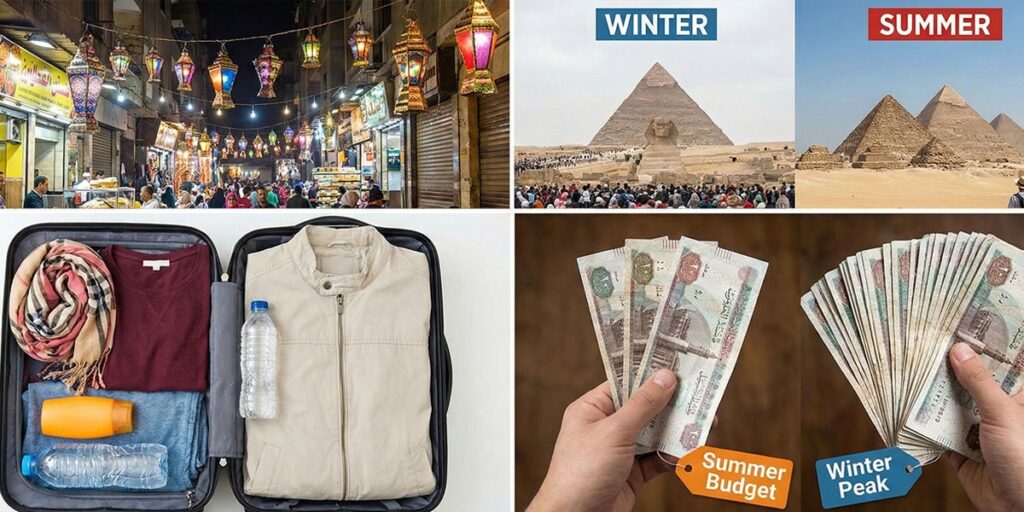
- Festivals & Ramadan: Egypt’s calendar has one big travel wildcard, Ramadan (the Muslim fasting month), which shifts each year (often falling in spring). During Ramadan, many locals fast from dawn to sunset, so days can feel quieter. Restaurants may be closed in daylight, but evenings become lively with street markets and feasts. Major sites do stay open (sometimes at reduced hours). If your visit overlaps Ramadan or Eid al-Fitr, embrace the unique culture but plan some midday downtime.
- Crowds: Winter and early spring are the busiest. If you hate lines, consider summer or fall when tourism dips. For example, July, August are almost eerily empty at Giza.
- Packing: No matter when you go, bring layers. Evenings can be cool in winter. Sunscreen and water are a must in summer. Modest dress is respected (especially at religious sites), but most places are used to tourists.
- Budget Travel: If you’re watching costs, summer (Jun, Aug) can save you money on flights and stays. Shoulder seasons (spring/fall) sometimes have sales too. Peak winter and holiday periods will be the priciest.
Knowing the best places to visit Egypt will actually add more charm to your trip.
Stay Connected with Airhub eSIM and Save More
You must buy eSIM online as well while traveling. No matter which season you choose, staying connected on your trip is easy with Airhub eSIM. You can pre-load an Egypt data plan and avoid confusing local SIM cards. For example, Airhub offers Egypt eSIM plans with flexible data packages and instant activation. And, don’t forget to consider the best time to travel to Egypt. Just buy an eSIM Egypt online through the Airhub app before you travel. It arrives via email and works immediately when you land. With reliable mobile data, you’ll easily use maps, translation apps, social media and more while exploring.
Pro tip: Use code WINTERWAVES to get 5% off your Airhub eSIM purchase for Egypt (or any country) during checkout. That means cheaper data in off-peak (or any) season. Having an eSIM also means you don’t waste time hunting for wifi, an invaluable perk if you’re in a desert jeep or cruising the Nile. In short, wherever and whenever you travel in Egypt, Airhub keeps you online and in touch.
FAQs
1. When is the absolute best time of year to visit Egypt?
Many travel experts point to winter through early spring (December to April) as the top season. During these months, daytime temperatures are warm but comfortable, evenings are cool, and clear, dry weather dominates.
2. How hot does it get in Egypt’s summer? Should I still go?
Yes, summer can be extremely hot. From June to August, Egyptian cities often exceed 35°C (95°F), and Luxor and Aswan frequently hit 40°C (104°F) or more. Daytime sightseeing is challenging, so plan outdoor activities for early morning or evening.
3. Is winter (Dec–Feb) comfortable in Egypt?
Totally. Egypt experiences mild, sunny days (even in the south) with average high temperatures for daytime in Cairo of 18 to 20 °C (65 to 68 °F), and this is the absolutely best time of year to visit for touring Egypt.
4. What about travel during Ramadan or local holidays?
If your trip coincides with Ramadan (dates change yearly), you may find that many restaurants are closed during the day and that many locals are observing fasting during that time. However, travelers are welcome to eat and drink as they normally would. In fact, there are often many festivities in the form of street markets in the evenings. In addition, most tourists continue to visit the main tourist attractions despite Ramadan being in effect; although some may begin their day later than they typically would, as well as sightseeing later due to altered sleeping schedules.
5. When is the best time to dive or enjoy the Red Sea?
The Red Sea is warm year-round. Fall (Oct-Nov) and spring (Apr-May) combine great water temps (around 24–26°C) with good visibility. Summer has the warmest sea (perfect for snorkeling), but it can be very windy. Winter dives offer cooler air but still warm water. Note: shipping travel to an eSIM Egypt is possible in any season.
6. How can I save money when traveling to Egypt?
Going on vacation when it’s not as busy (during the summer months) will usually give people the most savings on airfare and lodging. Late spring/early fall (also called “shoulder seasons”) typically provides some type of discount as well. To take full advantage of your travel budget, consider pairing an off-peak trip with ways to reduce costs.
7. Do I need a SIM or eSIM for my trip?
It’s highly recommended to get a local data plan. With Airhub eSIM, you can purchase an Egypt mobile data plan online before your trip and activate it instantly. This means you land with service ready, no searching for a SIM card or paying roaming fees.
Leave a Reply