At $8 for 3GB over 30 days, Sri Lanka is one of the cheaper countries in Asia to stay connected in. That’s the easy part, and it’s where most guides stop.
The parts worth reading come after: which local network you’ll actually be roaming on, where the signal vanishes on the Kandy–Ella train, and the entry paperwork you still need even though Sri Lanka’s tourist visa went free for 40 nationalities this May.
That last point has tripped up a lot of travel content since the rules changed including, candidly, an earlier version of this page. Free is not the same as no forms. We’ll come back to that properly, with sources.
Sri Lanka eSIM Plans and Prices
| Plan | Validity | Price (USD) |
| 12GB | 30days | $17 |
| 15GB | 30 days | $30 |
| 1GB per day | 5 days | $13.50 |
There are two ways of buying here and they suit genuinely different trips. Total-data plans work if you’re a light user, or if you’ll be on guesthouse Wi-Fi most evenings 3GB across a fortnight covers maps, WhatsApp and the occasional upload without much thought. Daily plans earn their keep when you’re unsure of your usage or moving constantly, because a fresh allowance arrives every morning instead of one pot slowly draining while you check it nervously.
Browse other destinations in our esim data plans, or head straight to the eSIM Sri Lanka plan page.
Which Sri Lankan Network Will You Be On?
This single question shapes your entire experience, and almost nobody selling eSIMs will answer it.
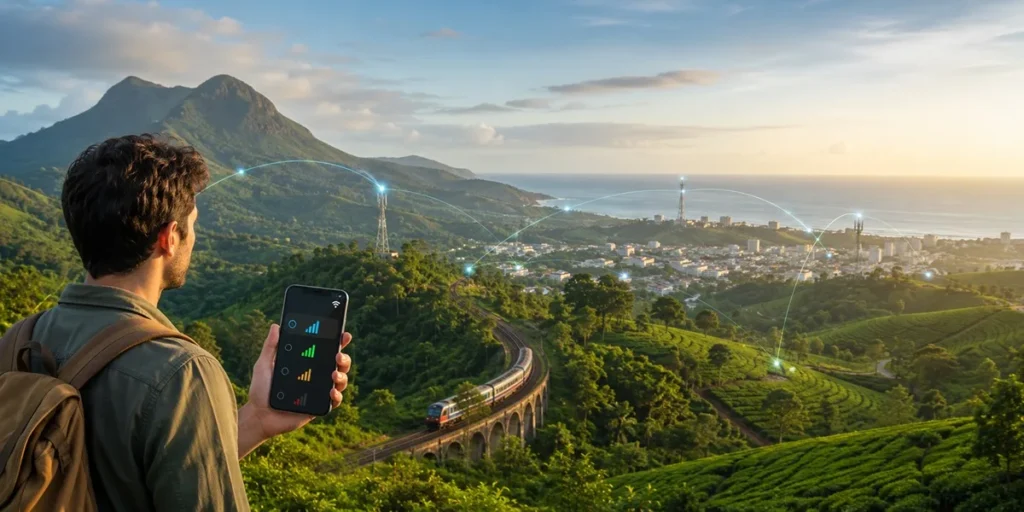
Sri Lanka has four mobile operators: Dialog, Mobitel, Hutch and Airtel. Dialog is the largest with the strongest reach beyond the main towns; Mobitel, state-owned, isn’t far behind. No travel eSIM provider builds a network of its own what you’re buying is resold roaming access on one or more of these, and which one decides whether you have a signal on a mountain road in the Central Province or a blank screen.
So before buying any Sri Lanka eSIM ours included find out what’s behind it.
Will Your Phone Work?
Ten seconds, before you spend anything.
Dial *#06#. An EID number appearing alongside your IMEI means your phone supports eSIM. You can also look under Settings → Cellular → Add eSIM on iPhone, or Settings → Connections → SIM Manager on most Androids.
Most flagships since the iPhone XS, Google Pixel 3 and Samsung Galaxy S20 handle it fine. The exceptions catch people out, though: plenty of mid-range and budget Androids still don’t support eSIM, some carrier-locked handsets refuse third-party profiles outright, and a few models sold in mainland China ship without it entirely. Our eSIM compatible devices list has the model-by-model detail.
And if your phone doesn’t support eSIM, that’s genuinely fine a physical SIM from Bandaranaike airport is a good option, which we’ll get to.
Before You Fly: The ETA You Still Need
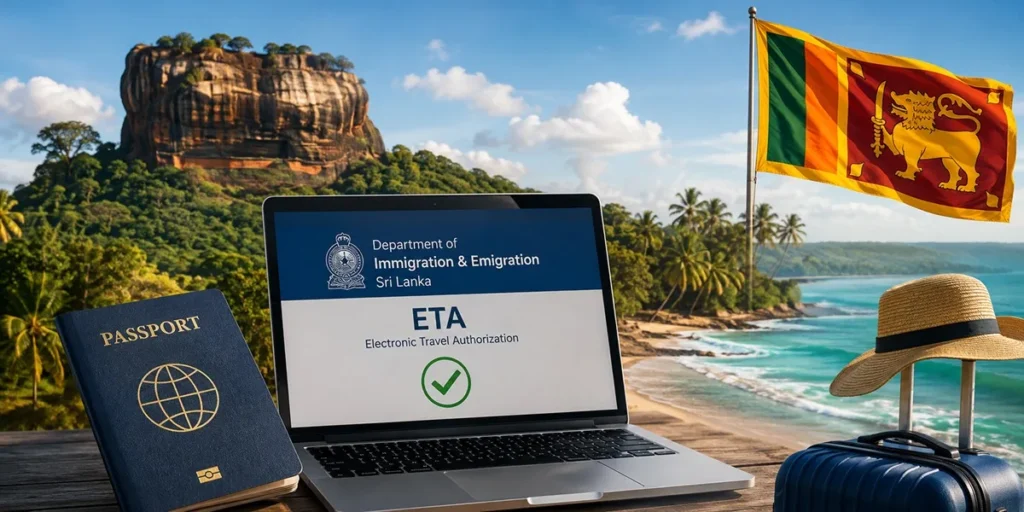
A lot of travel content has been wrong about this since May, and the cost of getting it wrong is not boarding your flight. So, precisely:
Since 25 May 2026, nationals of 40 countries can obtain a Sri Lankan tourist visa free of charge for 30 days. The list covers the UK, USA, Canada, Australia, New Zealand, India, China, Japan, South Korea, most of Western Europe and the Gulf states.
But removing the fee is not the same as removing the visa. Sri Lanka’s Department of Immigration and Emigration is unambiguous on this: every foreign national including citizens of those 40 countries, and including Maldives, Seychelles and Singapore, who were previously exempt altogether must obtain an Electronic Travel Authorization before arriving. The application is mandatory. Only the price changed.
The practical details worth noting:
- Apply online before you travel. Approval usually lands within 24–72 hours, so this isn’t an airport job.
- The free ETA covers 30 days, with a double entry facility running from your first arrival inside that window. Maldivian nationals get 90 days under a bilateral agreement.
- Staying longer? Extensions are available once you’re in the country, on payment of the applicable fee.
- ETA fees paid before 25 May 2026 aren’t refundable.
One warning worth taking seriously. Sri Lanka’s official ETA portal sits on a .gov.lk domain. A number of third-party sites will happily process the identical application for an inflated “service fee” perfectly legal, entirely avoidable. Apply through immigration.gov.lk or eta.gov.lk and it costs nothing.
Coverage: Cities, Hill Country and the Train
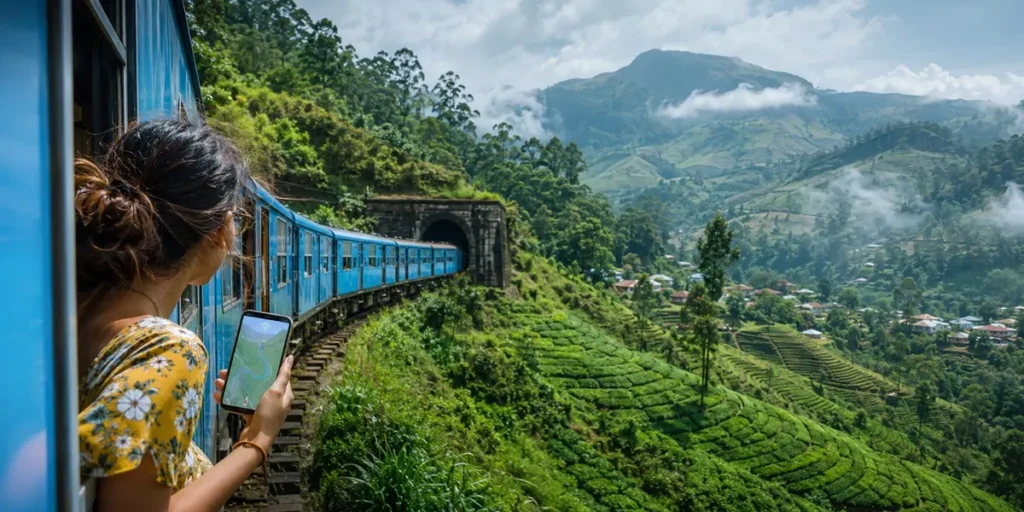
Colombo, Galle, Kandy and the southern beach towns are comfortably covered on all four networks. It’s everywhere else that gets interesting.
Take the Kandy Ella train, Sri Lanka’s signature journey and seven hours of tea country, tunnels and hillside. Signal comes and goes along the whole route, and the tunnels kill it entirely. If your phone has a job to do on that trip tickets, uploads, a call home sort it in Kandy before you board.
Hill country broadly behaves the same way. Ella, Nuwara Eliya, Haputale, Horton Plains: all patchier than the coast, on every network. The national parks too Yala and Udawalawe have decent coverage near the entrances and considerably less once you’re inside.
None of this is a provider failing. It’s terrain, and no eSIM changes topography. What does help, and costs nothing, is downloading offline maps for your full route before you leave a town with a signal.
How to Install It
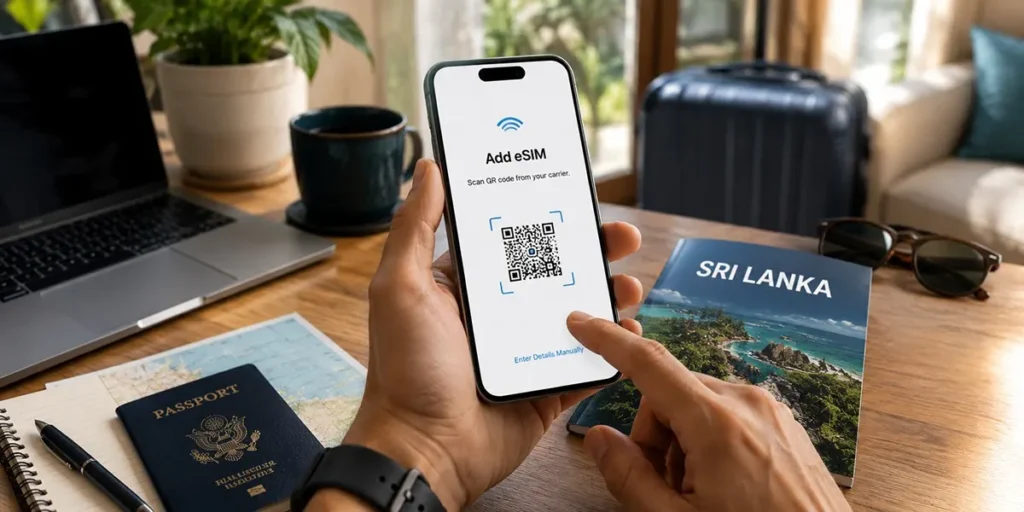
Do this at home on Wi-Fi. Not in the arrivals hall at Bandaranaike at 3am.
- Choose your plan, checking the validity against your actual trip length.
- Complete the purchase. A QR code and instructions arrive by email within minutes.
- Install the profile. iPhone: Settings → Cellular → Add eSIM → Use QR Code. Most Androids: Settings → Connections → SIM Manager → Add eSIM.
- Label the line “Sri Lanka” so you can identify it later.
- Set it as your data line and turn Data Roaming on for that line only the step people skip, then spend twenty minutes wondering why nothing loads.
Leave the line switched off until you land. Our how to install an eSIM guide covers what to do when a QR code refuses to scan.
Do You Need One, or Is an Airport SIM Fine?
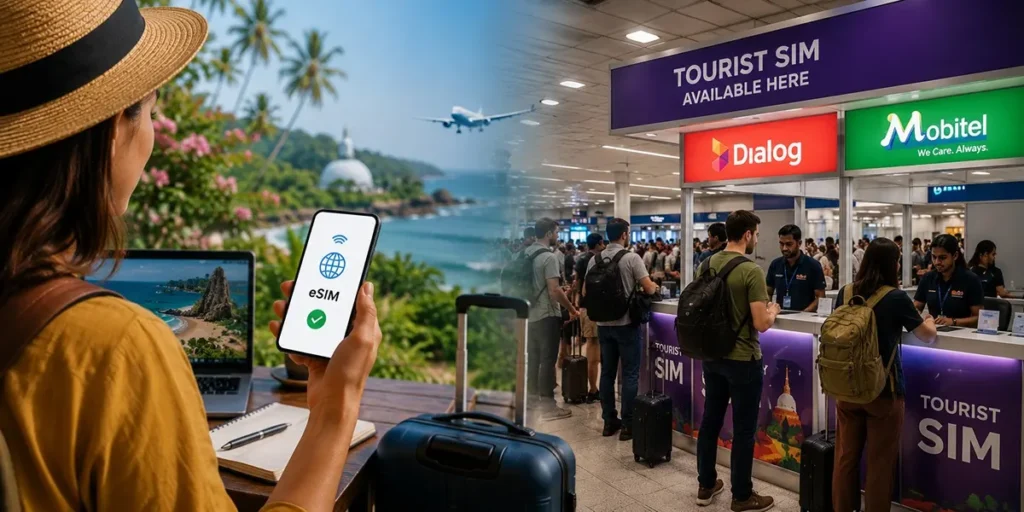
Honest answer: Sri Lanka is one of the countries where the local option is genuinely competitive, and pretending otherwise would be silly.
Dialog and Mobitel both run counters in the arrivals hall at Bandaranaike. They’re open for every flight, including the small-hours arrivals that make up much of the schedule, and their tourist packages are cheap. Staying a month or more? A local SIM will almost certainly cost less and hands you a Sri Lankan number, which is quietly useful for guesthouse bookings and tuk-tuk drivers who’d rather call than message.
Where an eSIM wins is the first few hours. You walk out of immigration already connected, rather than joining a queue after a ten hour flight and photocopying your passport. On a one or two week trip, that’s usually worth more than the price difference.
And if your phone doesn’t support eSIM, the airport counter isn’t second best. It’s simply your answer, and a perfectly good one.
FAQs
1. Can I set up my eSIM before landing in Sri Lanka?
Yes, and you should. Install it at home over Wi-Fi, then leave the line switched off until you arrive on many plans the validity period starts the moment the eSIM first connects to a network, so switching it on early can burn a day.
2. Will an eSIM work on my phone?
If it’s a recent flagship, almost certainly. Dial *#06# an EID number next to your IMEI confirms it. Many mid-range and budget Androids don’t support eSIM, and some carrier-locked phones won’t accept a third-party profile.
3. What if I run out of data mid-trip?
Top up through the app; nothing to reinstall. If you’re genuinely unsure how much you’ll use, a daily plan gives you a fresh allowance each morning rather than one pot to ration across a fortnight.
4. Why not just buy a local SIM when I get there?
For longer stays that’s often the better call the Dialog and Mobitel counters at Bandaranaike are cheap, open around the clock, and give you a local number. For a week or two, an eSIM saves you the queue and the paperwork on arrival.
5. Do I need a visa for Sri Lanka?
You need an ETA. Since 25 May 2026 it’s free for nationals of 40 countries including the UK, US, Canada and Australia but it remains mandatory, and you must apply before travelling. Approval usually takes 24–72 hours.
6. Is the free visa really free?
The fee is. The application isn’t optional. Apply through a .gov.lk site and you’ll pay nothing; third-party sites charge a service fee for exactly the same thing.
7. How long can I stay on the free ETA?
30 days, with double entry permitted from your first arrival. Extensions are available inside Sri Lanka for a fee. Maldivian nationals receive 90 days.
8. Which network will my Sri Lanka eSIM use?
Sri Lanka has four operators Dialog, Mobitel, Hutch and Airtel with Dialog generally offering the widest rural reach. Check which one your provider uses before buying.
9. How much data do I need for two weeks in Sri Lanka?
Around 10GB suits most travellers. You’ll navigate more than you would at home because the roads are unpredictable, and guesthouse Wi-Fi is frequently weaker than the listing suggested.
10. Will I have signal on the Kandy Ella train?
Intermittently at best. Seven hours through hill country and tunnels means coverage drops repeatedly on every network. Download offline maps and anything else you need before you board.
Before You Book
Apply for your ETA free for many nationalities now, still mandatory for everyone. Confirm your phone supports eSIM. Decide between total data and a daily allowance. And download offline maps before you head into the hills, because that’s where you’ll want them and won’t have signal to get them.
When you’re ready, install your eSIM Sri Lanka plan at home and you’ll be connected before you’ve cleared immigration.
Leave a Reply