Every spring, Japan transforms under a canopy of pale pink blooms. The cherry blossom season in Japan (sakura season) is one of the country’s most magical times, and it draws travellers from around the world. With trees bursting into flower from the south to the north, it’s important to know: when is cherry blossom season in Japan? If you want to catch the peak bloom. In this guide, we’ll give you the rundown: what sakura are, the bloom timetable by region, the best viewing spots, travel timing, costs, and budgeting tips, so stay tuned!
Table of Contents
- What are Cherry Blossoms?
- Japan cherry blossom season Regional Timeline
- Top Sakura Destinations to Explore
- Best Time to See Japanese Cherry Blossoms
- How Expensive is the View of Cherry Blossoms for Travellers?
- Budget Travel Tips for Sakura Season
- Explore Cherry Blossoms with Airhub
- See the Best of Sakura with Our Guide!
- FAQs
What are Cherry Blossoms?
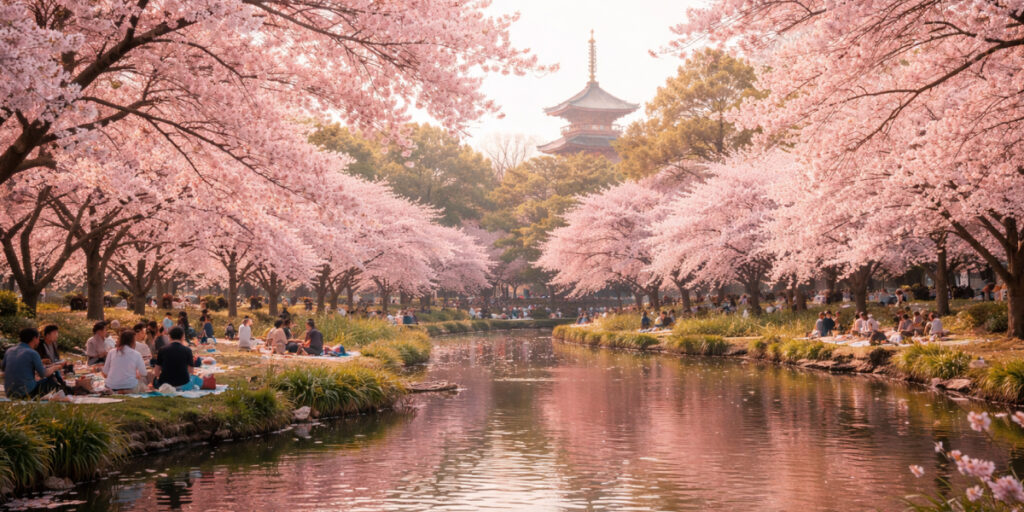
Cherry blossoms (sakura) are delicate pink flowers that bloom on cherry trees and have been a beloved symbol of spring in Japanese culture for centuries. Every April or so, parks, temples, and city streets are enveloped in pink clouds of petals. The blooms represent renewal and the beauty of fleeting moments, no surprise that local hanami (flower-viewing) festivals are a national tradition. Families and friends gather under the cherry trees for picnics and celebrations, making the Japan sakura season a social as well as visual spectacle. The blossoms themselves only last about a week in any given spot, which is why timing your visit right is crucial.
Japan cherry blossom season Regional Timeline
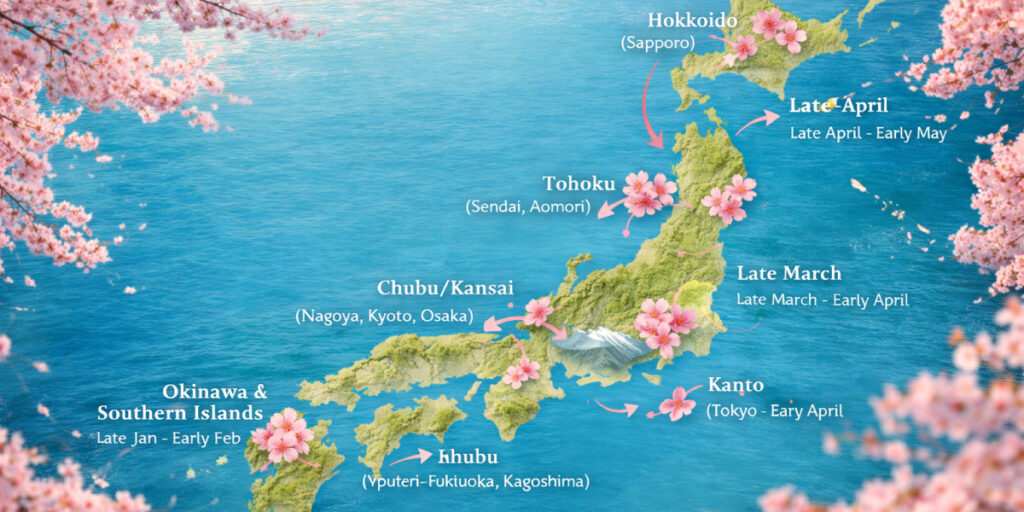
Because Japan stretches from subtropical to snowy climates, the cherry blooming season follows the warmth northward. In general, blooms start in the far south and move north over weeks. Below is a typical timeline by region:
| Region | Typical Bloom Time |
| Okinawa & Southern Islands | Late Jan – Early Feb |
| Kyushu (e.g., Fukuoka, Kagoshima) | Mid-March |
| Chubu/Kansai (Nagoya, Kyoto, Osaka) | Late March – Early April |
| Kanto (Tokyo) | Late March – Early April |
| Tohoku (Sendai, Aomori) | Early – Mid April |
| Hokkaido (Sapporo) | Late April – Early May |
These ranges can shift by a week or more depending on the weather each year, so it pays to check forecasts. In short, cherry blossom time in Japan sweeps from January in the south to May in the north.
Top Sakura Destinations to Explore
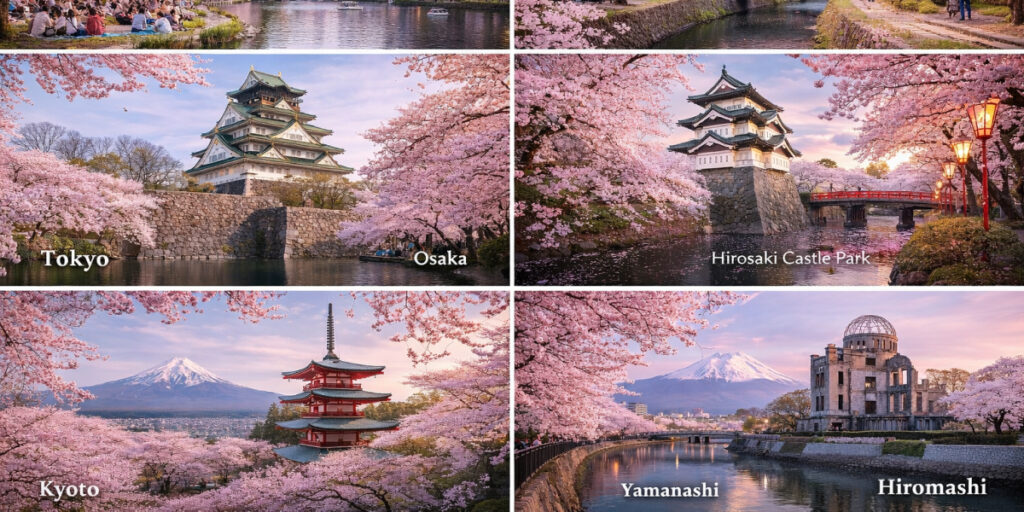
If you’re wondering where to see the most breathtaking Japan blossom season, here are six must-visit spots in Japan:
- Tokyo (Ueno Park & Shinjuku Gyoen) – Tokyo’s large parks bloom in late March. Ueno Park has 1,000+ cherry trees lining its paths, while Shinjuku Gyoen offers expansive lawns and ponds framed by blossoms. Both are filled with crowds enjoying hanami picnics under the floating pink canopy.
- Kyoto (Maruyama Park & Philosopher’s Path) – Kyoto’s ancient gardens and temple grounds come alive in early April. Maruyama Park, next to Yasaka Shrine, features a giant weeping cherry tree perfect for evening illuminations. The Philosopher’s Path is a picturesque canal walk lined with hundreds of sakura trees, ideal for a serene stroll.
- Osaka (Osaka Castle Park) – Cherry trees lining the moat in front of the historic castle come into full bloom at the beginning of April. The castle-hill-and-cherry-tree scene is iconic, and the spacious park grounds make it easy to find a hanami spot.
- Aomori (Hirosaki Castle Park) – In northern Honshu, Hirosaki Park boasts about 2,600 cherry trees of 52 different varieties. The blossoms here peak in late April to early May, surrounding the old castle keep in a mad-hatter’s fairytale scene. Luminous lanterns and petal “rafts” on the pond create magical scenes during the town’s Hirosaki Cherry Blossom Festival every year.
- Yamanashi (Arakurayama Sengen Park) – This spot offers the classic postcard: a five-story pagoda nestled among cherry trees, with Mount Fuji towering behind. Peak bloom is usually in late April. Be prepared for photographers lining up to capture the pagoda framed by sakura with Fuji in the distance; it’s one of Japan’s most famous cherry blossom views.
- Hiroshima (Peace Memorial Park) – Cherry trees surround the iconic A-Bomb Dome in Hiroshima Peace Park, offering a poignant contrast of beauty and history. Late March and early April are best here. Nearby Miyajima Island (Itsukushima) also has lovely blossom-lined walks and shrines if you’re exploring the region.
Best Time to See Japanese Cherry Blossoms
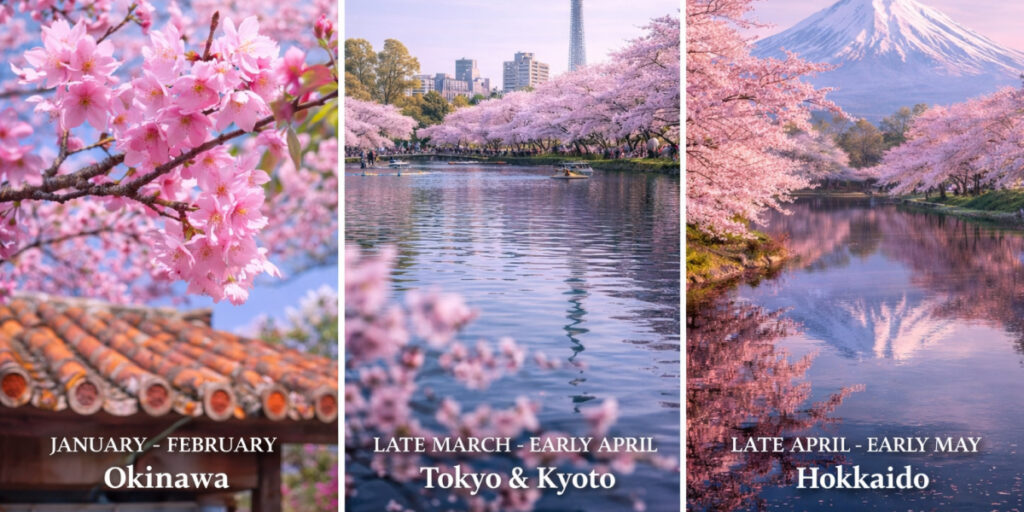
Timing is everything for sakura viewing. In general, late March and early April are often the best times to see Japanese cherry blossoms in most of the country. Here’s a quick guide to the prime windows:
- Late March – Central Japan (Tokyo, Kyoto, Osaka) and southern regions. By late March, the main islands (Honshu, Shikoku) are entering full bloom. This is often the best time to visit Japan for cherry blossoms if you want to catch the southern/central peaks.
- Early April – Still peak for Kyoto and Osaka, and the season moves into northern Honshu.
- Mid-April – Northern Honshu (Sendai, Aomori) and higher elevations bloom around now.
- Late April – Early May – Hokkaido blooms later, so if you head north this late, you can see sakura when most of the country has already finished.
- January–February – Only for Okinawa and nearby islands, where very early varieties bloom. (If you happen to be in Okinawa in February, you’ll see cherry blossoms while snow still falls up north).
How Expensive is the View of Cherry Blossoms for Travellers?
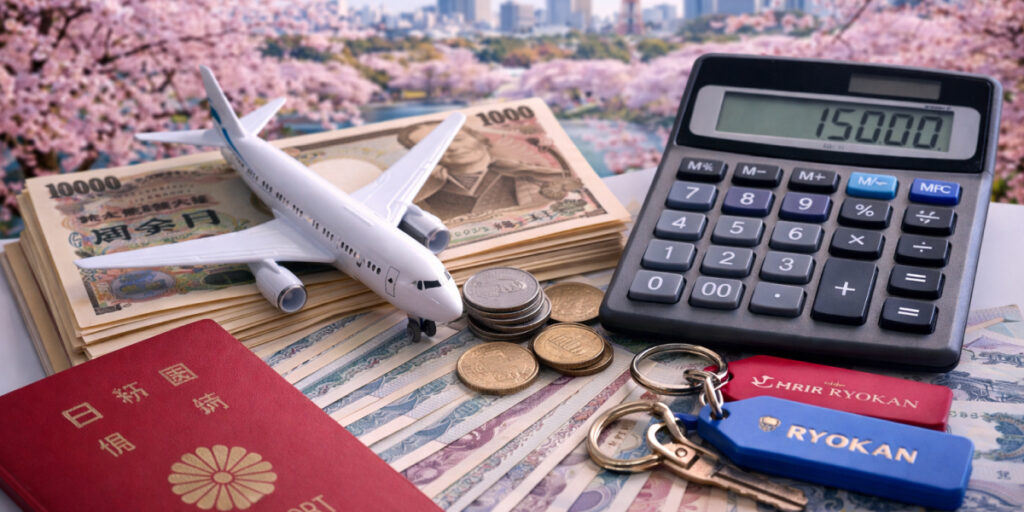
Cherry blossom season is also peak travel season in Japan, so prices tend to be higher. Many millions flock to Japan for the Sakura, contributing to surging demand for flights and hotels. Airlines often hike fares for round-trip tickets in spring. At the same time, accommodation costs jump substantially. Hotel prices in Tokyo, Kyoto, and Osaka often spike 30–50% above off-season rates. Boutique ryokans (traditional inns) and city-center hotels can sell out weeks in advance.
That said, 2026 has seen some relief: a weakened yen and fewer visitors from some countries have driven flight and hotel prices down 10–20% compared to 2025. Still, plan on paying a premium. International travellers should also budget for visa fees. Japan plans to raise its tourist visa charge in 2026 from a nominal fee to about ¥15,000 (roughly €80/$85) for a single-entry visa. While not directly a spring-season expense, it’s an added cost to know if you need a visa.
Budget Travel Tips for Sakura Season
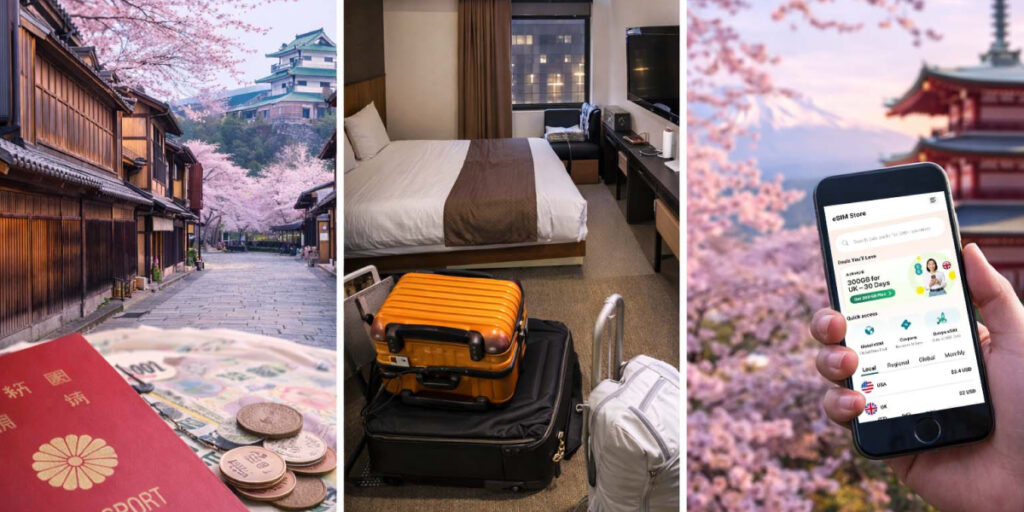
Even on a peak-season budget, you can make cherry blossom travel more affordable. Here are some savvy tips:
- Choose Offbeat Locations: Kyoto and Tokyo steal the headlines (and crowds), but places like Kanazawa, Takayama, or Hiroshima also have stunning blossoms with fewer tourists and sometimes better prices. Exploring these gems can stretch your budget and give a more local experience.
- Stay Smart on Accommodation: Consider business hotels, hostels, or capsule hotels; they’re clean and compact. Booking a hotel a few stops out on the subway line can significantly cut the room rate. Also look for family-run inns or Airbnb-type lodgings, which may offer better deals during spring.
- Stay Connected Wisely: Avoid high roaming fees. Buy an eSIM online ahead of time instead of an expensive temporary SIM card. It is a hassle-free process that gives you access to the local network within a few minutes.
Explore Cherry Blossoms with Airhub
Don’t let connectivity worries spoil your trip. Staying online in Japan is easy with an affordable eSIM Japan offered by Airhub. Instead of hunting down a local SIM card or paying roaming fees, you can buy one in advance. Airhub’s app lets you choose a Japan plan in minutes. After purchase, you simply scan a QR code to install the eSIM before you even leave home. Land in Japan and flip on mobile data, you’re instantly connected to a local network.
See the Best of Sakura with Our Guide!
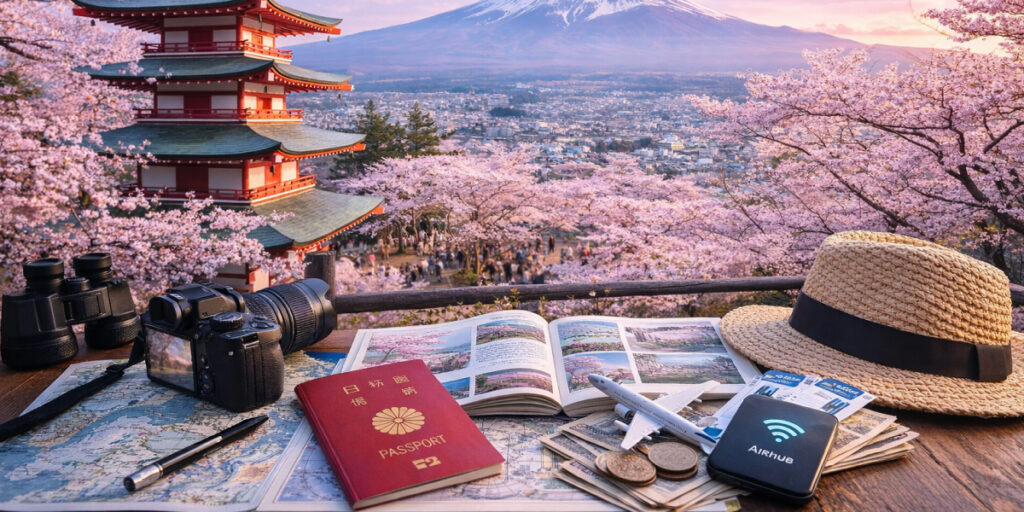
Cherry blossom season in Japan is a spectacular, whirlwind event. Seeing the country’s famous sakura bloom is well worth the planning effort. In this guide, you have not only learned about sakura (Japan’s springtime symbol), but also checked the bloom schedule by region. Book your flights and hotels early, and keep an eye out for deals. Remember that spring travel costs are higher (but savvy shopping can ease the hit), and carrying internet on the go is essential, so ditch your SIM card in Japan with Airhub. With the right timing and budget tips, your spring trip will be unforgettable.
FAQs
1. Why is Cherry Blossom Season So Important in Japan?
It marks the arrival of spring and symbolizes renewal. Blossoms carry deep cultural meaning in Japan and inspire centuries-old hanami (flower-viewing) festivals where people gather under the flowers.
2. Is Cherry Blossom Season a Good Time to Visit Japan?
Absolutely, the scenery is breathtaking, and festivities abound. Just be prepared for crowds and higher costs. With early planning and flexibility, you can still enjoy the best time to see sakura in Japan with fewer headaches.
3. Do I Need Internet During Sakura Season?
Yes. The Internet helps with maps, train schedules, translation, and booking on the fly. In fact, an eSIM (like Airhub) is ideal; you can buy it in advance and avoid hunting for a local SIM. Staying connected makes it easier to find the best spots and share your experiences.
4. How long does the cherry blossom season last?
Each location’s full bloom lasts about a week or two, weather permitting. Nationwide, the cherry blossom season in Japan spans roughly January (in Okinawa) through May (in Hokkaido), moving northward over time.
Leave a Reply