Explore Europe’s most beautiful lesser known places, from turquoise lakes to snowy Lapland, with the best time to visit, how long to stay, and how to reach each one. And stay connected everywhere with a reliable travel eSIM.
Europe is the most loved travel destination in the world, and it isn’t even close. More than half of all international trips on the planet end somewhere in Europe, year after year. The beauty gets people on the plane, but it’s everything around the beauty that keeps them coming back: clean, walkable cities and towns that take pride in themselves. Trains that actually run on time. Luxury hotels are a five minute stroll from thousand year old castles. Food cultures are so deep that a single country can feed you differently every day for a month. Cool, gentle weather that feels like a blessing if you’re flying in from a hot country. History on nearly every corner, festivals in nearly every season, and a level of safety and ease that gives you real peace of mind. And then there are the people, travel Europe for a couple of weeks and you’ll come home having understood a few cultures from the inside, not just photographed them.
Here’s the thing, though. When most of us plan a trip, we default to the famous places in Europe, London, Paris, Rome. And fair enough: the classic European cities to visit earn their fame every single day. But Europe keeps its best moods in quieter corners. Places that don’t feel crowded or overdone. Places that make you feel something. If you’re planning a trip, maybe it’s time to look beyond the usual.
One small tip before we get into the list, get an eSIM before you go. It’s genuinely easy: no pulling out your SIM card, no hunting for a mobile shop when you land. You buy a plan, scan a QR code, and you have the internet. It matters most on exactly these kinds of trips, where you’re crossing borders and wandering far from big cities. No stress, no roaming charges. Now, let’s look at some special places in Europe, the kind you’ll remember forever.
Why Is Europe the World’s Most Loved Travel Destination?
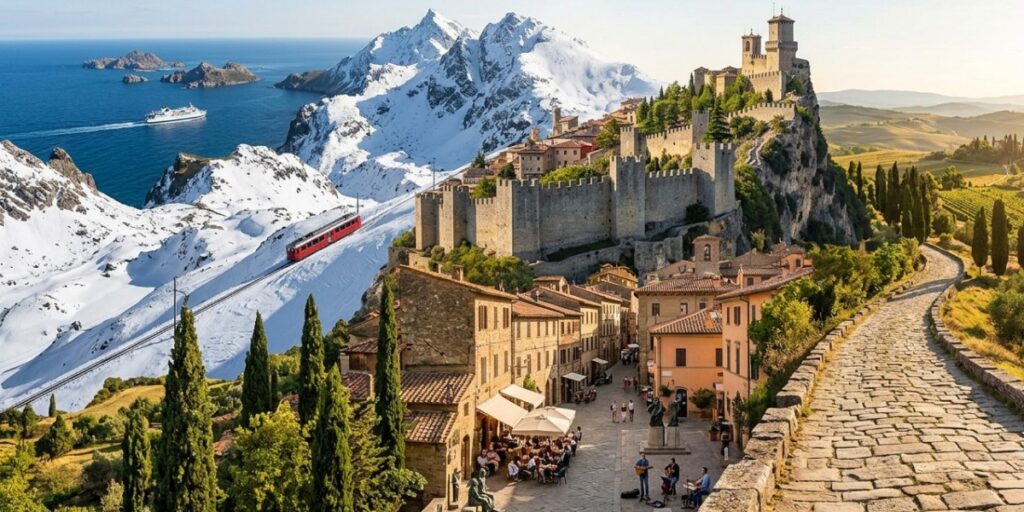
Ask ten travelers and you’ll get ten overlapping answers. History you can touch, Roman roads, medieval walls, castles that are still lived in. Fifty,plus countries packed close enough that breakfast in one and dinner in another is completely normal. World class hygiene, healthcare, and infrastructure, which quietly removes half the anxiety of travel. A climate range that runs from Mediterranean sun to Arctic snow, so there’s a “best country to visit in Europe” for every taste and every month. Add art, music, café culture, mountain railways, island ferries, and the sheer pleasure of places built for walking, and you get a continent people return to five, ten, twenty times. The eight spots below capture all of that, without the tour,bus crowds.
Europe at a Glance: Which Place Fits Your Trip?
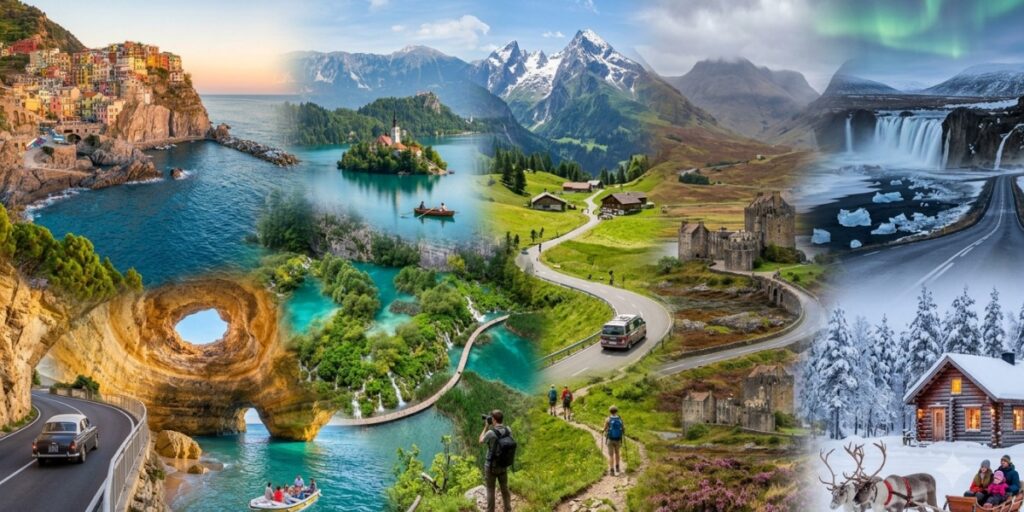
Use this as your shortcut. It’s the question we get asked most: not just where to go, but which of the top places to visit in Europe fits the trip you’re actually planning.
| Destination | Best time to visit | Ideal for | How long |
| Amalfi Coast, Italy | Apr–Jun, Sep–Oct | Honeymoons, slow travel | 3–4 days |
| Algarve, Portugal | May–Jun, Sep–Oct | Families, beach + boat adventures | 4–5 days |
| Plitvice Lakes, Croatia | May–Jun, Sep | Nature lovers, photographers | 1–2 days |
| Lake Bled, Slovenia | May–Sep | Weekend escapes, couples | 2 days |
| Swiss Alps, Switzerland | Jun–Sep hiking, Dec–Mar skiing | Honeymoons, scenery chasers | 4–7 days |
| Scottish Highlands | May–Jun, Sep | Road trips, castle and history fans | 4–6 days |
| Iceland | Jun–Aug midnight sun, Sep–Mar auroras | Road trips, photographers | 5–10 days |
| Lapland, Finland | Dec–Mar snow, Jun–Jul midnight sun | Families, bucket,list winters | 3–5 days |
Amalfi Coast, Italy – Just Take It Slow
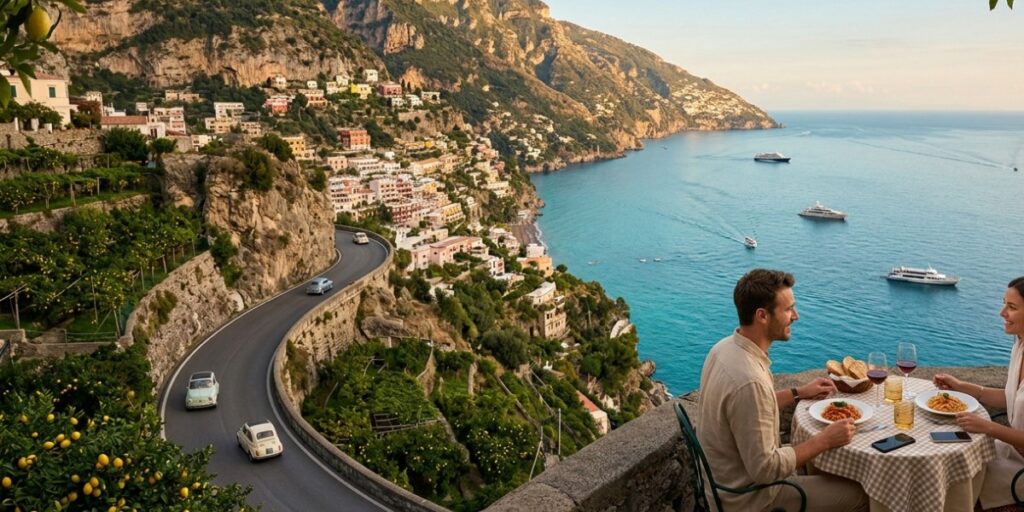
This place is as beautiful as the pictures make it look. Maybe even more. A UNESCO listed stretch of cliffs where pastel towns cling to the rock and lemon groves hang over the sea, connected by one famously winding coastal road. You will genuinely feel like you’re in a movie.
Base yourself in Positano for the postcard views or Ravello for the quiet, the terrace at Villa Cimbrone up there might be the single best viewpoint on the whole coast. Sit at a café. Eat pasta. Look at the sea. Breathe. If your legs want more, the Path of the Gods trail gives you the entire coastline from above in about three hours. There’s no rush here, and that’s the best part. You’ll want to photograph everything, and with an eSIM you can share it right away or send it home to family.
Good to know: Best time: April–June and September–October (July–August is beautiful but jammed, and the coastal road crawls) · Ideal for: honeymoons and slow travelers · How long: 3–4 days · Getting there: fly into Naples, then take the ferry from Naples or Salerno, it’s faster than the bus and doubles as a sightseeing cruise.
Algarve, Portugal Quiet Beaches and Sea Adventures
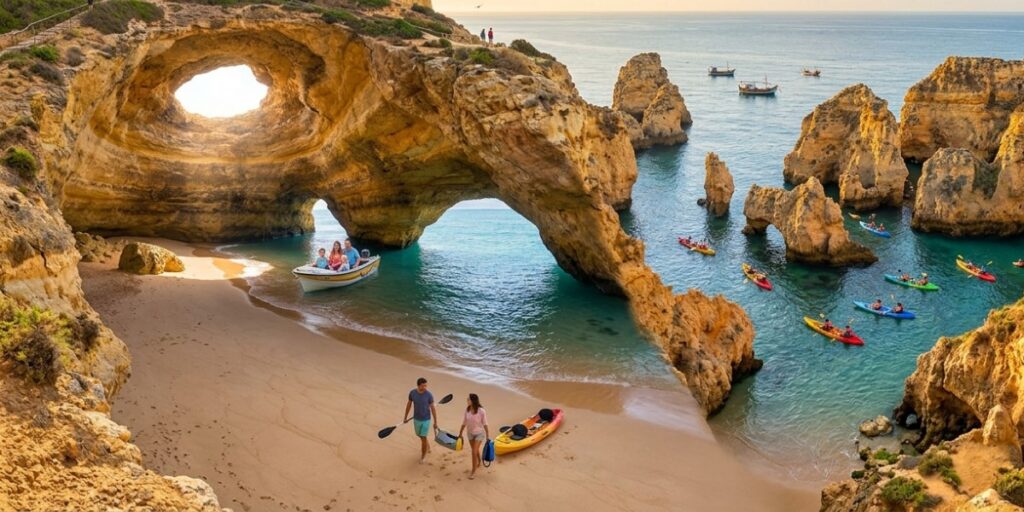
Not everyone wants a crowded beach. The Algarve is a nice balance, warm and sunny for around 300 days a year, but still peaceful once you step past the main resorts. Golden cliffs, tiny coves hidden between rock arches, and seafood that was swimming that morning. The air smells like salt.
The signature experience is a small boat trip into the Benagil sea cave, where sunlight pours through a hole in the domed roof onto the sand below, going early in the morning for calm water and thin crowds. Around Lagos, the Ponta da Piedade headland is a maze of golden sea stacks you can explore by kayak, and the Seven Hanging Valleys Trail is regularly ranked among Europe’s best coastal walks. Order a cataplana (seafood stew) at least once. This is a great place to slow down, and even though it’s relaxed, you’ll want your maps, camera, and internet working. An eSIM helps with all of that.
Good to know: Best time: May–June and September–October (summer is hotter and busier; the sea is warmest in September) · Ideal for: families and couples who want beach plus adventure · How long: 4–5 days · Getting there: fly into Faro; a rental car makes cove hopping easy.
Plitvice Lakes, Croatia So Much Water, So Much Peace
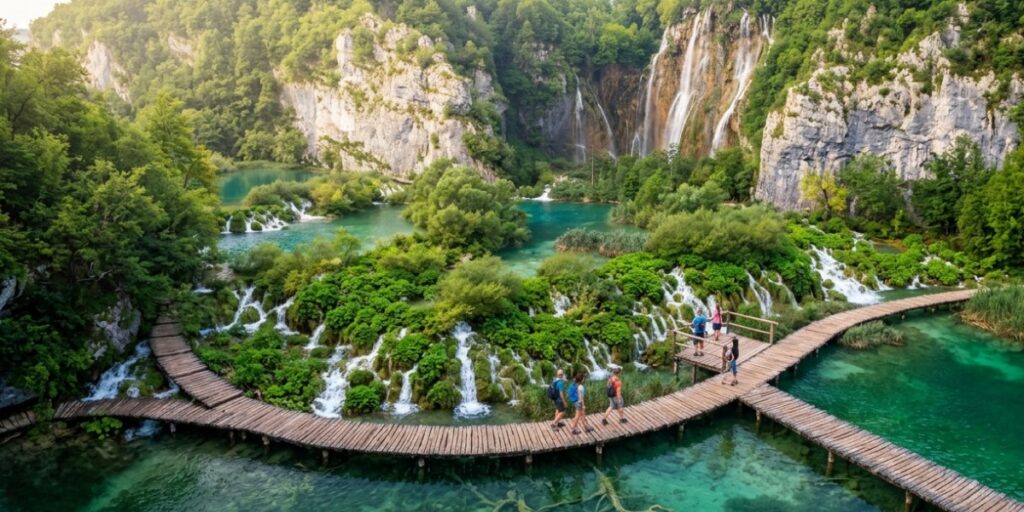
Imagine walking on wooden boardwalks over blue,green water. That’s Plitvice: 16 terraced lakes stitched together by more than 90 waterfalls, including Veliki Slap, Croatia’s tallest at 78 metres. It’s been a UNESCO World Heritage Site since 1979, one of Europe’s oldest, and it earns it. No shopping, no busy streets. Just nature, pure and simple.
Two honest tips from travelers who’ve done it: arrive before 9 am (tour buses roll in mid morning and the boardwalks are narrow), and know that swimming isn’t allowed here, this is a place to walk and stare, and it’s one of the best places to travel for exactly that. You’ll cover a lot of kilometres, so wear comfortable shoes. The electric boats and panoramic trains inside the park are included with your ticket, which makes looping the upper and lower lakes easy. Your phone’s GPS and camera will earn their keep, and with an eSIM you won’t be hunting for Wi,Fi all day.
Good to know: Best time: May–June and September for full waterfalls without peak crowds (book timed entry tickets online in summer) · Ideal for: nature lovers and photographers · How long: one full day; stay a night nearby to beat the buses · Getting there: about 2 hours by car or bus from Zagreb, 1.5 from Zadar.
Lake Bled, Slovenia Simple, Beautiful, Quiet
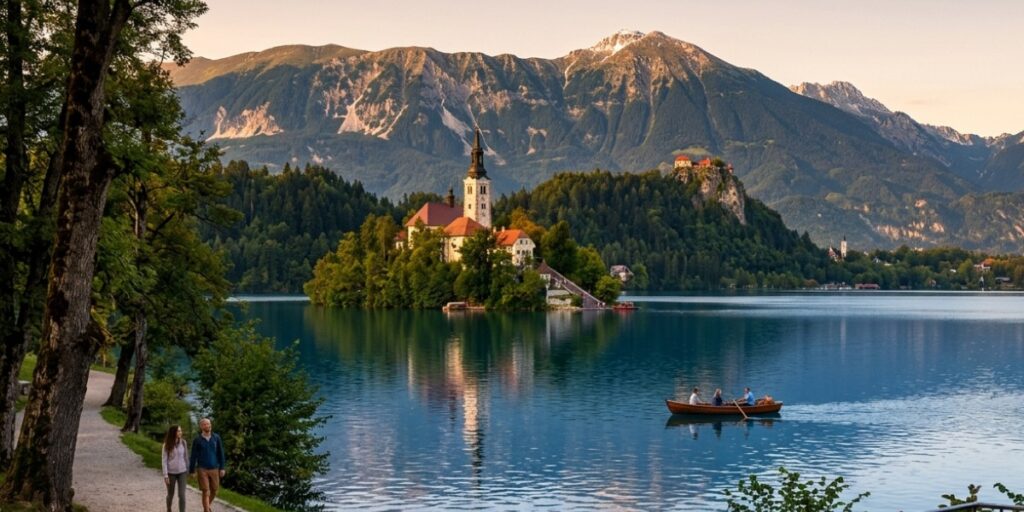
This lake has a little island in the middle with a tiny church on it, a medieval castle on a cliff above, and the Julian Alps behind everything. It looks designed. It isn’t.
Take a traditional wooden pletna boat out to the island (or rent a rowboat and do it yourself), climb the 99 stone steps, and ring the church bell, local legend says it grants a wish. Back on shore, walk the 6 km path around the lake, then do the thing everyone does and order a slice of kremšnita, Bled’s famous cream cake. If you have a spare half day, Vintgar Gorge is 4 km away: a wooden walkway pinned to canyon walls above rushing turquoise water. Bled is calm. Peaceful. Not loud, not crowded outside peak summer. Just nice. And yes, your eSIM will work here too.
Good to know: Best time: May–September (July–August is busiest; winter turns it into a snow,globe) · Ideal for: weekend escapes and couples · How long: 2 days, easily combined with Plitvice or Ljubljana · Getting there: Ljubljana airport is only about 35 minutes away.
Swiss Alps, Switzerland – Clean, Cold, and Beautiful
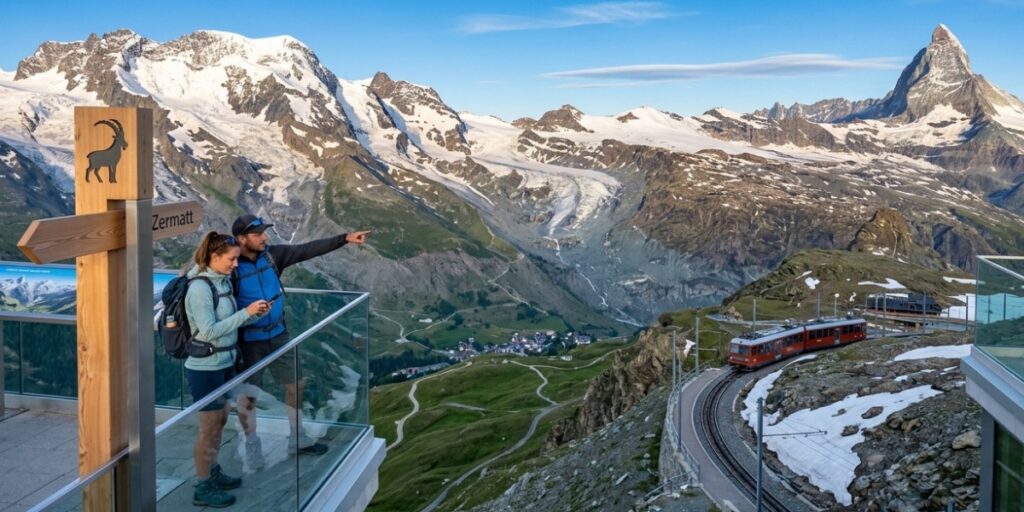
The mountains here are so perfect they almost look fake. But they’re real, and the Swiss have built the world’s most civilised ways to get into them. Zermatt is car-free, sitting under the Matterhorn, with the Gornergrat cog railway climbing to 3,089 metres for the classic panorama. Grindelwald opens up the Jungfrau region: cliff walks, gondolas, and green valleys ringed by 4,000,metre peaks. Between regions, the Glacier Express is fairly called the world’s slowest express train, eight hours of nonstop scenery.
One honest note: Switzerland is expensive, and pretending otherwise helps nobody. The trick is the trains, a Swiss Travel Pass covers most rail, buses, and boats, and turns the transport itself into sightseeing. Everything feels peaceful and organised. You’ll take hundreds of photos, check train times, and book huts and hotels on the go, and with an eSIM you can do all of that while standing on a mountain.
Good to know: Best time: June–September for hiking and green valleys, December–March for skiing · Ideal for: honeymoons and serious scenery chasers · How long: 4–7 days · Getting there: fly into Zurich or Geneva; trains reach Zermatt and Grindelwald in a few scenic hours.
Scottish Highlands – Hills, Castles, and Sheep
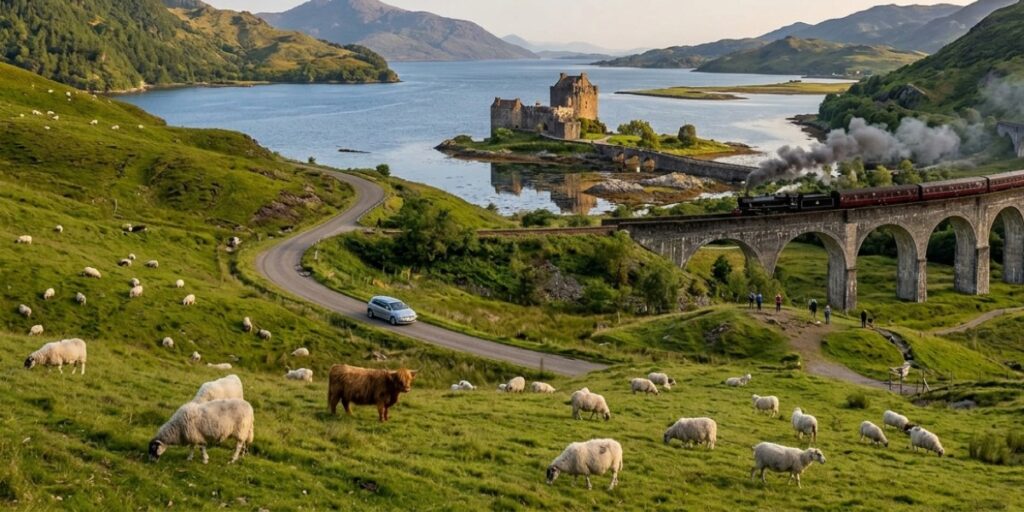
Scotland is a little wild, in a good way. Open, quiet, green, and dramatic. Drive through Glencoe, where the road threads a glen carved by glaciers and old volcanoes, stop at ruined castles like Eilean Donan or Urquhart on Loch Ness, and keep an eye out for Highland cows. If your trip allows, push on to the Isle of Skye.
The famous moment is the Jacobite steam train crossing the Glenfinnan Viaduct, yes, the real Harry Potter bridge. It runs roughly April to October and sells out months ahead, so book early; if you miss out, the viewpoint walk by the viaduct lets you watch the train steam over for free. An insider timing tip: May–June and September give you long daylight and far fewer midges (the tiny biting insects that peak in July–August). Even though the Highlands can feel remote, your eSIM keeps you connected for maps, music, and memories, just note that the UK sits outside the EU, so a Europe-only plan may not cover it. Check before you fly.
Good to know: Best time: May–June and September · Ideal for: road,trippers and history fans · How long: 4–6 days · Getting there: fly into Inverness, Glasgow, or Edinburgh; a rental car is essential.
Iceland Waterfalls and Volcanoes Everywhere
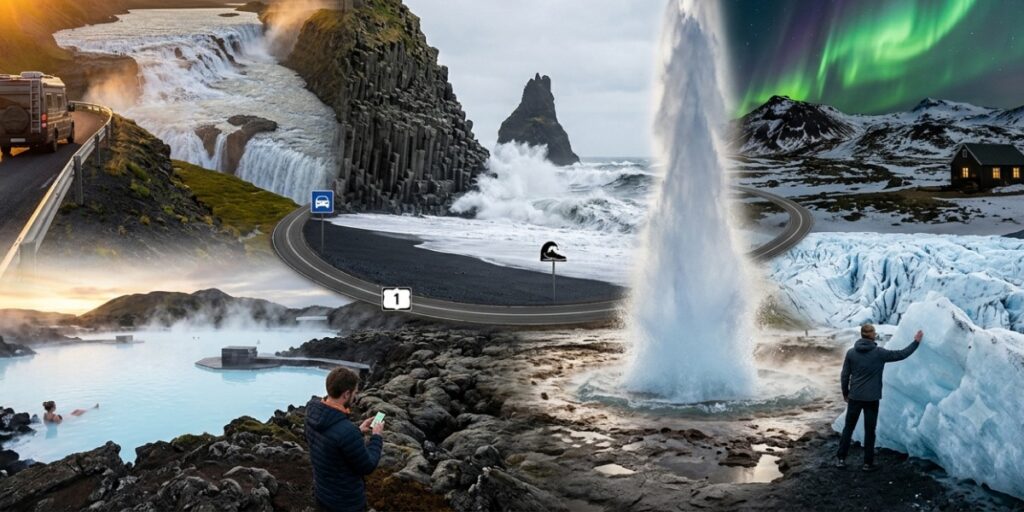
Iceland is Earth showing off. One minute you’re in a lava field, the next you’re standing under Gullfoss thundering into its canyon, then soaking in a geothermal lagoon while the wind does its thing. Walk the black sand at Reynisfjara (respect the sneakers,wave warnings, they’re serious), watch Strokkur erupt every few minutes, and touch a glacier.
It’s a road trip country. Short on time? The Golden Circle, Þingvellir, Geysir, Gullfoss, is a superb single day from Reykjavík. Within a week or more, drive the full Ring Road: about 1,330 km around the entire island, stopping wherever looks cool, which is everywhere. Timing changes everything here: June–July brings the midnight sun and near endless daylight for driving, while September–March trades daylight for northern lights. Costs are high, so book accommodation early. And with an eSIM, your internet works even out in the lava fields, so you won’t get lost or miss a single photo.
Good to know: Best time: June–August for the midnight sun and open highland roads, September–March for auroras · Ideal for: road trips and photographers · How long: 5 days for the south coast, 7–10 for the full Ring Road · Getting there: fly into Keflavík, 45 minutes from Reykjavík.
Lapland, Finland Snow, Silence, and Lights in the Sky
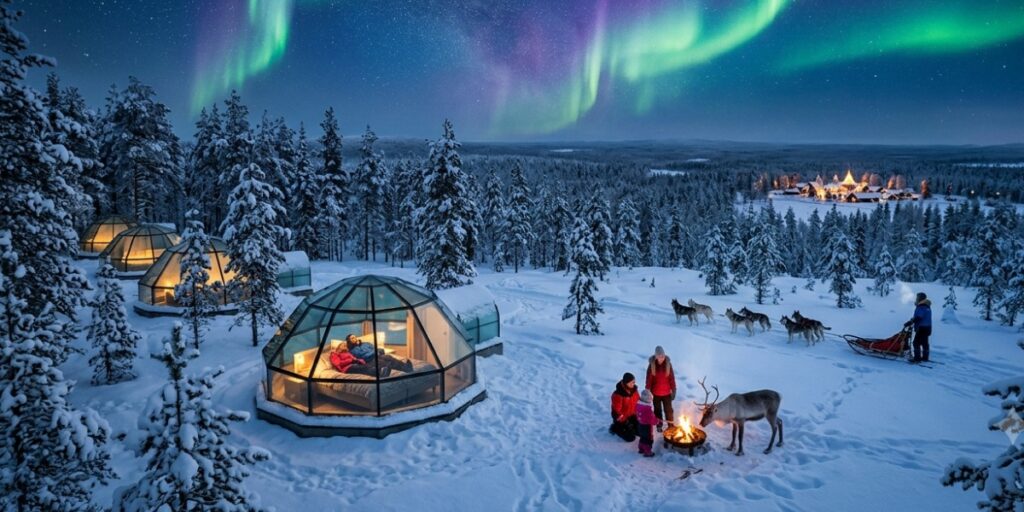
Lapland doesn’t feel like the rest of Europe. It barely feels like the rest of the planet. In winter, the forests sit under half a metre of snow, the silence is total, and the sky puts on the best free show on Earth, in Finnish Lapland the northern lights appear on roughly every other clear night between September and March.
Rovaniemi is the gateway: it sits right on the Arctic Circle and is the official hometown of Santa Claus, which makes it unbeatable for families. You can cross the Circle line and meet Santa on the same afternoon. From there, the classics: husky sledding through frozen forest, reindeer farms, snowmobile safaris, and a night in a glass igloo watching for auroras from your bed (couples, this is your honeymoon wildcard). Come in summer instead and the whole region flips into 24hour daylight, Lapland sits in the land of the midnight sun, where the sun simply doesn’t set for weeks. Either season, you’re a long way from anywhere, which is exactly the point, and exactly when an eSIM beats hunting for Wi,Fi.
Good to know: Best time: December–March for snow and auroras, June–July for the midnight sun · Ideal for: families (Santa!) and bucket list winter trips · How long: 3–5 days · Getting there: fly to Rovaniemi or Kittilä, usually via Helsinki.
Quick Planning Tips for Your Europe Trip
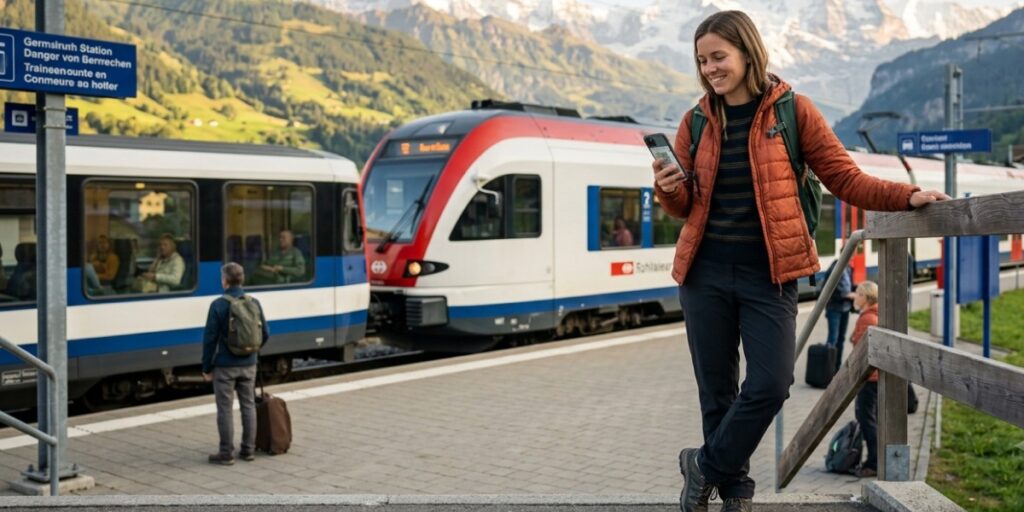
Think of this as the two minute Europe travel guide. Shoulder seasons (May–June, September– October) are the sweet spot almost everywhere on this list: good weather, lower prices, thinner crowds. Most of these destinations sit inside the Schengen area, where many nationalities get 90 days visa free across the whole zone, but the UK (Scottish Highlands) has its own separate entry rules, so check both. Trains are brilliant for the Alps and central Europe; budget airlines and rental cars win for Iceland, the Algarve, and the Highlands. Book summer accommodation early for Iceland, the Amalfi Coast, and Lapland’s glass igloos, they genuinely sell out. And pack layers: this list runs from Mediterranean beaches to the Arctic Circle, sometimes in one trip.
So pack your bag. Keep it light. Charge your phone. And get your eSIM plan sorted before you fly. The Airhub app makes it simple: choose a plan, get the QR code, scan it, and go. It’s one less thing to worry about, so you can just enjoy the trip, and really see Europe.
FAQs
1. What are the best places to visit in Europe beyond the big cities?
Some of the best places in Europe are its natural escapes: the Amalfi Coast and Lake Bled for romance, the Algarve and Plitvice Lakes for nature, the Swiss Alps and Scottish Highlands for scenery, and Iceland and Finnish Lapland for once,in,a,lifetime light, midnight sun in summer, auroras in winter.
2. What is the best month to visit Europe?
For most of this list, May–June and September–October hit the sweet spot of good weather, lower prices, and fewer crowds. The exceptions run on their own clock: Lapland is best December–March for snow and auroras, and Iceland’s midnight sun peaks in June–July.
3. How many days do I need for a Europe trip?
Seven to ten days comfortably covers two neighbouring destinations from this list, say Plitvice plus Lake Bled, or the Swiss Alps plus the Amalfi Coast. Iceland’s full Ring Road deserves 7–10 days on its own.
4. What is the best way to stay connected during a Europe trip?
A travel eSIM for Europe is the most flexible option. You activate it before you fly, and your phone connects to local networks the moment you land, no SIM swapping, no roaming shocks, and one regional plan can cover the whole trip.
5. How do I check my phone’s eSIM compatibility?
Most recent iPhones, Samsung Galaxy, and Google Pixel phones support eSIM. You can check the full list on our website, or look in your phone’s settings under mobile/cellular data for an “Add eSIM” option.
6. Can I use the same eSIM in multiple countries?
Yes. Airhub offers eSIMs for 190+ countries, plus regional and multi,country plans, so one Europe plan can cover most of this list without buying again and again. Just confirm non,EU stops like Switzerland, the UK, and Iceland are on your plan’s coverage list.
Leave a Reply