Cruising is the rare holiday where the brochure undersells the logistics and oversells nothing else. Norwegian is having a genuinely good year. Great Stirrup Cay, its private island in the Bahamas, has just opened the Great Tides Waterpark, nearly six acres and 19 waterslides, on top of the 1.4acre pool complex and new pier that landed there in late 2025. Norwegian Luna joined the fleet in April 2026 alongside sister ship Norwegian Aqua, both carrying the Aqua Slidecoaster.
None of which prepares you for the moment on night seven when you discover what’s been quietly accumulating on your onboard account. Cruising has its own vocabulary, its own etiquette, and a short list of costs that nobody mentions until they’re already yours. What follows are the Norwegian cruise tips worth knowing before you board rather than after, including the straight answer about staying connected, which most guides fudge and some get flatly wrong.
Before You Sail
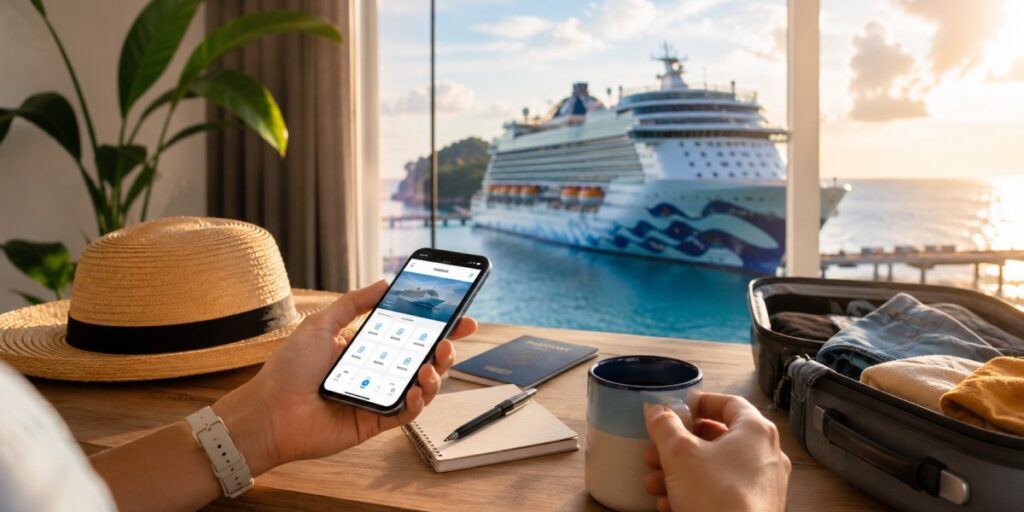
Almost everything that makes a cruise feel effortless is decided weeks before you set foot on the ship. Front,load the admin and you spend embarkation day with a drink; leave it and you spend it in a queue.
Start with the NCL app, on iOS or Android. It runs your online check in, your reservations, and your daily schedule once you’re aboard, and you’ll open it more often than you expect. Set it up at home, not in the terminal on patchy port Wi,Fi.
Then check in the moment the window opens. It runs from 90 days out and closes three days before sailing, and checking in early earns you a better boarding group and a shorter wait at the port. There is no upside whatsoever to leaving it late, you can confirm the current window on NCL’s official site. While you’re there, look properly at More at Sea, NCL’s perks bundle (it was called Free at Sea until recently). It packages beverages, Wi,Fi, shore excursion credits and specialty dining, and it’s excellent value for some travelers and a poor deal for others. The drink package in particular carries a separate prepaid gratuity that catches people out, and we’ll do that arithmetic shortly.
The decision most first timers underweight, though, is the ship itself. Norwegian cruise ships differ enormously from one another. Norwegian Prima has go-karts. Aqua and Luna have the Aqua Slidecoaster, a hybrid rollercoaster and waterslide. Norwegian Getaway runs The Illusionarium dinner theater; Encore has laser tag. Plenty of people pick an itinerary first and end up on a vessel that doesn’t suit how they actually like to spend a week, for a first cruise, matching the ship to your temperament usually matters more than which islands you touch.
One last piece of vocabulary: Freestyle Cruising. No fixed dining times, no assigned tables, no rigid schedule. If the image of a compulsory 6pm seating with strangers is precisely what has kept you off cruise ships, this is the line built to fix that.
What to Pack (and the Dress Code Nobody Explains Properly)
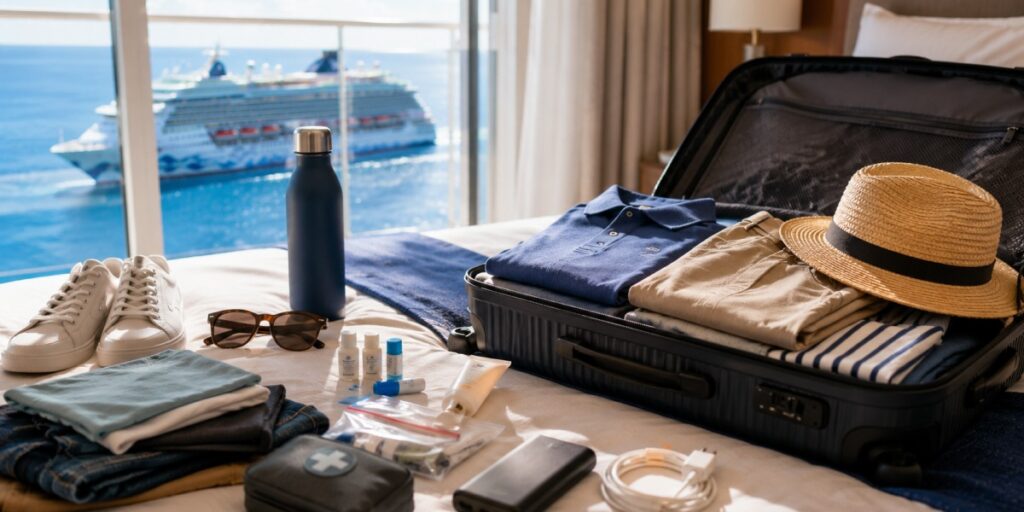
Let’s kill the biggest packing myth immediately, because it’s the one making people drag garment bags through airports for no reason.
There are no formal nights in Norwegian. The dress code is cruise casual, start to finish. Dress up if you enjoy dressing up, but nothing aboard requires it. The single exception is a handful of specialty restaurants, Cagney’s, Le Bistro, which ask for smart casual. The tuxedo stays home.
With that out of the way, a realistic cruise packing list:
- Daytime wear. Shorts, light trousers or jeans, simple tops. Proper layers if you’re sailing Alaska or Northern Europe rather than the Caribbean.
- One smart,casual outfit. A collared shirt and chinos, or a dress or skirt. Enough for a specialty restaurant booking, that’s the ceiling, not the baseline.
- A reusable water bottle. Onboard bottled water is expensive and refill stations are everywhere. Easiest saving on the ship.
- Shore excursion essentials. Sunscreen, sunglasses, a hat, and shoes you can genuinely walk in. Port days involve far more walking than anyone anticipates.
- Tech gear. Charger and a portable power bank. If your phone is doing maps and translation ashore, a flat battery at 2pm ends the day early.
- A small first aid kit. Basic medications, plus something for seasickness. Even glassy sailings catch people out.
The luggage detail is worth internalising: checked bags are taken at the terminal and delivered to your cabin later, sometimes considerably later. Swimwear, medication, sunscreen, one change of clothes. Carry on. Every time.
Embarkation Day
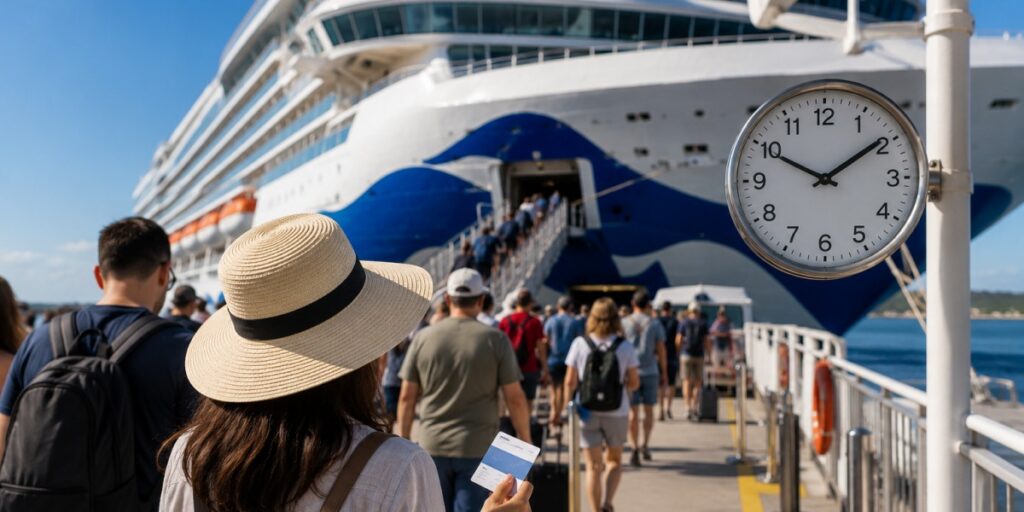
Boarding day has a rhythm, and knowing it is most of the battle.
Your room key is the whole trip in one card. Cabin key, payment method, ID for dining and activities, and your pass to get off and back onto the ship in port. Keep it on you. Replacements come from Guest Services, and that’s a queue you’d rather skip.
Everyone boards and walks straight to the main buffet, which makes it the most crowded room on the ship for about two hours. Other venues are usually open, glance at the daily programme, or just ask a crew member. You’ll eat better and sit down faster. Your cabin, meanwhile, probably isn’t ready yet, so plan on carrying a day bag rather than loitering outside your door.
And on any itinerary that crosses time zones, watch for the change. Your stateroom attendant leaves a card, and the NCL app always shows current ship time. Missing a time zone shift is one of the most common ways people miss an excursion they’ve already paid for.
Dining and Drinking, Freestyle Style
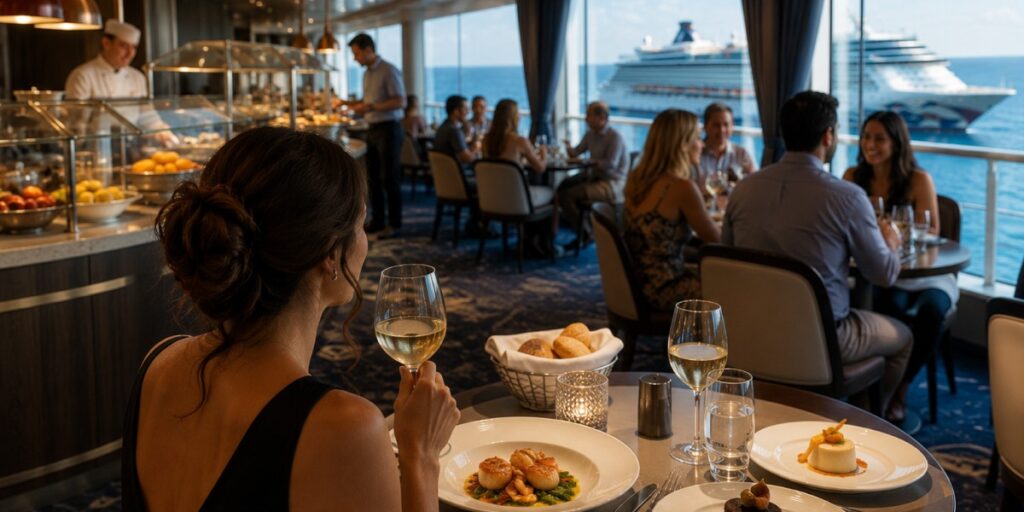
Freestyle Dining means you eat when and where you like, which is liberating right up until you realise the good tables have been claimed by people who planned.
The main dining rooms, Hudson’s and its equivalents, need no reservation and cost nothing extra. Walk in. And a small thing many first,timers never discover: you aren’t limited to one appetiser or one dessert. Torn between two? Order both. Nobody minds.
Specialty restaurants are the opposite story. Onda, Le Bistro, Cagney’s and Teppanyaki fill fast, particularly on short sailings, and reservations open the moment your booking is confirmed. Prime times go first and they go early.
Then there’s the drink package, which deserves actual arithmetic rather than instinct. Drinks bought outside the More at Sea promotion carry a 20% service charge at the point of sale. Take the promotional Unlimited Open Bar and you pay a separate prepaid beverage gratuity instead, as of May 2026, $32 per person per day on sailings of two to five nights, and $28.50 per person per day on sailings of six nights or more. That’s before you’ve had a single drink. If you’re a two,glasses,of,wine,with,dinner traveler, paying as you go is very often cheaper. Run the numbers honestly rather than hopefully.
One more: the buffet’s crush hours are roughly 11am–1pm and 5–7pm. Eat outside them, especially on port days, and it’s a completely different room.
Making the Most of Onboard Activities
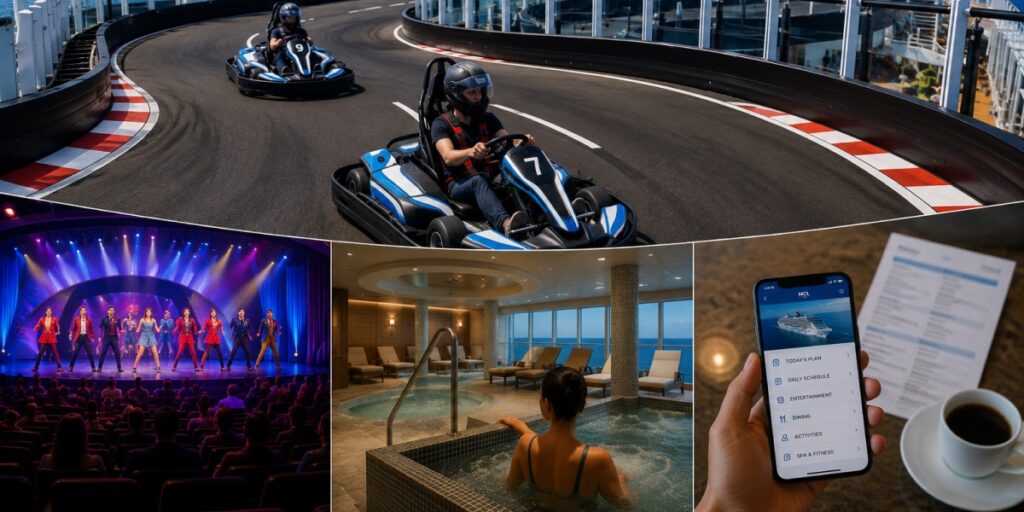
Book the popular things the instant you’re able. Go,karts, laser tag, Broadway,style productions, the comedy clubs, they sell out, and the app is the fastest route to a slot.
Beyond that, the daily programme is the most underused document on the ship. It’s in print and in the app, it lists everything happening that day, and two minutes with it over coffee is the difference between stumbling into things and actually planning your day.
Families get more than they expect here. The youth programmes run scavenger hunts, movie nights and age,grouped activities, which translates into genuine adult downtime. Take it. And if you want the Mandara Spa’s Thermal Suite, the hydrotherapy pools and heated loungers, go on a port day, when most of the ship is ashore and prices are often quietly discounted.
Staying Connected: At Sea vs. In Port
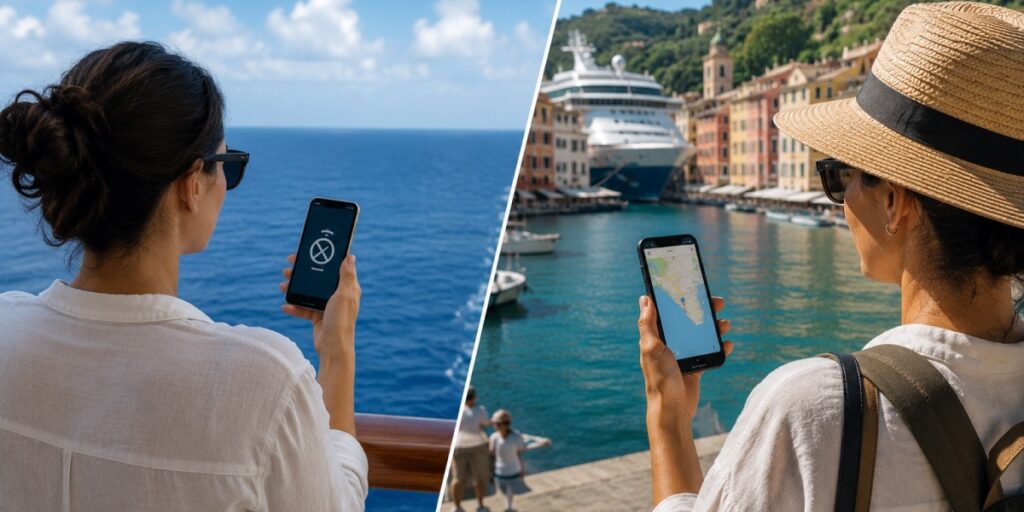
This is the section where most cruise advice, including plenty written by companies that sell eSIMs, becomes misleading. So let’s be direct.
A travel eSIM does not work in the middle of the ocean. eSIMs connect to land-based mobile networks, and once you’re well offshore there is simply no network within reach. Most standard travel eSIM plans exclude maritime coverage outright, and their terms usually say so in writing. Anyone pitching an eSIM as your at sea solution is selling you something it isn’t.
What an eSIM does brilliantly is everything that happens near land or off the ship, which, on most itineraries, is exactly where you need your phone anyway.
| Where you are | What works | What to expect |
| Mid,ocean, sea days | Ship’s Wi,Fi, or the ship’s own maritime cellular network | Ship Wi,Fi packages are the realistic option. Maritime cellular is charged at premium roaming rates. |
| Approaching or leaving port, coastal sailing | eSIM, once a land network is in range | Signals come and go. Fjords and mountainous coastlines can block it even close to shore. |
| Docked and ashore | eSIM, the best option by far | Full local speeds for maps, translation, rideshares, and messaging, without roaming charges. |
The roaming charge nobody warns you about
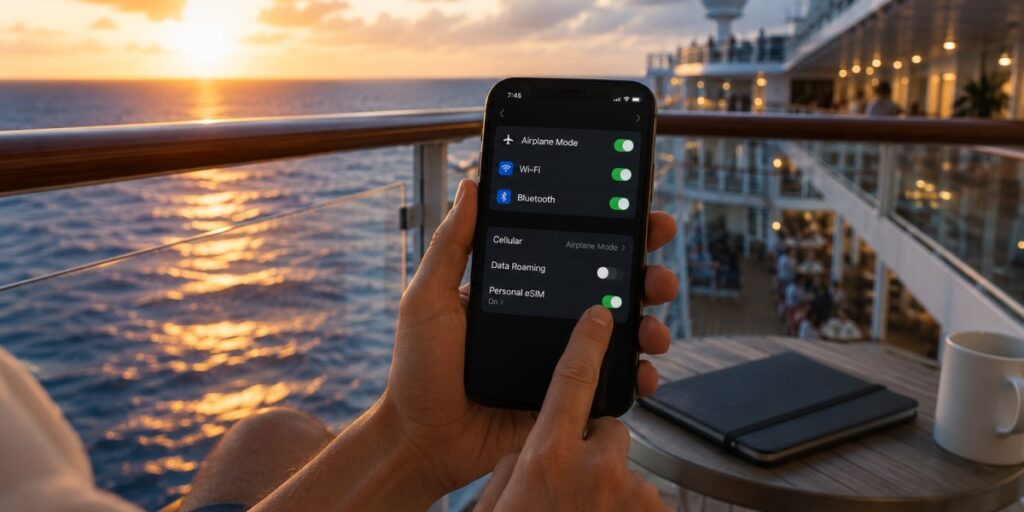
If you read one paragraph on this page, make it this one. Cruise ships operate their own onboard cellular network. Leave your phone roaming as the ship pulls away from the coast and it will find that network by itself, silently, and your background apps will start spending money at maritime roaming rates. Most people learn this several weeks later, when the bill arrives.
The fix costs nothing:
- Airplane mode as you board. Switch Wi,Fi back on separately if you’ve bought a ship package.
- Turn off data roaming for your home carrier line in settings, not just cellular data.
- Enable your eSIM data only once you’re docked and on a local network.
- Back to airplane mode before the ship sails.
Build that habit on day one and the problem never exists. Our guide to avoiding roaming charges has the full settings walkthrough if you want it.
Matching a plan to your itinerary
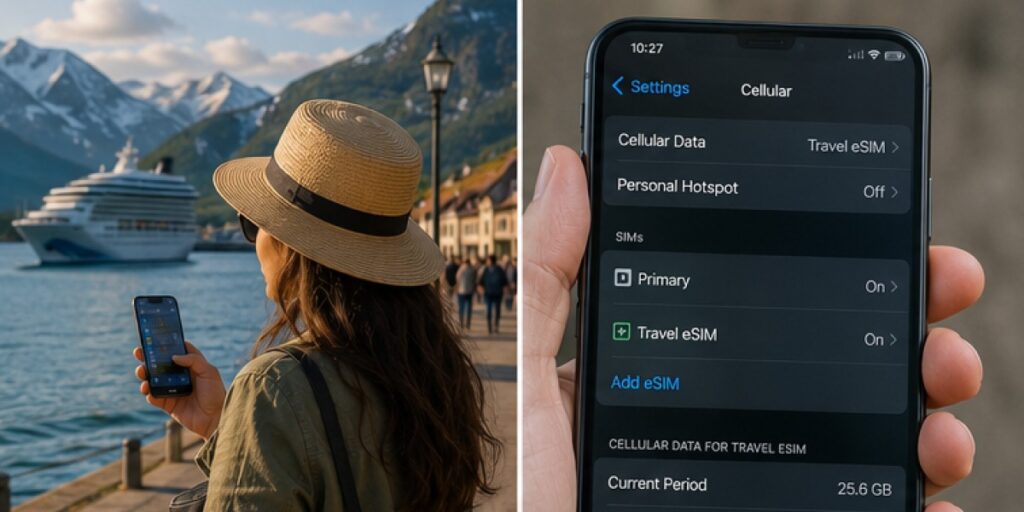
Cruises are not interchangeable when it comes to connectivity, and it’s worth thinking this through before you buy anything at all.
Caribbean sailings cross several countries in a single week, so a regional or global plan beats buying nation by nation, AirHub’s esim options cover multi country routes. Alaska itineraries almost always include Canadian ports, which sit outside the US only plan, so check Canada is in your coverage before you sail. Northern Europe and the fjords have superb coverage in port but lose signal between mountains on scenic cruising days, which is a good argument for downloading offline maps before you step ashore.
And then there’s the honest counterexample: transatlantic and repositioning cruises are mostly sea days. An eSIM will barely earn its keep on one. Buy the ship’s Wi,Fi package instead, we’d rather tell you that than sell you a plan you’ll watch sit idle for six days.
For port,heavy itineraries where you’re ashore most days, an esim with unlimited data takes away the low, level mental accounting of rationing megabytes across a week of maps, translations and photo uploads.
If you’re on a dual SIM phone, one final detail: an eSIM lets your home number stay live for banking codes and two,factor logins while your data runs on the travel plan. Most recent iPhones and flagship Androids handle this fine, but spend thirty seconds confirming on your manufacturer’s support page before you leave.
Shore Excursions
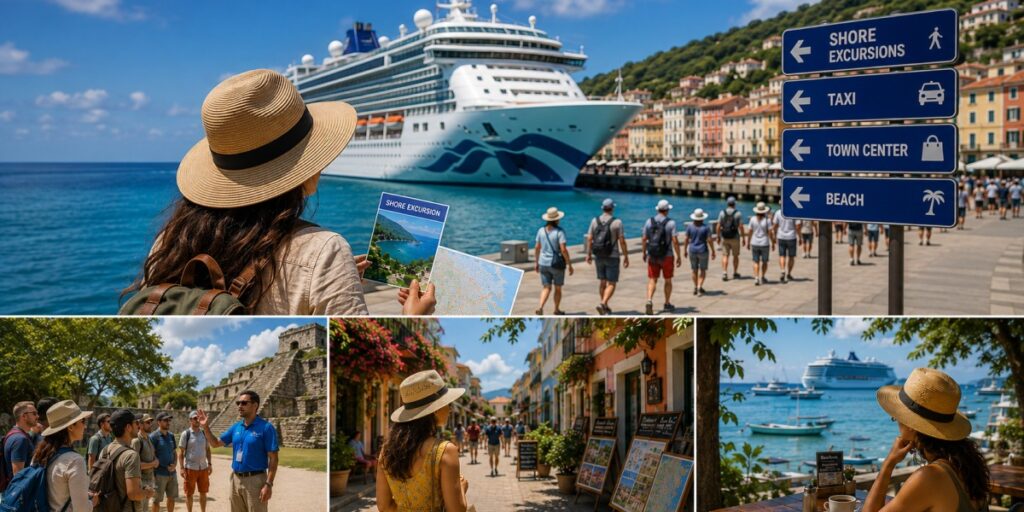
The core trade,off ashore is money against certainty, and it’s worth understanding rather than defaulting.
Book through NCL and you’re buying a guarantee: if your tour runs late, the ship waits, or Norwegian arranges transport to catch it at the next port. For a first cruise, that’s usually worth the premium on its own, the nightmare scenario is watching your ship leave without you.
Book independently and you’ll often save 20–50%, frequently with smaller groups and longer time in port. Reputable local operators are easy enough to find. But the ship will not wait for you, so read reviews properly, check the cancellation policy, and ask explicitly what happens if the ship skips the port altogether.
Worth knowing either way: with your key card and photo ID you can leave and reboard as often as you like during a port call. And resist the urge to book something for every single port day. A packed schedule ashore is exhausting, and the days people actually describe afterwards tend to be the unplanned ones, a wander through town, a café, an hour by the water doing nothing.
Budgeting, Gratuities and Saving Money
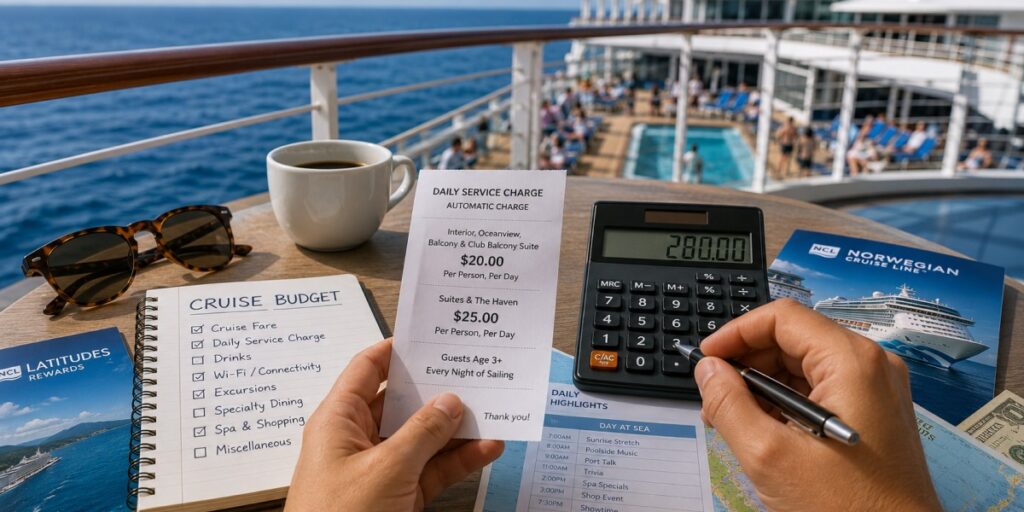
Cruise fares present as all, inclusive and then reveal themselves not to be. Here’s what actually accumulates.
The daily service charge is the big one, and it’s the one first,timers miss. Norwegian applies an automatic charge of $20 per person, per day in interior, oceanview, balcony and Club Balcony Suite staterooms, and $25 per person, per day in other suites and The Haven. It applies to every guest aged three and over, every night of the sailing. For a couple on a seven,night cruise in a standard cabin, that’s roughly $280 on top of your fare. You can prepay it, which locks in the current rate if an increase is announced, and it can be adjusted at Guest Services if you need to. Budgeted for in advance, it’s a non,event. Discovered on the final night, it’s the sour note the holiday ends on.
Beyond that, a few smaller levers. Join Latitudes Rewards before you sail, it’s free, and the points accrue toward things like priority embarkation and dining discounts, so there’s no argument for not doing it. Watch for the unadvertised discounts, too: spa and shop promotions cluster on embarkation day and port days, when the ship is quiet, and they rarely resurface later in the week.
FAQs
1. Is there a dress code on Norwegian Cruise Line?
There are no formal nights. Cruise casual applies throughout, so shorts and a shirt are fine nearly everywhere. A few specialty restaurants, Cagney’s and Le Bistro among them, ask for smart casual, one nicer outfit covers the entire cruise.
2. How much are gratuities on a Norwegian cruise?
NCL charges $20 per person, per day in standard staterooms and $25 per person, per day in suites and The Haven, for every guest aged three and over. It posts automatically to your onboard account, can be prepaid, and is adjustable at Guest Services.
3. Does an eSIM work on a cruise ship?
In port and near the coast, yes, that’s where it works best. Out at sea, no. Travel eSIMs depend on land-based networks, and most providers exclude maritime coverage from their plans. For sea days you’ll need the ship’s Wi,Fi or its maritime cellular network.
4. How do I avoid roaming charges on a cruise?
Airplane mode as you board, and turn off data roaming for your home carrier line, not just cellular data. Switch your travel data only once you’re docked on a local network. Ships run their own cellular network that phones latch onto automatically, at premium rates, if roaming is left enabled.
5. Can I bring my own water bottle on a Norwegian cruise?
A reusable bottle is a smart pack: onboard bottled water is expensive and refill points are easy to find. NCL does restrict bringing beverages aboard, so check the current policy on ncl.com before packing actual drinks rather than an empty bottle.
6. Is the More at Sea drink package worth it?
Entirely a function of how much you drink. The promotional package carries a prepaid beverage gratuity of $32 per person per day on two,to,five,night sailings and $28.50 on sailings of six nights or more, as of May 2026. Drinks bought without the package carry a 20% service charge. Light drinkers usually come out ahead paying as they go.
7. Should I book shore excursions through NCL or independently?
NCL’s cost more but guarantee the ship waits or arranges transport if you’re delayed. Independent operators often save 20–50% with smaller groups, but the ship won’t wait for you. First,timers generally prefer NCL’s; experienced cruisers mix the two.
8. Do I need to tip beyond the service charge?
No. The daily service charge covers standard crew tipping, and bar and spa bills already carry their own service charge. Extra cash for exceptional service is welcome, but it’s genuinely optional.
9. What should I put in my carry-on?
Medication, swimwear, sunscreen, chargers, travel documents, one change of clothes. Checked bags reach your cabin hours after you board, so anything you want that first afternoon travels with you.
Ready to Sail?
Pick the ship rather than just the route. Pack lighter than instinct suggests. Budget the service charge before you go, not last night. And sort your connectivity at home rather than standing in a port terminal trying to buy data on someone else’s Wi,Fi.
For the ports themselves, install your esim before you fly, it activates by QR code and it’s live the moment you step ashore on day one. AirHub covers 190+ countries, so the same app handles the flights on either side of the cruise too.
Leave a Reply