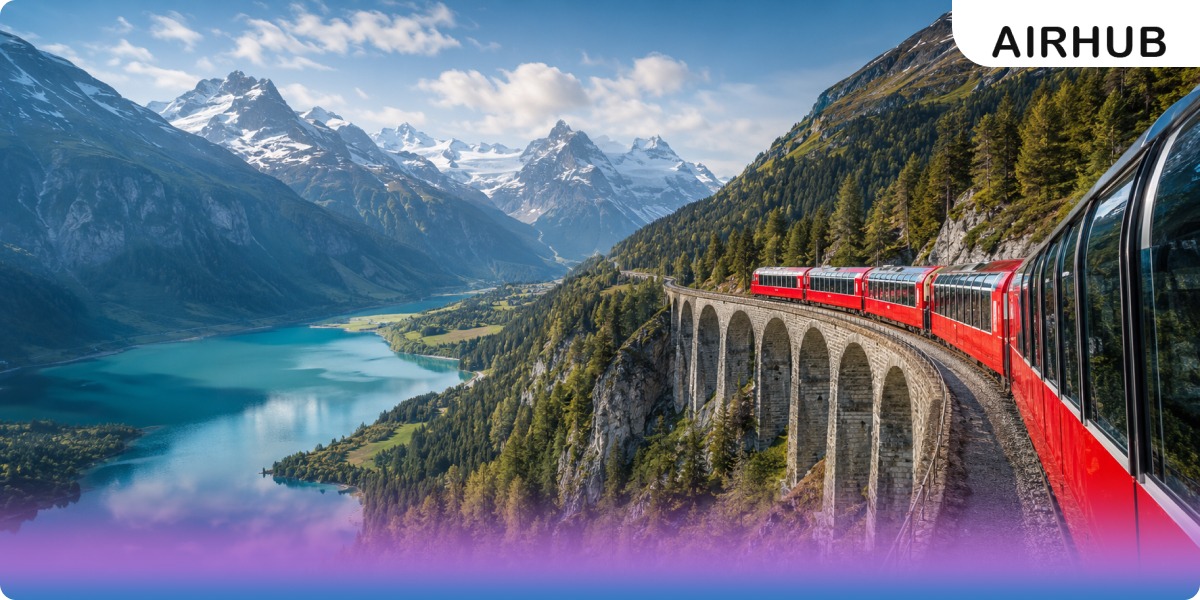
From the Glacier Express to the Bernina, here are Switzerland’s best scenic trains the routes worth planning a trip around, which ones need a seat reservation, how to save with the right pass, and how to keep your phone working through every tunnel.
Most countries treat the train as the dull stretch between the good bits. Switzerland turned that idea inside out. Here the train is the good bit the network runs so dense that barely a valley goes unreached, and a handful of routes exist for no reason other than the view: wall-to-wall panoramic glass, a deliberately unhurried pace, the Alps unspooling on every side. It’s one of the very few places on earth where people plan an entire trip around the simple act of sitting on a train.
What follows is the honest version the scenic trains actually worth your time and money. The headline panoramic lines like the Glacier Express and Bernina Express. The little cogwheel railways that grind up to the ridgelines. And the practical stuff most round-ups skate past: what each ride really costs, when a seat reservation is compulsory, whether a Swiss Travel Pass earns its keep, and how to keep your phone alive through all those tunnels.
Best Scenic Trains at a Glance
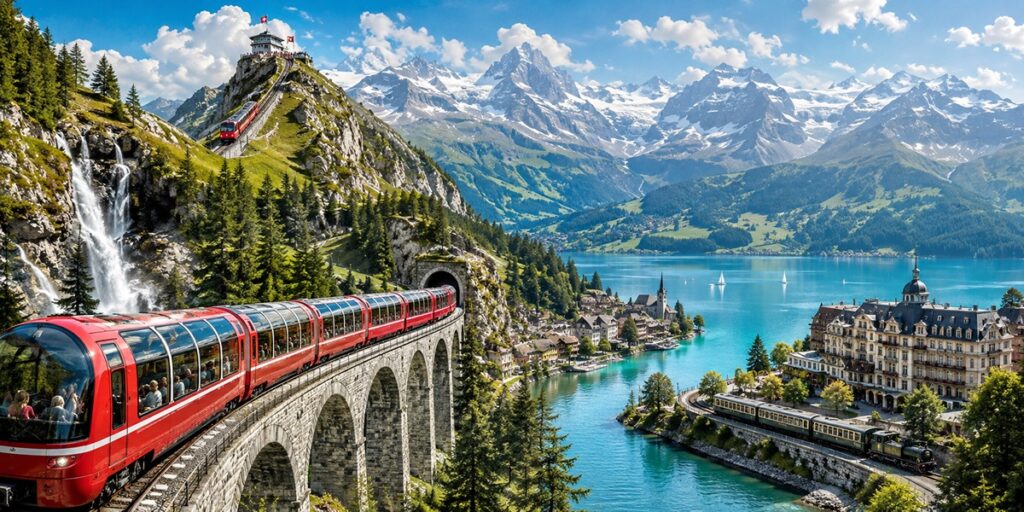
Before the detail, the shortcut match the ride to the kind of trip you’re taking:
- First-timers who want the icon: Glacier Express — the full-day, bucket-list panoramic run.
- Best value and variety: Bernina Express — half the time, arguably more dramatic, and cheaper.
- Short on time: Luzern–Interlaken Express — postcard scenery in about two hours.
- Lakes and Belle Époque glamour: the GoldenPass Line, Montreux to Lucerne.
- Something a little different: Gotthard Panorama Express — a train and a lake steamer on one ticket.
- Families chasing summit views: the cogwheel railways — Jungfrau, Gornergrat, Pilatus, Schynige Platte.
Glacier Express vs Bernina Express: Which to Choose
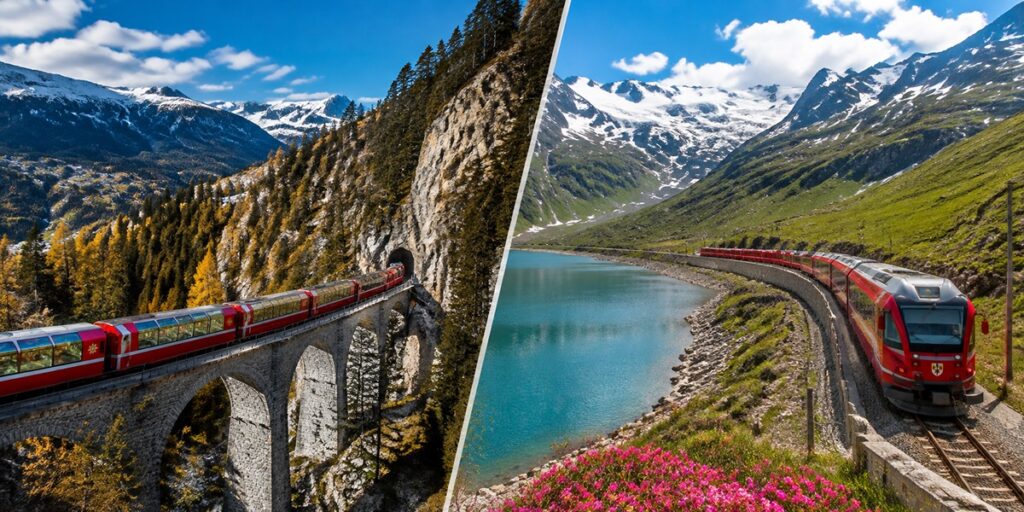
Nearly everyone planning a first Swiss rail trip snags on the same question, so let’s settle it up front an honest side-by-side:
| Glacier Express | Bernina Express | |
| Route | Zermatt ↔ St. Moritz | Chur ↔ Tirano (Italy) |
| Duration | ~8 hours | ~4 hours |
| Distance | 291 km | ~144 km some sources cite ~122 km for the Bernina Express service) |
| Scenery | High Alpine passes, gorges, vineyards | Snowy peaks to palm trees, glaciers, spiral viaducts |
| Onboard food | At-seat multi-course dining | Trolley service (bringing your own is fine) |
| Reservation | Required | Required |
| Best for | The classic, slow, one-seat bucket-list day | Best value and the most dramatic variety in less time |
The quick verdict: take the Glacier Express for the leisurely, do-it-once, watch-the-world-crawl-by day, and the Bernina Express if you’d rather trade a few hours for more drama and a smaller bill. Tempted by both? Split them across different days eight straight hours of window-gazing is about as much as anyone can romantically absorb in one sitting.
The Famous Panoramic Trains
Glacier Express
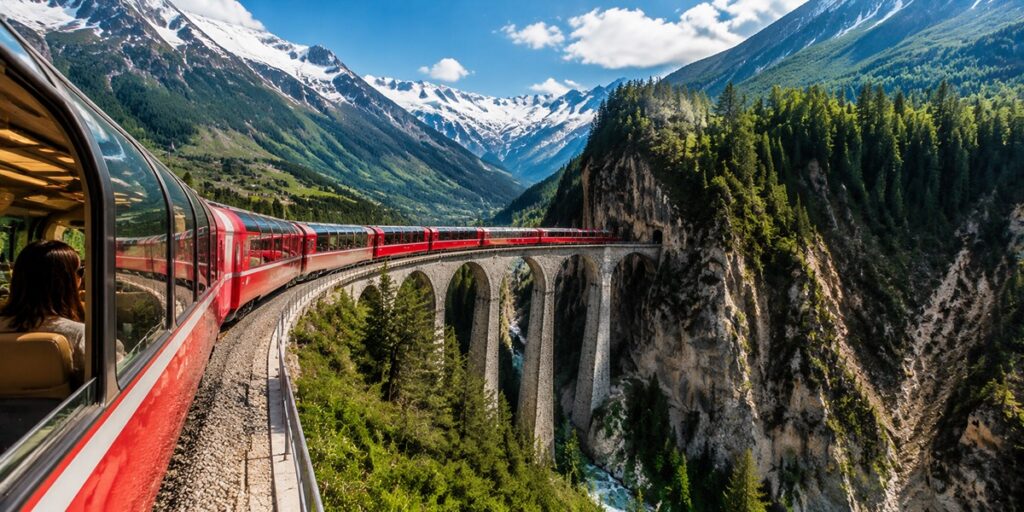
They call it the “world’s slowest express,” and the slowness is the entire point. Between the ski towns of Zermatt and St. Moritz it eases over hundreds of bridges and through dozens of tunnels the Landwasser Viaduct being the money shot while you settle in behind curved panoramic glass, often with a multi-course lunch delivered to your seat.
Route: Zermatt ↔ St. Moritz · 291 km · ~8 hours · Key sights: Landwasser Viaduct, Oberalp Pass, Rhine Gorge · Tickets: ticket + mandatory seat reservation. The Swiss Travel Pass covers the base fare; the reservation is paid separately and it’s required even for pass and eligible-card holders.
Tip: Tight on time or budget? The Matterhorn Gotthard Bahn regional trains cover the Visp–Zermatt stretch with much of the same scenery and no panoramic reservation fee.
Bernina Express
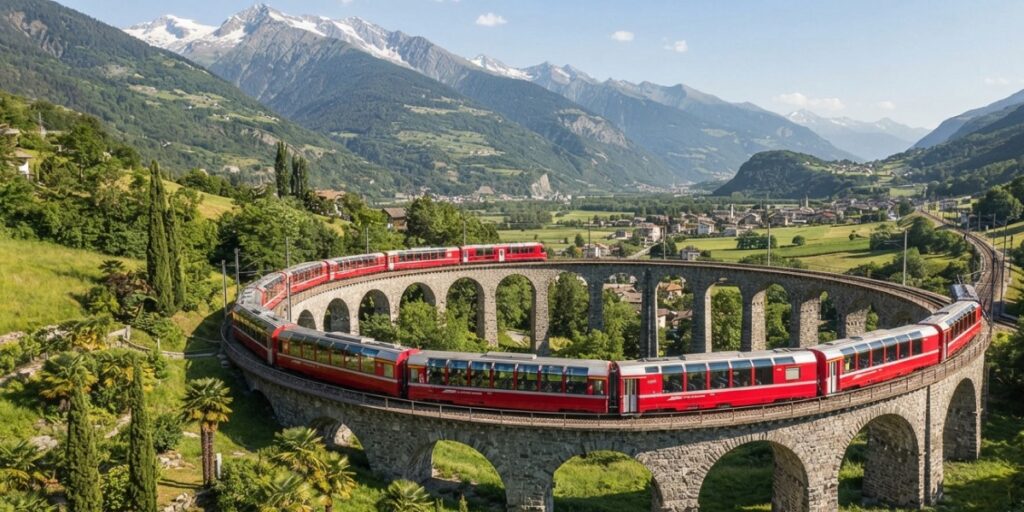
For sheer range per hour, nothing else comes close. In roughly four hours the Bernina Express hauls you from the snowbound Graubünden peaks over the Bernina Pass and down to palm-lined Tirano, just across the Italian border. It’s UNESCO-listed, threads 55 tunnels and 196 bridges, and curls through the spiral Brusio Viaduct on the descent a genuine feat of engineering disguised as a joyride.
Route: Chur ↔ Tirano (Italy) · ~4 hours · Key sights: Brusio Circular Viaduct, Morteratsch Glacier, Bernina Pass · Tickets: ticket + mandatory seat reservation (a supplement on top of the fare/pass).
Tip: Keen photographers and budget travellers can ride the same route on RhB regional trains no panoramic reservation fee, thinner crowds, and some windows that actually open.
GoldenPass Line
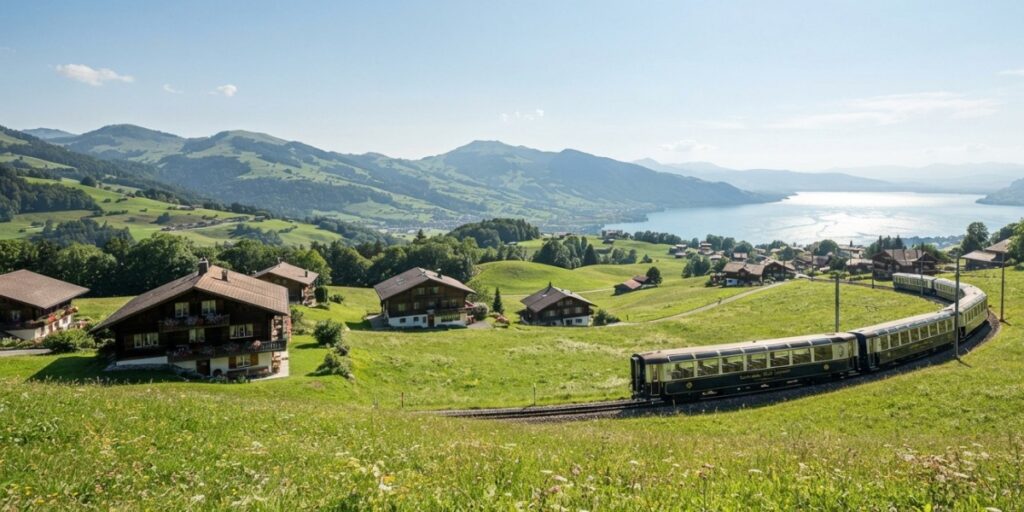
The classic lakes-and-Alps corridor between Montreux and Lucerne, the GoldenPass trades high drama for a gentler beauty: rolling pre-Alpine meadows, storybook chalets, a glittering Lake Geneva finale. If you only do one leg, make it Montreux–Zweisimmen ideally aboard the vintage Belle Époque coaches, modelled on a 1930s luxury train.
Route: Montreux ↔ Lucerne (via Zweisimmen/Interlaken) · ~5.5 hours end to end · Key sights: Lake Geneva, Gstaad, Simmental · Tickets: covered by Swiss Travel Pass; reservation rules depend on the specific service and class.
Note: The GoldenPass Express runs Montreux–Interlaken direct, using gauge-changing technology so you skip the old change at Zweisimmen.
Gotthard Panorama Express
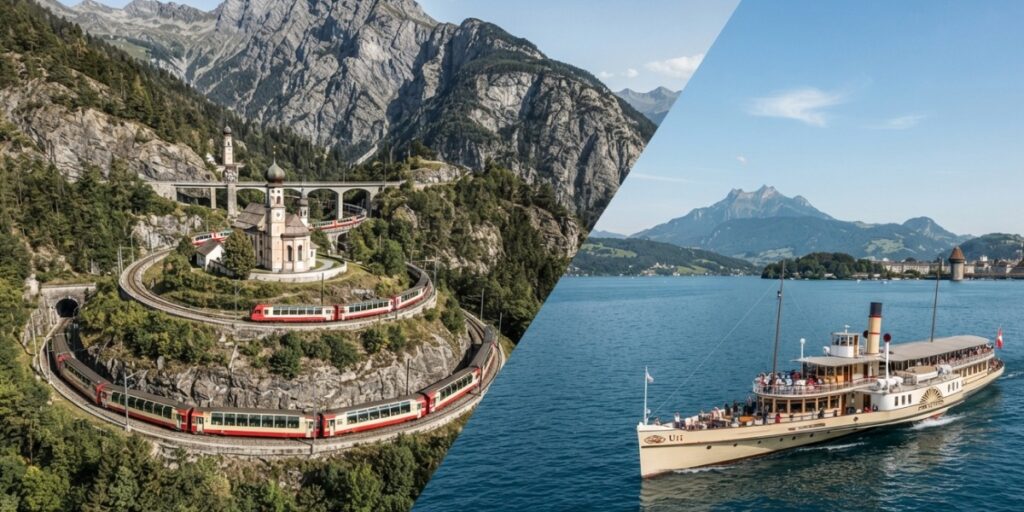
This is the odd one out, in the best way, because it isn’t only a train. You ride the historic Gotthard mountain line through the Alps catching that famous triple glimpse of the little church at Wassen as the track spirals around it then step aboard a vintage-style steamer for the glide across Lake Lucerne. Two completely different journeys, stitched into one ticket.
Route: Lugano/Bellinzona ↔ Lucerne (train + lake steamer) · ~5.5 hours · Key sights: Wassen church, spiral tunnels, Lake Lucerne cruise · Tickets: ticket/pass + seat reservation on the train leg.
Tip: Check the current service and class requirements before travelling, especially on a 2nd-class pass.
Luzern–Interlaken Express
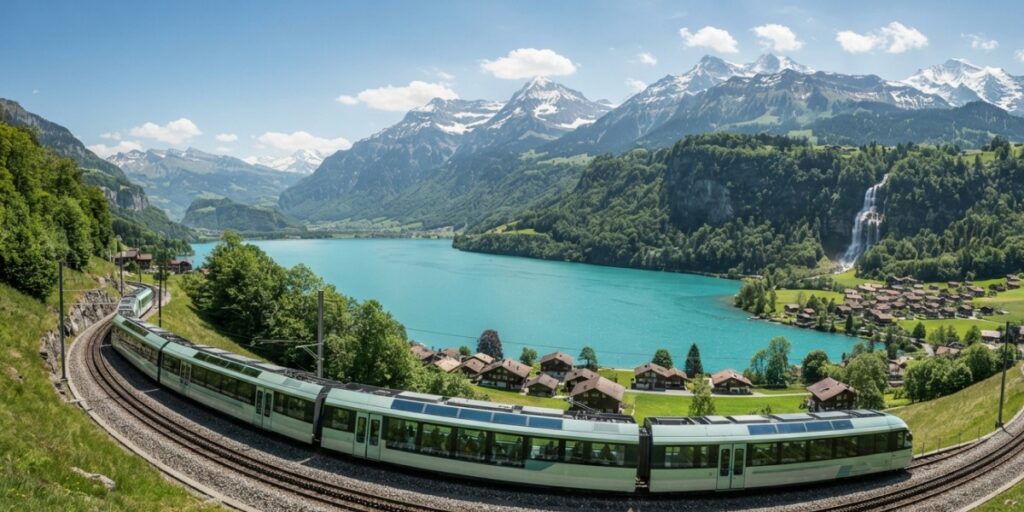
Pound for pound, the best scenery-per-hour on the list. In about two hours it traces a chain of Alpine lakes, gears up the Brünig Pass on a cogwheel stretch, and slides past waterfalls and improbably turquoise water between two of Switzerland’s most-loved towns.
Route: Lucerne ↔ Interlaken · ~2 hours · Key sights: Brünig Pass, Lake Brienz, Bernese Alps · Tickets: covered by Swiss Travel Pass; seat reservation optional.
Tip: Heading Lucerne → Interlaken? Take the right-hand side of the train for the best views the whole way.
Voralpen Express
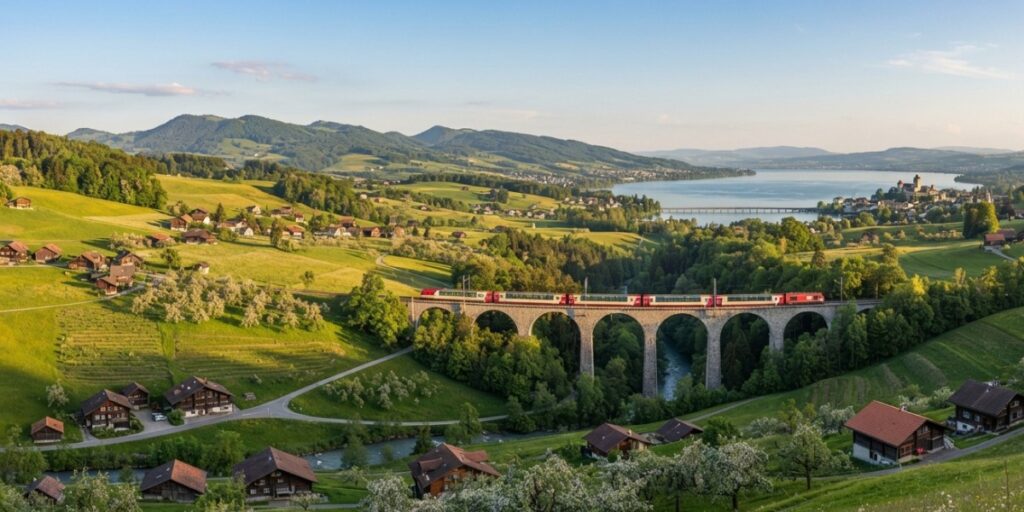
The quiet achiever. Instead of jagged summits, the Voralpen Express serves up rolling hills, orchards, and unhurried villages between St. Gallen and Lucerne a lovely, crowd-free ride that doubles as a genuinely handy east–west link, running hourly.
Route: St. Gallen ↔ Lucerne · 125 km · ~2h15 · Key sights: Abbey of St. Gallen, Sitter Viaduct, Lake Zürich near Rapperswil · Tickets: covered by Swiss Travel Pass; reservation optional.
Tip: No panoramic-train reservation fee here, which quietly makes it one of the best-value scenic rides in the country.
Cogwheel & Mountain Railways
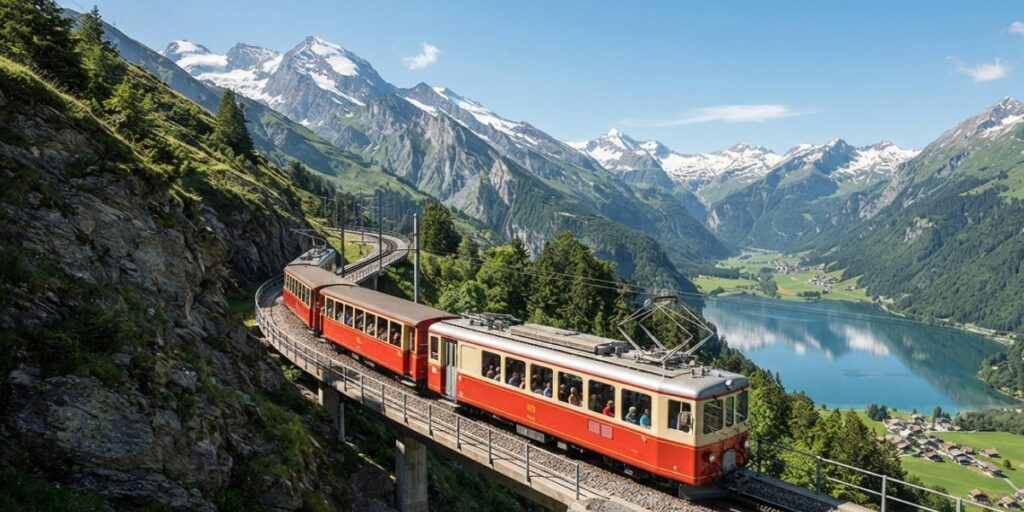
Not every great Swiss ride is an all-day panoramic marathon. These shorter cog and mountain railways trade breadth for altitude, delivering summit-level views in under an hour and most are easy wins with kids in tow.
Jungfrau Railway (to the Jungfraujoch)
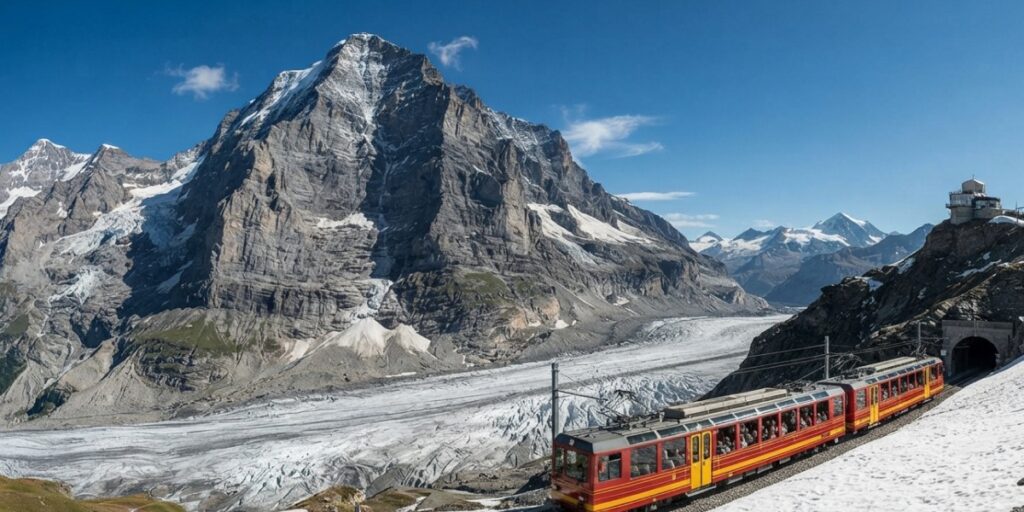
The cogwheel haul up to the Jungfraujoch the “Top of Europe,” and the highest railway station in Europe passing right by the fearsome Eiger north face on the way.
Route: Kleine Scheidegg ↔ Jungfraujoch · ~35 min · Key sights: Eiger, Sphinx Observatory, Ice Palace · Tickets: check the current fare and pass-discount options; seat reservations are mandatory May 1–October 31 on the applicable services.
Note: It’s pricey and entirely at the mercy of the weather check the summit webcam before you commit on a grey day, or you’ll pay a premium to stand in a cloud.
Gornergrat Railway
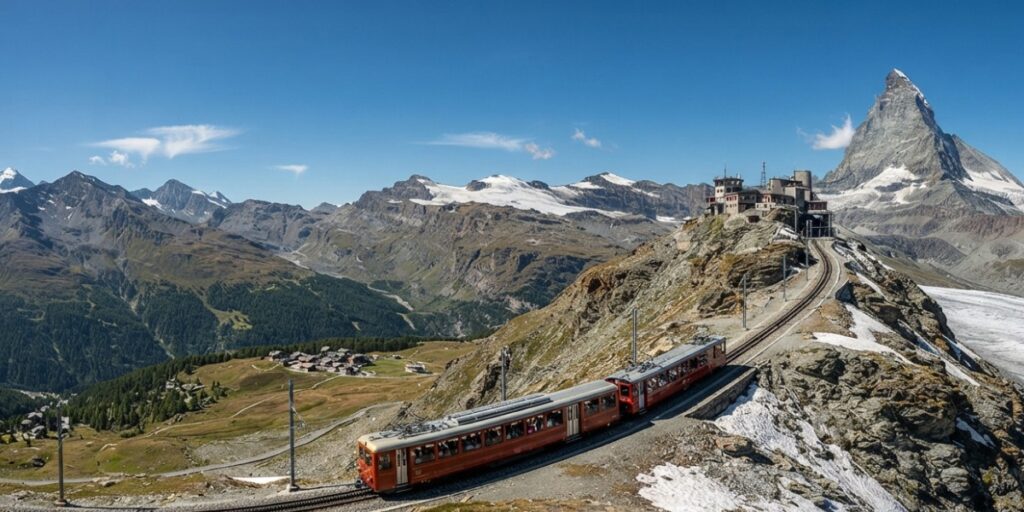
An open-air cog railway out of Zermatt up to a 3,089 m summit with point-blank Matterhorn views and, handily, the way many skiers reach the slopes.
Route: Zermatt ↔ Gornergrat · ~33 min · Key sights: Matterhorn, Riffelalp · Tickets: the Swiss Travel Pass gives a discount rather than full coverage.
Cogwheel Railway up Mount Pilatus
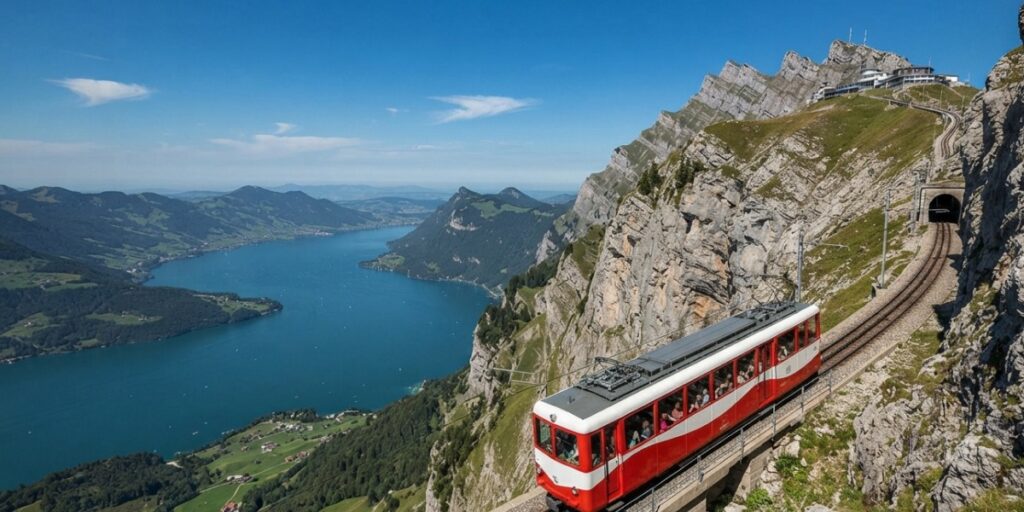
The steepest cogwheel railway in the world, gripping gradients of up to 48% as it claws from Alpnachstad toward the Pilatus summit high above Lake Lucerne. The climb takes around 30 minutes.
Route: Alpnachstad ↔ Pilatus Kulm · ~30 min up · Key sights: Lake Lucerne panorama, the summit ridge.
Tip: Do the classic “Golden Round Trip” cogwheel up, cable car down (or the reverse). The cogwheel line runs seasonally, generally May–November, conditions permitting.
Schynige Platte Railway
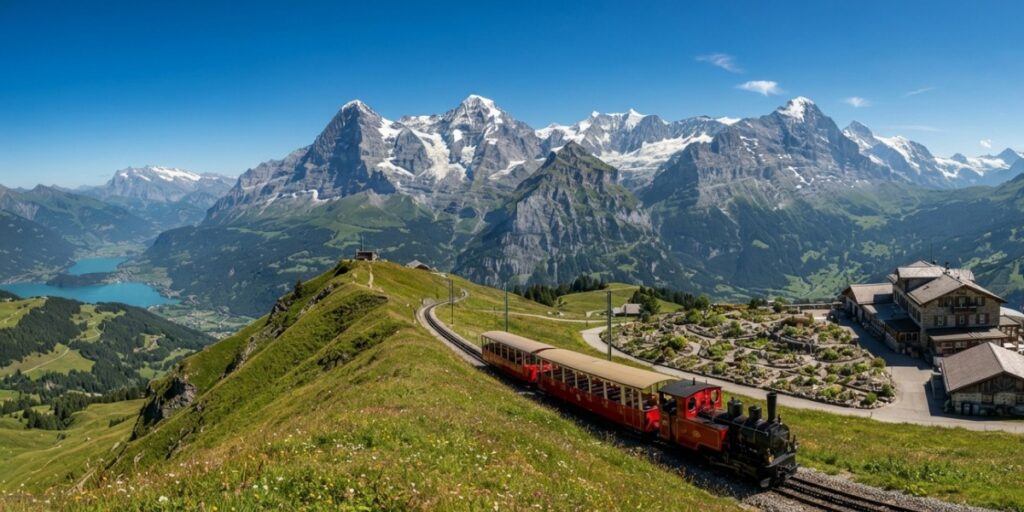
Unashamed Swiss nostalgia: a vintage cog railway from Wilderswil up to a 1,967 m ridge, where a historic Alpine botanical garden frames a head-on view of the Eiger, Mönch, and Jungfrau.
Route: Wilderswil ↔ Schynige Platte · ~50 min · Key sights: Bernese Oberland panorama, Alpine garden · Tickets: check current mountain-railway discounts for your pass. Summer-only confirm the current timetable before planning around it.
Wengernalpbahn
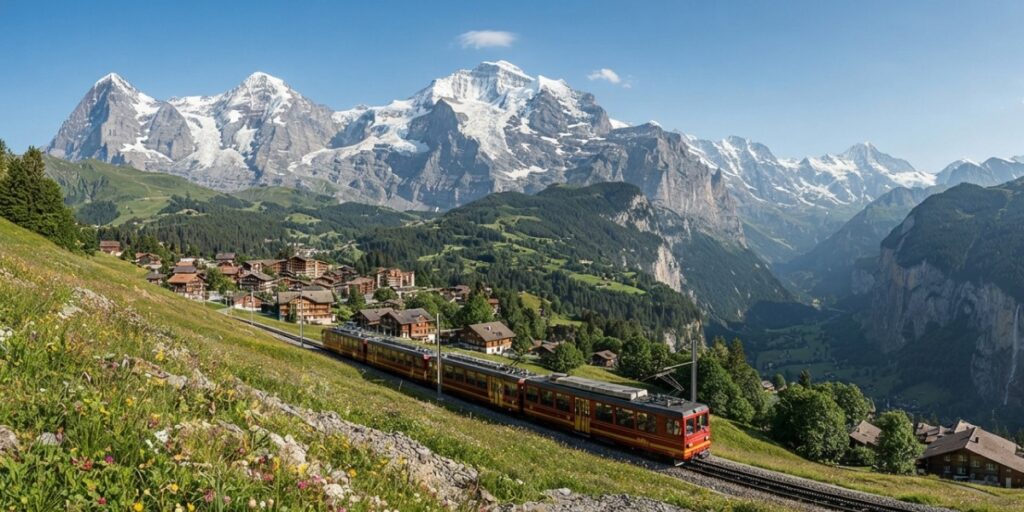
The world’s longest cogwheel railway, linking Grindelwald and Lauterbrunnen via Kleine Scheidegg and the car-free village of Wengen, with the Eiger–Mönch–Jungfrau trio in frame for much of the ride.
Route: Grindelwald ↔ Lauterbrunnen via Kleine Scheidegg · ~42 min (Kleine Scheidegg–Lauterbrunnen) · Key sights: Wengen, Eiger, Lauterbrunnen valley.
See It All: The Grand Train Tour of Switzerland
Can’t choose? You don’t have to. The Grand Train Tour of Switzerland is a ~1,280 km signposted route that strings the best lines together the Glacier Express, Bernina, GoldenPass and Gotthard Panorama among them into one epic loop across four language regions, five UNESCO World Heritage sites and 11 lakes.
It isn’t a single train or a fixed departure. You hop on and off the segments in whatever order suits you, which makes it the natural backbone for anyone planning a proper rail tour of Switzerland. The easiest way to do it: a Swiss Travel Pass covering the relevant travel, with seat reservations added separately where required.
A first-timer’s ~7-day version: Lucerne → GoldenPass to Montreux → across to Zermatt (with a Gornergrat detour) → Glacier Express to St. Moritz → Bernina Express down to Tirano and back. That single loop hits the headline scenery without ever doubling back.
Map: How the Swiss Rail Network Fits Together
Switzerland’s network is dense and beautifully interconnected nearly everywhere on this list joins up without a car. The clearest way to see how the routes link is the official SBB journey planner and network map.
As a mental model, the scenic network clusters around three hubs:
- South-east — Zermatt, Chur & St. Moritz: Glacier Express and Bernina Express territory, plus the Gornergrat climb out of Zermatt.
- Centre — Interlaken & Lucerne: the busiest cluster, feeding the GoldenPass, Luzern–Interlaken Express, Gotthard Panorama, and the Jungfrau, Pilatus, Schynige Platte and Wengernalp mountain railways.
- West — Montreux & Lake Geneva: where the GoldenPass ties the centre to the French-speaking lakeside.
Tickets & Passes: How to Ride for Less
Swiss rail is glorious and, let’s not pretend otherwise, expensive so how you buy can matter as much as which train you catch. The main ways to soften the blow:
Swiss Travel Pass. Unlimited travel on trains, buses and boats for a set run of consecutive days (3, 4, 6, 8 or 15), plus free entry to 500+ museums, and it covers the panorama trains excluding seat reservations and supplements. Most mountain excursions get up to 50% off rather than full coverage. For 2026, adult 2nd-class prices run CHF 254 (3 days), CHF 309 (4 days), CHF 399 (6 days), CHF 439 (8 days), and CHF 499 (15 days). Doing several of these rides in one trip? It usually pays for itself.
Swiss Half Fare Card. CHF 150, valid one month, cutting fares roughly in half across trains, buses, boats, many mountain railways, and local transport. It shines on longer trips made of lots of individual journeys rather than one intensive touring week.
Eurail / Interrail. If Switzerland is one leg of a bigger Europe trip, these cover the eligible rail fare but some panoramic trains still need a separate seat reservation or supplement.
The regional-train hack. The panoramic “Express” trains share their tracks with ordinary regional trains. Take the regional version on the Bernina or Glacier corridor and you skip the panoramic reservation fee, sidestep the crowds, and can hop off in the towns along the way. You give up the giant glass roof but not a single mountain.
Which pass is right for you comes down to how many routes you’ll ride. Heavy itinerary → lean toward the Swiss Travel Pass. Two or three marquee routes → compare a Eurail flexi pass or point-to-point fares. It’s a trade-off to weigh against your own route list, not a one-size-fits-all answer. For live fares and booking, use the official SBB and railway sites for your route.
Best Time of Year to Ride
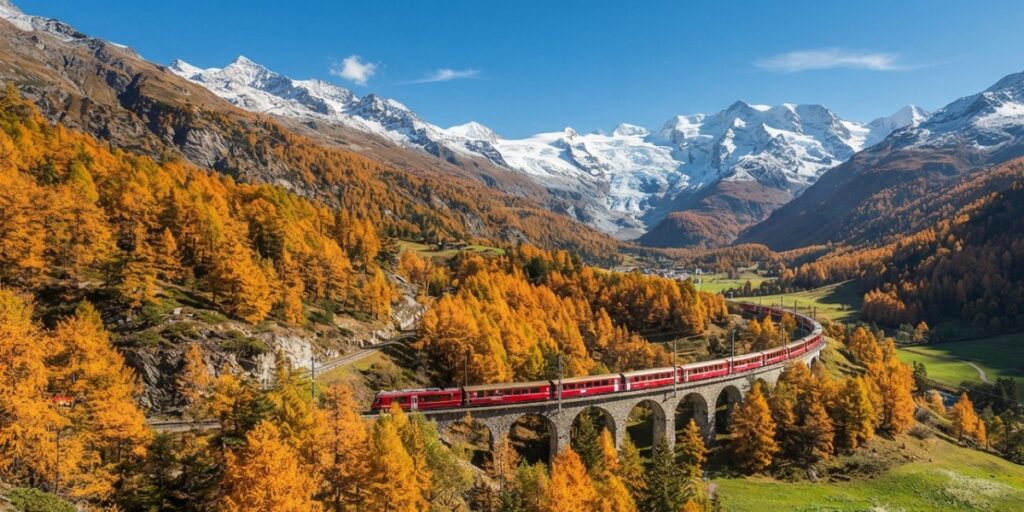
There’s no wrong season here, only different moods. Winter is the full snow-globe fantasy and on the Glacier Express, off-season reservation fees can be cheaper too. Autumn sets the larch forests ablaze in gold, especially along the Bernina and Albula lines. Summer is when the open-air and high-altitude rides come into their own several cog railways and seasonal services run mainly from spring through autumn. Spring is the quiet, green, low-crowd window on the marquee routes.
Whatever the season, double-check current-year operating dates for the seasonal lines before you build a trip around them they can shift slightly year to year.
Staying Connected on the Rails
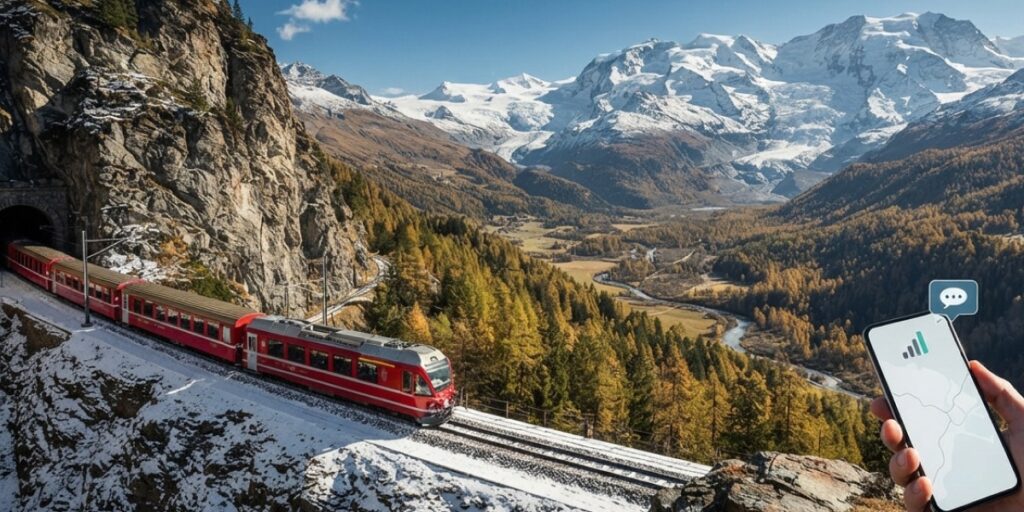
Here’s the thing nobody warns you about on the platform: the onboard Wi-Fi is a lottery. These routes spend serious time buried inside mountains and crossing remote passes, so coverage genuinely comes and goes usually right at the moment you want to check a connection, send a photo home, or pull up your next reservation.
Two moves keep it painless:
Download before you climb. Save offline maps for your route and cache the day’s SBB journey plan while you’ve still got signal.
Use a travel eSIM. Rather than paying your home carrier’s roaming rates for a week of maps and photos, a Switzerland eSIM gives you local data the moment you land. If Switzerland is one stop on a wider European trip, a Europe eSIM covers the neighbouring countries the Bernina and Mont Blanc lines cross into.
Install it before you leave, pull down your maps, and you’re sorted from the first station to the last. New to eSIMs? Here’s how to install one and a quick device compatibility check.
FAQ
1. Which is the most scenic train in Switzerland for first-timers?
The Glacier Express and Bernina Express are the two icons. For the full, slow, bucket-list day, take the Glacier Express; for the most dramatic variety in less time, take the Bernina Express.
2. Do I need a seat reservation on Switzerland’s scenic trains?
It depends on the service. The Glacier Express requires one; other scenic services have their own rules, so check the specific train before travelling. A Swiss Travel Pass does not automatically include the required seat reservations.
3. Are the scenic trains covered by the Swiss Travel Pass?
The pass covers travel on the panorama trains but excludes seat reservations and supplements. Many mountain excursions get a discount rather than full coverage.
4. Which scenic train is best if I’m short on time?
The Luzern–Interlaken Express folds lakes, a cogwheel pass, and waterfalls into about two hours. The Voralpen Express (St. Gallen–Lucerne, ~2h15) is another gentle option.
5. What’s the difference between the GoldenPass Line and the GoldenPass Express?
The GoldenPass Line is the classic scenic corridor connecting Montreux, Zweisimmen, Interlaken and Lucerne (with a change at Zweisimmen). The GoldenPass Express runs Montreux–Interlaken direct, using gauge-changing technology to avoid that change.
6. How many days do I need for the Grand Train Tour of Switzerland?
The tour covers around 1,280 km across eight sections. How long depends on how many stops you make anywhere from a packed week of continuous travel to a slower loop with several overnight stays.
7. Will my phone work on the trains through the tunnels?
Coverage comes and goes in tunnels and remote mountain areas, and the onboard Wi-Fi is unreliable. Download offline maps and keep your journey info available offline; a travel eSIM is the most dependable way to have mobile data between stations without roaming charges.
Leave a Reply