Almost every guide to choosing an eSIM for international travel skips the first question worth asking: whether you need one at all. Depending on your home carrier and where you’re headed, you might already be covered and a page selling eSIMs isn’t usually where you’ll hear that said out loud.
So we’ll start there, then move through the things that genuinely differ between providers. What a plan costs. Which network you actually end up roaming on. Whether you can tether a laptop. What happens the moment your data runs out.
That first one deserves a warning. Published prices for what is functionally the same product currently range by a factor of six, and the reasons behind that spread are rarely visible anywhere near the buy button.
Do You Actually Need One?

There are four situations where the honest answer is no, or probably not.
- Your home plan may already cover it: A number of US and UK plans include international data at no extra charge, and people on those plans buy travel eSIMs they never needed with some regularity. T-Mobile publishes a guide explaining why many travelers don’t need one at all thanks to built in roaming a carrier being rather straighter about this than most sellers manage. Read your own plan’s international terms before spending anything.
- EU residents travelling within the EU are already sorted: Roam Like at Home means your domestic allowance works at domestic rates across the EU and EEA. Buy nothing.
- Long stays change the maths entirely: Past roughly a month in one country, a local SIM or local eSIM picked up on arrival is usually cheaper and comes with fewer restrictions. That’s especially true across Southeast Asia, where local prepaid data costs very little. Travel eSIMs are designed around weeks, not seasons.
- And if your phone doesn’t support eSIM: the decision isn’t yours to make a physical travel SIM is the answer, which is worth knowing before you spend twenty minutes comparing plans.
Everybody else travelers from outside the EU, anyone hopping between countries, anyone whose carrier bills a daily roaming fee is precisely who these products were built for.
Will Your Phone Work?
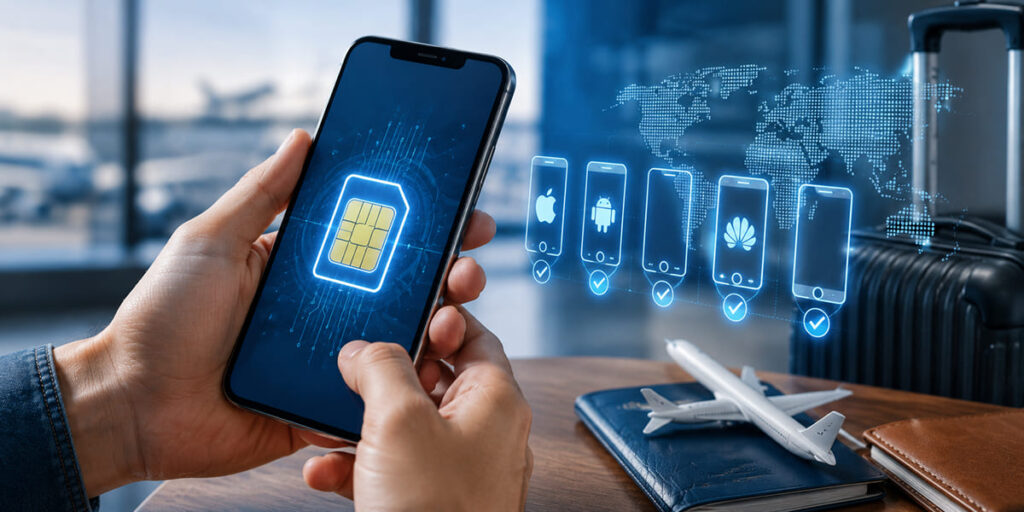
Most modern phones do. A meaningful minority don’t. The check takes ten seconds.
Dial *#06#. An EID number appearing alongside your IMEI means you’re covered. You can also look under Settings → Cellular → Add eSIM on iPhone, or Settings → Connections → SIM Manager on most Androids.
Broad compatibility started with the Google Pixel 2, then the iPhone XS, then the Samsung Galaxy S20. It’s been close to standard on flagships ever since but “close to standard” isn’t universal, and the gap catches people out. A great many mid-range and budget Android handsets still ship with no eSIM support whatsoever. Some carrier-locked phones refuse third-party profiles outright. Certain models sold in mainland China have no eSIM at all.
One shift deserves its own note. US iPhones have been eSIM only since the iPhone 14, with no physical SIM tray at all. The iPhone 17 line extends that to around a dozen markets, and the iPhone Air has no tray anywhere it’s sold. That quietly invalidates the standard advice about keeping your physical SIM as a backup on those handsets, there’s nothing to keep. The upside is that modern iPhones run two eSIMs simultaneously, so your home line and a travel plan can sit side by side.
Our eSIM compatible devices list has the model-by-model detail. And if your phone doesn’t support eSIM, the answer is a physical travel SIM. Not a new phone.
What Travel eSIMs Cost
This is where the market gets genuinely odd.
Take a common benchmark roughly 10GB across Europe for 30 days and published prices from major providers run from about $14 to $94. Nearly a sevenfold spread for what is, from the travelers side of things, the same product.
Some of that gap is real. Some of it isn’t.
Aggregator marketplaces resell wholesale capacity and cluster at the bottom, occasionally advertising rates as low as $0.10 per GB on large regional bundles. Direct-to-consumer brands sit in the middle, generally $18–$37 for that benchmark, and usually justify it with better apps and support. Unlimited-data providers sit highest Holafly’s unlimited Europe plans start around $74.90 for 30 days because what you’re paying for is the absence of a cap rather than a larger allowance. And long-validity plans look expensive until you divide by the days; a 180-day plan at $94 is nothing of the sort.
At the small end, prices converge much more tightly. Airalo sells 1GB Turkey packs at around $4.50. Saily starts near $3.99 for 1GB over seven days. Holafly’s shortest unlimited plans begin around $19 for five days.
In the meantime, you can browse current esim data plans by destination.
What to Compare Before You Buy
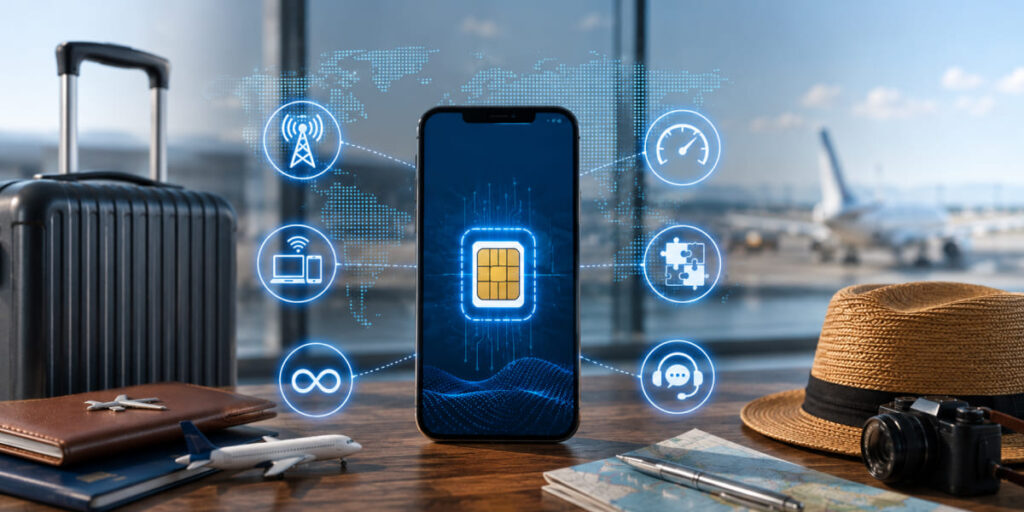
Price is the easy part. Five other things matter more, and most sales pages are conspicuously quiet about every one of them.
- Which network you’ll actually be on. No eSIM provider owns a network what you’re buying is resold roaming access on a local carrier, and which carrier determines your entire experience once you leave the cities. The better providers name their partners; some let the plan hop to whichever operator has the strongest signal. A provider that won’t tell you has told you something.
- Tethering permissions. Check this specifically if a laptop is coming with you or you’re sharing with travel companions. Several providers restrict hotspot use precisely on their unlimited plans, which is inconveniently the plan you’d most want it on.
- What “unlimited” is hiding. Virtually no unlimited plan runs at full speed indefinitely. The standard structure is a daily high-speed allowance followed by throttling, typically somewhere between 384kbps and 1Mbps. That’s perfectly usable for maps and messaging and quietly miserable for video calls. So the number that matters was never the word “unlimited” it’s the daily cap, and the speed underneath it.
- Top-ups and stacking. Can you add data mid-trip without reinstalling the whole profile? Can you stack a second plan onto one that’s still running? On a two-week trip these questions matter far more than they sound.
- Support you can verify independently. App Store ratings and Trustpilot beat testimonials on a provider’s own website, partly because Trustpilot blocks companies from offering incentives to remove or amend reviews. Live chat is worth considerably more than an email address when you’re standing in an unfamiliar airport with no data.
Which Kind of Traveller Are You?
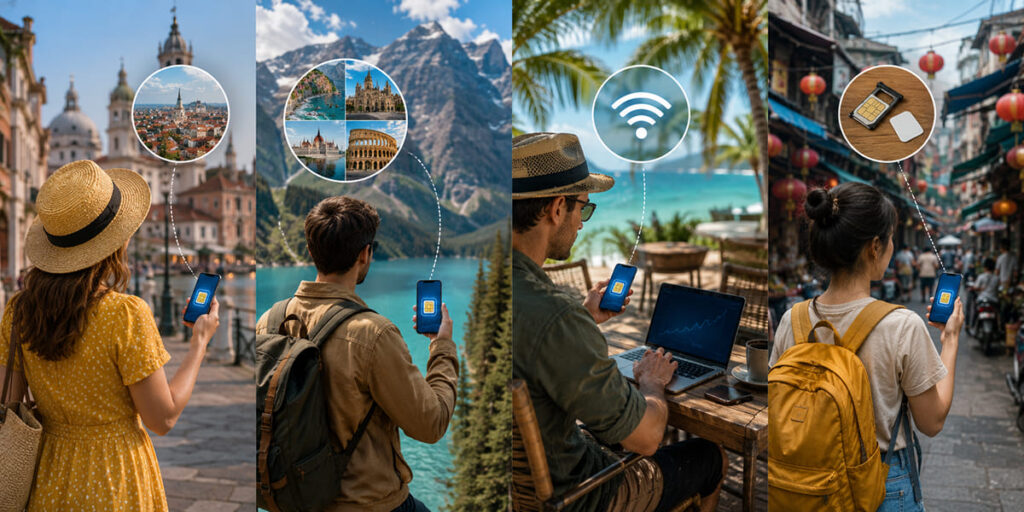
The “best” eSIM depends far more on the shape of your trip than on the brand name. Four rough profiles cover most people.
If you’re taking a short city break in one country, buy a small country-specific plan 1–3GB is plenty. Whatever you do, don’t buy a global plan for a single destination; it’s the most expensive possible way to solve the simplest version of the problem.
On a multi-country trip, a regional plan almost always beats buying three or four separate country plans, with break-even usually arriving at the second country. Read the actual country list rather than the region name, though. Two plans both labelled “Europe” can cover noticeably different maps.
Working remotely? Prioritise tethering permission and a generous high-speed allowance over the headline price. A cheap plan that blocks hotspot use is worth nothing at all if your laptop needs it.
And for a long stay in one country, seriously consider not buying a travel eSIM. A local prepaid plan usually costs less and frequently includes a local number into the bargain.
The Limitations, Honestly
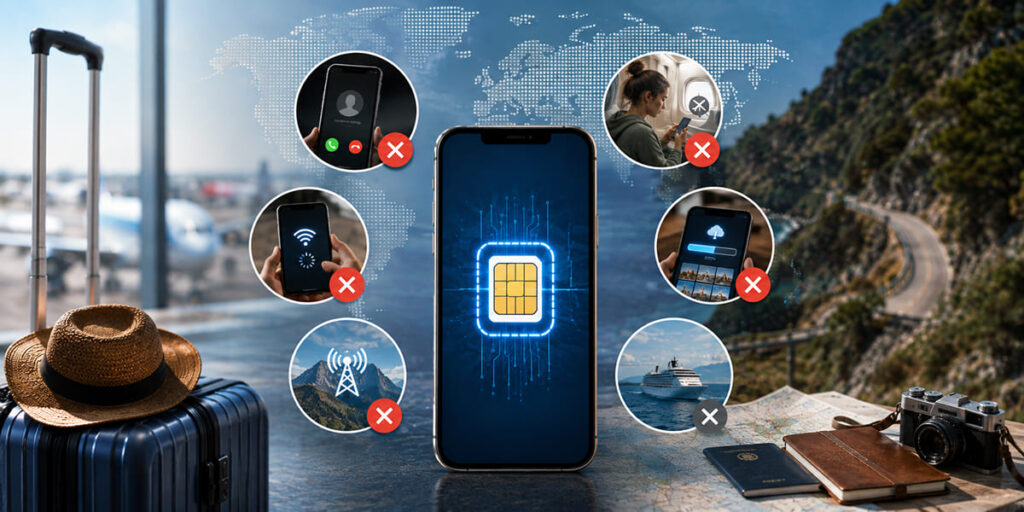
Travel eSIMs are genuinely good products. They’re not a solution to everything, and the drawbacks are much better discovered now than at 11pm in a foreign airport.
Most are data-only. No local number, no native calls or texts. That’s fine for WhatsApp and FaceTime, right up until a restaurant, a driver or your bank needs to reach you or a service insists on sending an SMS code to a local number. If any of that is likely, look for a plan that includes voice and SMS.
Activation needs an internet connection. You can’t install one on arrival without Wi-Fi or an existing signal, which is exactly why the advice is always to install before you fly.
They run through the provider’s app. Activation and usage tracking generally require one, meaning another account and another set of permissions. Worth factoring in if you’re privacy-conscious.
Coverage is only ever as good as the underlying carrier. Rural areas, mountains and open water are weak spots regardless of which logo is on the app. Mid-ocean on a cruise, no travel eSIM works at all that needs the ship’s Wi-Fi or a specialist maritime service.
Allowances are smaller than you’re used to. Most people have unlimited domestic plans and consistently underestimate how fast automatic photo backups can chew through 3GB.
How to Buy and Install
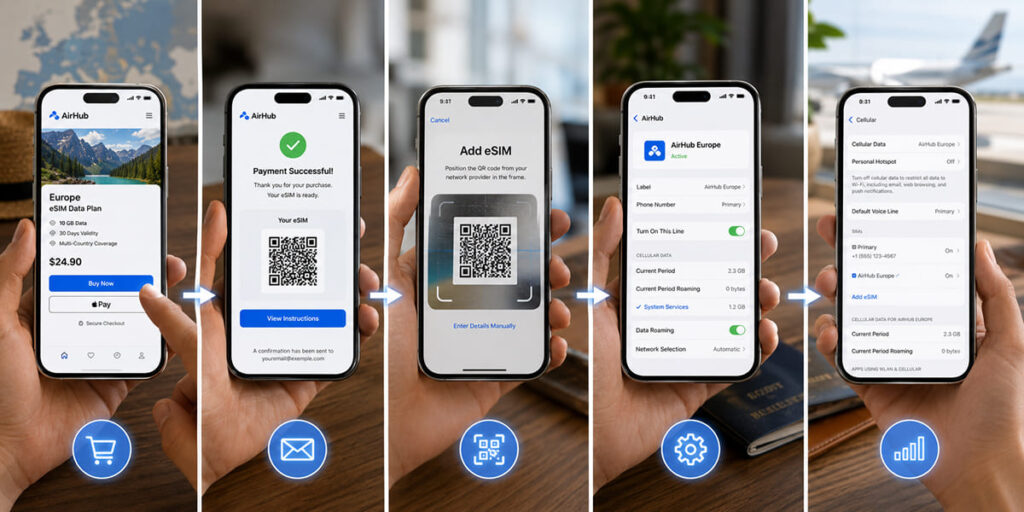
Do this at home, on Wi-Fi. Not in an arrivals hall, jet-lagged, on congested airport Wi-Fi, with a queue building behind you.
- Choose your plan, checking the validity period against your actual trip length rather than your optimistic one.
- Complete the purchase. A QR code and instructions arrive by email, usually within minutes.
- Install the profile. iPhone: Settings → Cellular → Add eSIM → Use QR Code. Most Androids: Settings → Connections → SIM Manager → Add eSIM. Some providers send a manual activation code alongside the QR — keep both.
- Label the line by destination, so it’s still identifiable three trips from now.
- Set your data line to the travel eSIM and switch Data Roaming on for that line only. This is the step people skip, then spend twenty minutes at baggage reclaim wondering why nothing loads.
Our how to install an eSIM guide handles the edge cases, including what to do when a QR code refuses to scan.
Don’t Activate Too Early
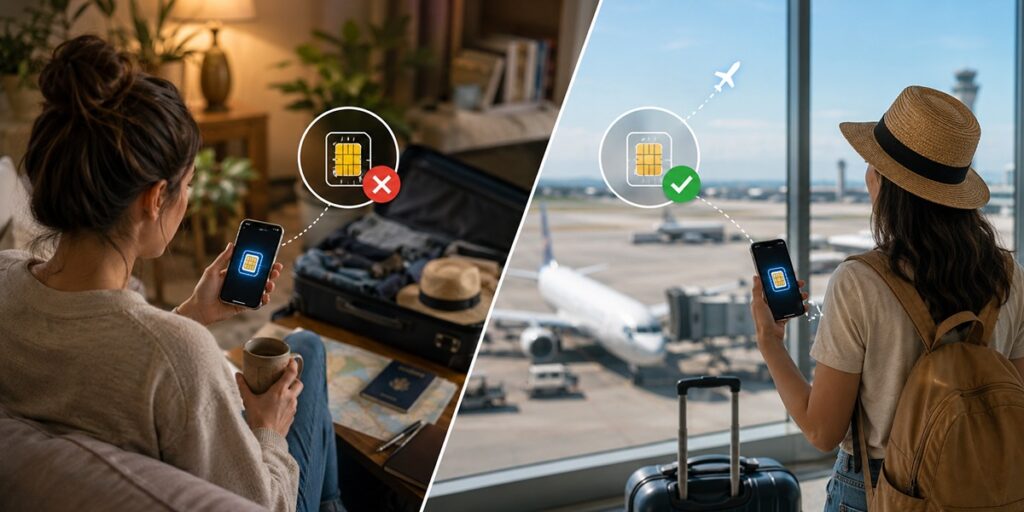
This is the most expensive mistake in the whole category, and it’s barely written about anywhere.
Installing a plan and activating it are not the same thing. Install before you fly that part needs Wi-Fi and absolutely should happen at home. But on a great many plans, the validity period starts the moment the eSIM first connects to a network, not when your plane lands. Switch it on at home “just to check it works” and you may have spent day one of a seven-day plan standing in your own kitchen.
The safe sequence is simple: install at home, leave the line switched off, enable it only once you’ve landed. If you want reassurance the profile is installed properly, confirm it appears in your cellular settings rather than turning it on to find out.
Airhub eSIMs support instant activation after purchase, but the validity period begins when the eSIM first connects to a supported network at your destination, not when you purchase or install it.
Practical Tips That Save Data and Money
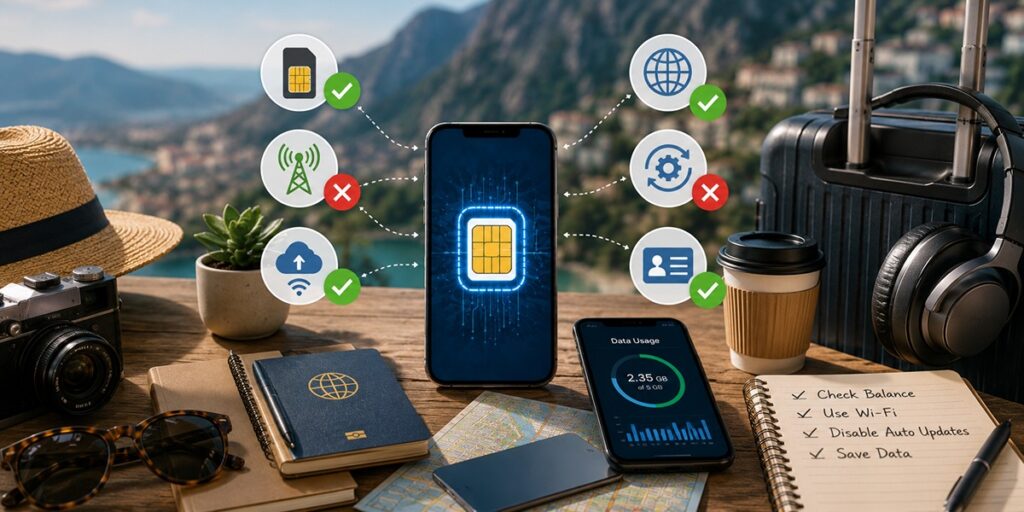
- Don’t delete the eSIM profile when the plan expires. The data running out doesn’t make the profile useless many can be topped up and reused on a later trip. Delete it and you’re reinstalling from scratch next time.
- Turn data roaming off on your home line. Leave it on and your phone may quietly attach to a foreign network alongside your travel plan, which is where the genuinely alarming bills come from. Incoming SMS is free on many home plans and billable on others, so check yours if you’re keeping the home line live for verification codes.
- Watch the tethering trap. Any device connected to your phone’s hotspot treats that connection as Wi-Fi. Which means apps set to “update over Wifi only” will cheerfully pull down a 2GB system update over your travel data without asking. Disable automatic updates on the phone and on anything tethered to it.
- Push the heavy work onto real Wi-Fi. Cloud backups, photo syncing and video calls are the three big consumers by a distance. Hotels and cafés handle them fine use a VPN if you’re touching anything sensitive.
- Glance at your balance every couple of days. Most providers show realtime usage in-app, and running out mid-navigation in a city you don’t know is entirely avoidable.
- Some countries want ID for local SIMs. India, China, Turkey, the UAE, Vietnam and Indonesia all operate KYC rules of one kind or another. Travel eSIMs generally sidestep this because they roam on a foreign network rather than being issued locally but it’s worth knowing if you’re planning to buy locally instead.
FAQs
1. Do I need an eSIM for international travel?
Not always. Check your home plan first some US and UK plans include international data. EU residents travelling within the EU are already covered by Roam Like at Home. For everyone else, a travel eSIM usually beats roaming charges on trips of a few days to a few weeks.
2. How much does an international eSIM cost?
Small plans start around $4 for 1GB. For a benchmark 10GB regional plan over 30 days, published prices across major providers range from roughly $14 to $94, depending on whether you’re buying from an aggregator, a direct brand or an unlimited-data provider.
3. Will my phone work with a travel eSIM?
Dial *#06# — an EID number alongside your IMEI means yes. Most flagships since the iPhone XS, Pixel 2 and Galaxy S20 support eSIM, but many mid-range and budget Androids don’t, and some carrier-locked handsets refuse third-party profiles.
4. Can I keep my own phone number?
Yes. A travel eSIM is a second line, so your home number stays active for calls and texts while the eSIM handles data. Keep data roaming switched off on the home line.
5. Do travel eSIMs include a phone number?
Most are data-only. Messaging apps work fine, but you won’t receive local calls or SMS codes unless the plan specifically includes voice and SMS.
6. Is unlimited data really unlimited?
Not at full speed, with virtually any provider. Expect a daily high-speed allowance followed by throttling, often between 384kbps and 1Mbps. Ask for both numbers before buying.
7. Can I use an eSIM as a hotspot?
Often, but not always — and several providers restrict tethering specifically on unlimited plans. Check before buying if a laptop is travelling with you.
8.When should I install my eSIM?
Install at home over Wi-Fi before you fly, but don’t switch it on until you arrive. On many plans the validity period starts at first network connection, so activating early can waste a day or more.
9. What happens if I run out of data?
Most providers allow in-app top-ups or let you stack a second plan without removing the first. Worth checking before you buy if you’re away for more than a week.
10. Do eSIMs work on cruises?
Not in open water. Travel eSIMs roam on land-based networks, so mid-ocean you’ll need the ship’s Wi-Fi or its maritime cellular service. They work normally in port.
11. Is an eSIM cheaper than roaming?
Usually, though not universally. Some home plans include international data that’s perfectly adequate for a short trip. Look up your carrier’s published roaming rate before assuming otherwise.
Before You Book
Check your home plan first. Confirm your phone supports eSIM. Count the days you’ll actually need rather than the days you might. And if you’re buying unlimited, get the daily allowance and the throttled speed in writing before you pay.
Once you know what you’re after, compare eSIM plans by destination and install before you fly. Trip covering several countries? The eSIM Europe and other regional plans usually work out cheaper than buying each country separately and there’s a dedicated travel eSIM for the USA guide if that’s where you’re headed.
Leave a Reply