Every list of the best places to visit in Europe will tell you Paris is beautiful. Far fewer mention that most French museums close one day a week and it’s rarely the day you’d guess, that watching the sunset from Oia in August is closer to queuing than sightseeing, or that two of the continent’s best-loved destinations sit outside EU roaming which means your phone starts costing money differently the moment you land.
That gap is what this list is for. Ten European destinations, each with the practical detail attached: when to go, how many days you genuinely need, and the one thing worth knowing before you book anything. Two of these places have a real over tourism problem and we’ve said so rather than quietly leaving them off. And at the end there’s a short, honest section on where your existing mobile plan stops working the one part of this we know better than the travel publishers.
How We Picked These Ten
No list of ten covers a continent, so here’s what this one is actually trying to do.
Range, rather than ranking. Three world famous capitals, three places built around landscape instead of architecture, and several that repay a longer stay than most itineraries hand them. Everything here is reachable on a budget flight or a straightforward European rail connection no three-leg transfers. We also deliberately kept two destinations with documented over tourism problems, on the grounds that omitting them would be dishonest and including them without a warning would be worse.
And what this isn’t: a personal favorite piece. We haven’t claimed to have stood in all ten. Where the advice below gets specific, it’s the kind you can check against a tourist board or a train timetable.
At a Glance
| Destination | Country | Best months | Days needed | EU roaming applies |
| Paris | France | Apr–Jun, Sep–Oct | 4–5 | Yes |
| Rome | Italy | Apr–May, Sep–Oct | 3–4 | Yes |
| Santorini | Greece | May–Jun, Sep–Oct | 3–4 | Yes |
| Barcelona | Spain | May–Jun, Sep–Oct | 3–4 | Yes |
| Edinburgh | United kingdom | May–Sep | 3 | No |
| Interlaken | Switzerland | Jun–Sep, Dec–Mar | 3–4 | No |
| Porto | Portugal | May–Jun, Sep–Oct | 3 | Yes |
| Lofoten Islands | Norway | Jun–Aug, Sep–Mar | 5–7 | Yes (EEA) |
| Hallstatt | Austria | May–Jun, Sep | 1–2 | Yes |
| Tallinn | Estonia | May–Sep, Dec | 2–3 | Yes |
The Ten Destinations
1. Paris, France

The clichés about Paris are all true, which is inconvenient for anyone hoping to write about it freshly. The Eiffel Tower, the Louvre, the Impressionists at the Musée d’Orsay, Notre Dame back open after the fire they’re famous because they earn it.
What makes the city work, though, is the walking between them. Le Marais, the Latin Quarter and Saint-Germain each reward an afternoon with no plan attached, and the small squares and food shops you fall into along the way tend to outlast the monuments in memory.
Go April to June or September to October. Avoid July and August, which are hot, crowded, and the stretch when a good number of Parisians leave and smaller restaurants simply shut for the month. Give it four or five days three works, but you’ll feel it.
Worth knowing: book timed entry for the Louvre and the Eiffel Tower well in advance, then check closing days before you build the rest of the itinerary around them. Most French museums close one day a week, commonly Monday or Tuesday, and the number of people who lose a day to this is remarkable.
More on France eSIM plans if you’re building a longer French itinerary.
2. Rome, Italy
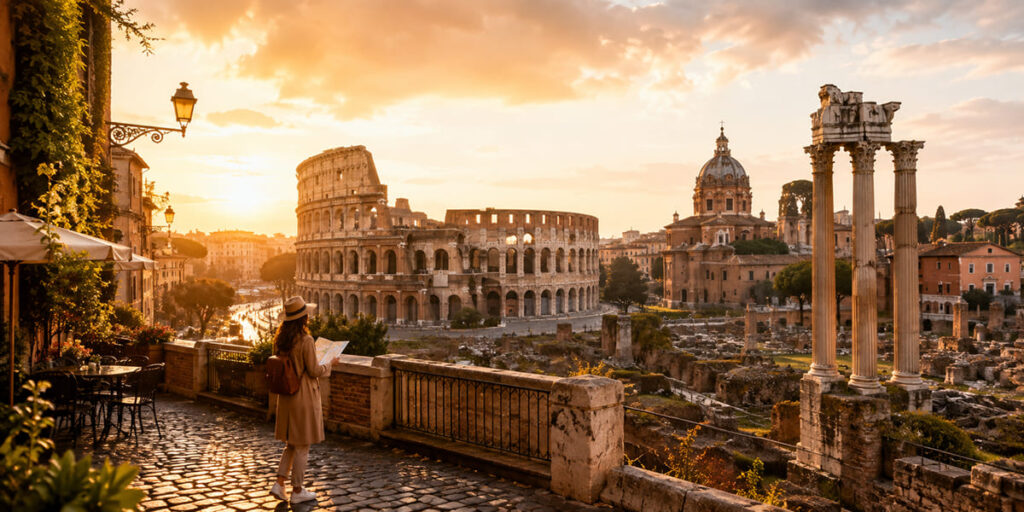
Rome stacks roughly 2,500 years of building on top of itself, and the real pleasure is how casually it does it a 2nd-century column propping up a café awning, a medieval church grafted onto a Roman temple, none of it treated as remarkable by anyone who lives there.
The essentials: the Colosseum, the Roman Forum and Palatine Hill (usually one combined ticket), the Pantheon, and the Vatican Museums with the Sistine Chapel at the end. Cross the river to Trastevere to eat.
Go April to May or September to October August in Rome is genuinely punishing, and many family-run places close for the holidays. Three or four days covers it, more if you want the Vatican properly rather than at a march.
Worth knowing: Colosseum entry is timed and sells out weeks ahead in season. Book that first, before flights if you can, and let the slot you get shape everything else.
3. Santorini, Greece
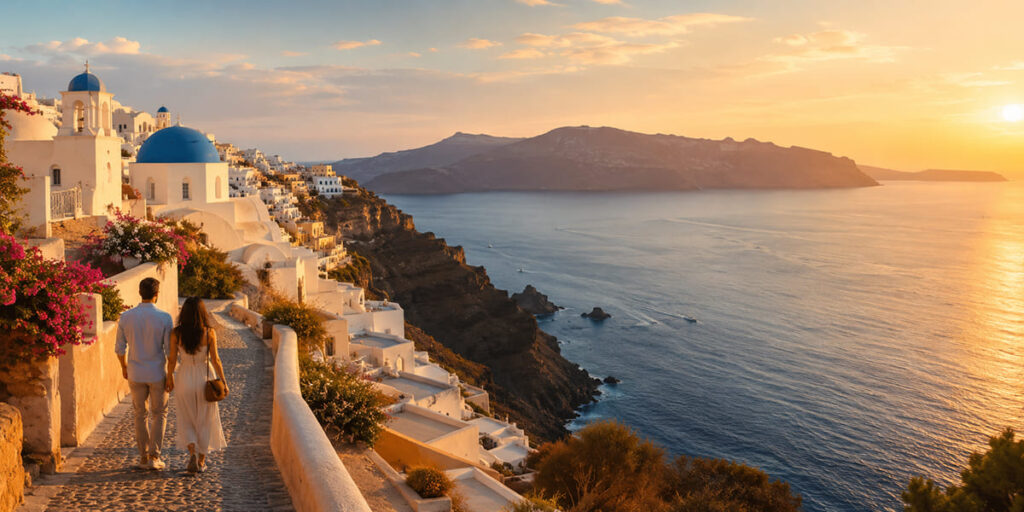
White villages stacked along a cliff edge above a flooded volcanic crater, with the sea a very long way down. That caldera view is the entire reason to come, and it delivers.
Oia has the famous sunset and, in season, a crowd that genuinely has to be seen to be believed people arriving two hours early to hold a spot on a wall. Fira is livelier and considerably better for eating. The island’s most underrated site is Akrotiri, a Bronze Age settlement buried by eruption and preserved beneath the ash. And for the caldera without a viewing platform full of tripods, the clifftop walk from Fira to Oia runs about 10km along the rim and takes three to four hours.
Come in May, June, September or October; July and August are hot and heaving. Three or four days is right.
Worth knowing: for the sunset itself, skip Oia and watch from Imerovigli or Firostefani instead. Same view, same light, a fraction of the people and this single decision probably makes more difference to how you remember Santorini than anything else on this page.
4. Barcelona, Spain
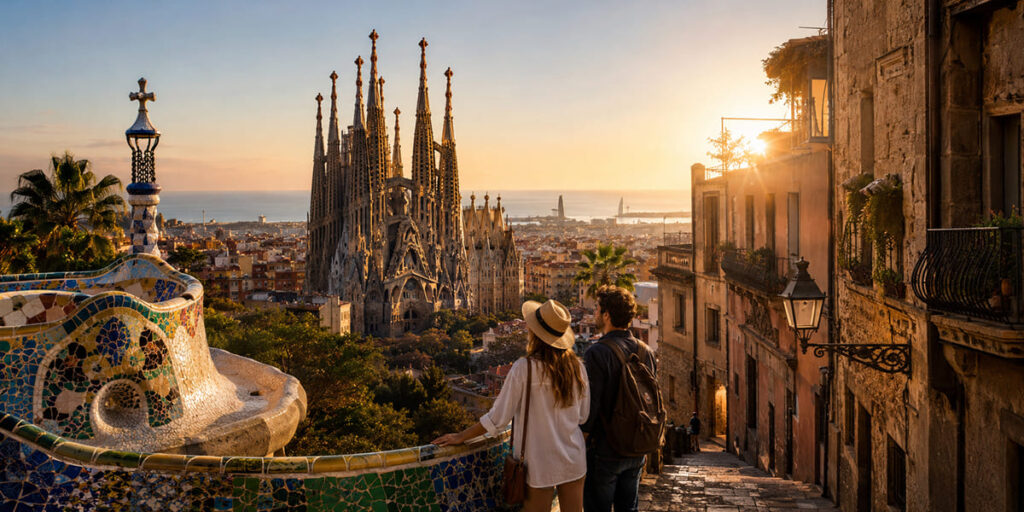
Barcelona is a Gaudí city, and what surprises people is how well that holds up under the weight of expectation. The Sagrada Família is unlike any other building in Europe. Park Güell, Casa Batlló and Casa Milà fill out the case. The Gothic Quarter’s medieval lanes are the counterweight to all that modernisme, and Barceloneta puts a beach at the end of a metro ride.
Go May to June or September to October, and give it three or four days.
Worth knowing: the Sagrada Família and Park Güell both run timed entries and both sell out book them before you arrive rather than hopefully on the day. Barcelona also has a persistent pickpocketing problem on Las Ramblas and the metro. Nothing dramatic, but keep your phone in a front pocket rather than a back one.
5. Edinburgh, Scotland

A castle on a volcanic plug, a medieval Old Town, a Georgian New Town, and a proper hill you can climb without leaving the city. Edinburgh fits a great deal into a walkable centre.
Arthur’s Seat is the best free thing to do anywhere on this list 45 minutes up, and the whole city and the Firth of Forth laid out beneath you. Dean Village and the Water of Leith walkway are the quiet answer to the Royal Mile’s crowds.
Three days is enough. May to September for weather but August is the Fringe, and that changes the calculation entirely.
Worth knowing: the Fringe is extraordinary, and it also triples accommodation prices and fills every street in the Centre. If you want it, book months ahead and accept the cost. If you don’t, avoid August completely it’s effectively a different city for those weeks.
Roaming note: the UK sits outside the EU Roam Like at Home. More below.
6. Interlaken, Switzerland
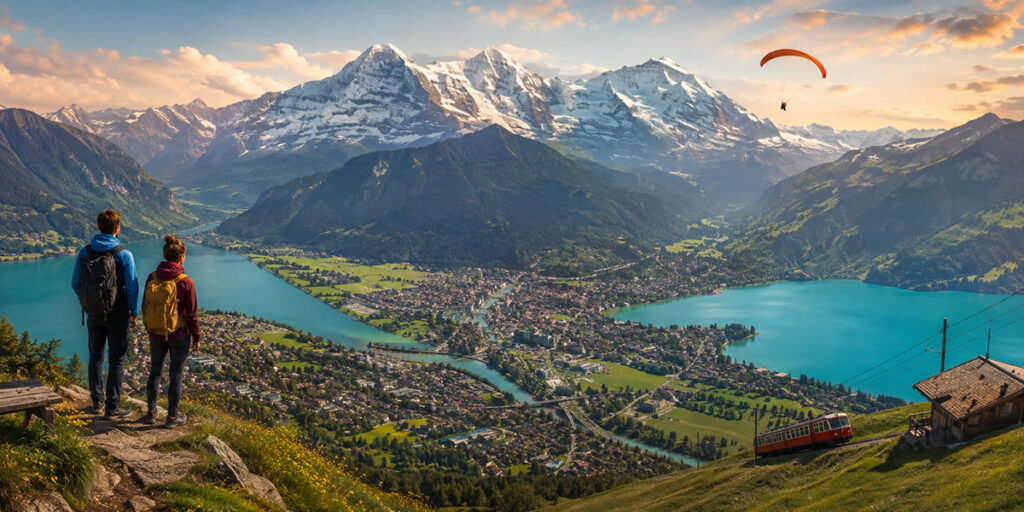
Interlaken sits between two lakes with the Jungfrau massif rising behind it, and it exists mostly as a launchpad for getting up into the mountains paragliding off Harder Kulm, hiking around Grindelwald and Lauterbrunnen, skiing once the snow arrives.
June to September for hiking and lake weather, December to March for skiing. Three or four days gives you two solid mountain days plus margin for the weather turning, which it will.
Worth knowing: Switzerland is expensive in a way that catches out travellers arriving from France or Italy, and the mountain railways compound it fast. Look at the regional Jungfrau passes before you buy tickets individually, and budget more per day here than for anywhere else on this list comfortably more.
Roaming note: Switzerland is in neither the EU nor the EEA. See below.
7. Porto, Portugal
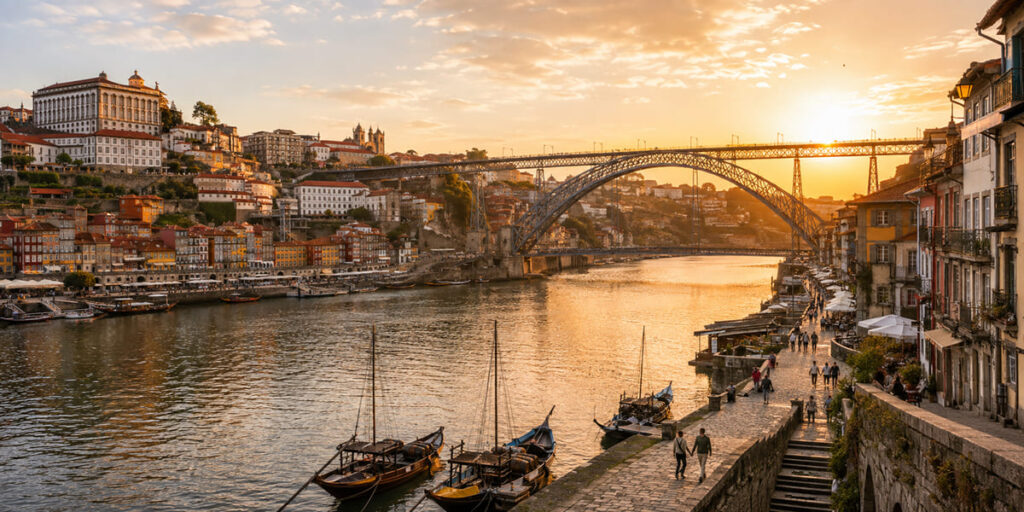
Porto is built in tiers running down to the Douro, and the Dom Luís I Bridge spanning it is the image that brings everyone. The Ribeira waterfront, the Sé cathedral, the Palácio da Bolsa and the Livraria Lello bookshop will fill two days without effort.
Here’s the detail most visitors get slightly wrong: the port lodges aren’t in Porto. They’re in Vila Nova de Gaia, on the other bank. Walk the lower deck of the bridge and you’re there inside ten minutes, which is a much better arrival than a taxi.
Go May to June or September to October. Three days, or four with a Douro Valley day trip attached.
Worth knowing: Porto is among the better-value city breaks in Western Europe, and it’s a great deal steeper underfoot than photographs suggest. Shoes matter here more than they do in most cities.
More on Portugal eSIM plans if Lisbon is also on the itinerary.
8. Lofoten Islands, Norway
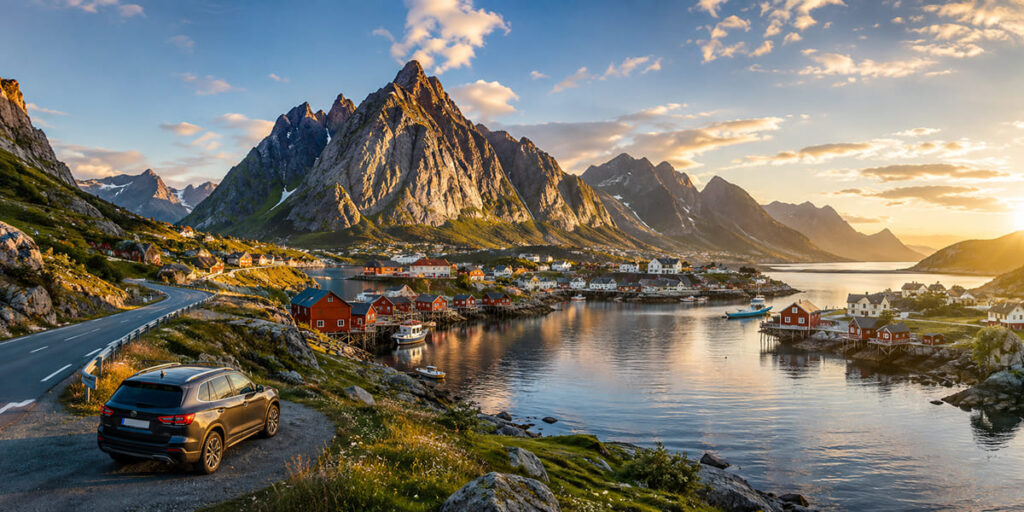
An archipelago above the Arctic Circle where granite peaks drop straight into the sea and red fishing cabins sit along the water beneath them. Reine, Å, Haukland Beach, Svolvær and Henningsvær are the anchors most routes are built around.
Two very different seasons here. June to August brings the midnight sun and hiking in near-permanent daylight; September to March brings the northern lights, along with cold and far less predictable conditions. Five to seven days it’s a long way to travel for less.
Worth knowing: you need a car, and this isn’t negotiable. Public transport between the islands exists but it’s thin and slow, and the entire point of Lofoten is being able to stop wherever the light is doing something extraordinary. Book the car well ahead for summer.
Mobile coverage is generally good in towns and along the E10, but it can be limited in remote mountain areas and on some smaller islands. Download offline maps before setting out, especially if you plan to hike or drive away from populated areas.
9. Hallstatt, Austria
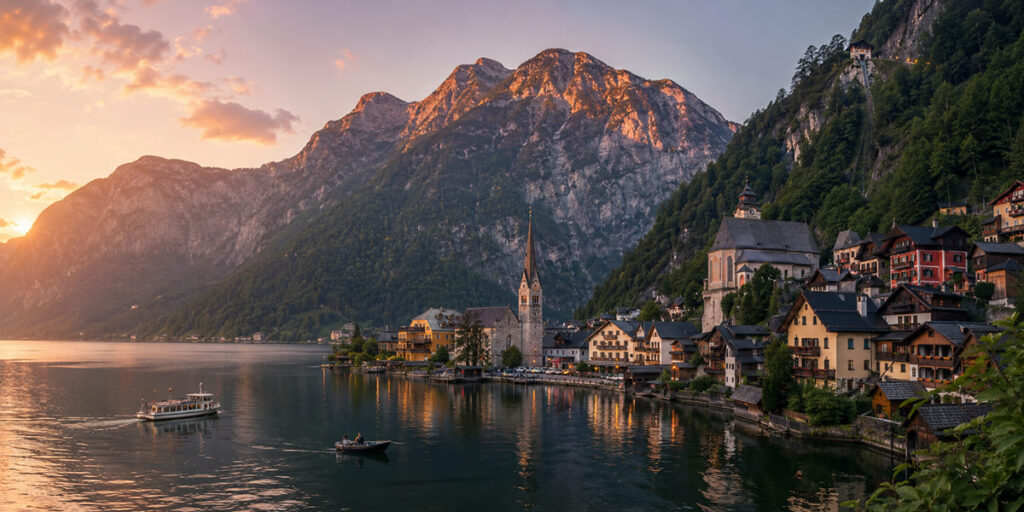
A UNESCO listed lakeside village of roughly 800 residents, wedged between a mountain and the Hallstätter See, with a salt mine above it that’s been worked for something like 7,000 years.
It’s also, bluntly, one of Europe’s sharpest overtourism cases. Coach day-trippers arrive in volume, and for several hours a day a village of 800 people hosts a crowd many times its own size. That’s the reality, and it’s worth knowing before you go rather than after.
May to June or September, avoiding peak summer. One or two days though the second is the important one, for reasons below.
Worth knowing, and this is the tip that matters most on this page: stay overnight. Day-trippers largely arrive mid-morning and are gone by late afternoon, which means anyone staying gets the village nearly to themselves at breakfast and again in the evening. It is the entire difference between a good visit and a disappointing one. The Skywalk viewing platform and the salt mine tour both sit above the village and justify the funicular.
10. Tallinn, Estonia
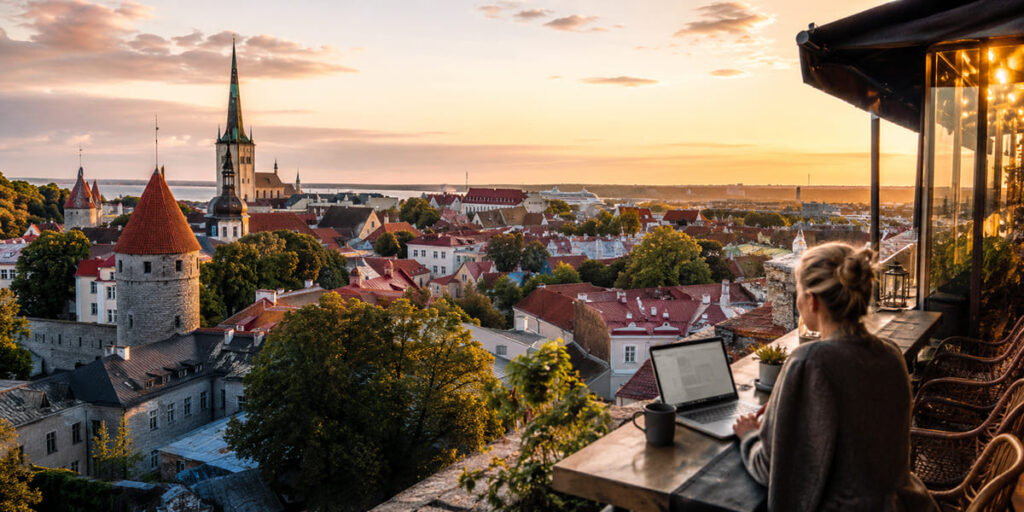
A remarkably intact medieval walled old town, UNESCO-listed, sitting on top of one of the most digitally advanced countries in Europe — a combination you don’t get anywhere else. Toompea hill has the viewpoints; Telliskivi Creative City, a converted industrial complex, has the food and the design studios.
Estonia’s e-Residency programme and its public digital infrastructure have made Tallinn a genuine hub for remote workers, and you can see it in the density of good cafés with wifi that actually holds up.
May to September, or December for a Christmas market that’s among the better small ones in Europe. Two or three days.
Worth knowing: Tallinn is a straightforward ferry from Helsinki, which makes pairing the two trivially easy and it’s substantially cheaper than its Nordic neighbour across the water, which is worth knowing if you’re building a Baltic-Nordic route on a budget.
Which of These Sit Outside EU Roaming

If you’re an EU resident, Roam Like at Home means your domestic plan works at domestic rates across the EU and, importantly, across the wider EEA too. That covers Norway, Iceland and Liechtenstein alongside the EU member states, which is the part people routinely get wrong.
So seven of the ten above are straightforward. Lofoten included Norway is in the EEA, and Roam Like at Home generally applies there just as it does in Spain.
Two aren’t:
Edinburgh (United Kingdom). Since Brexit, the UK sits outside the EU roaming area. Some operators have retained EU-style roaming, while others have reintroduced roaming charges, so check your provider’s policy before you travel.
Interlaken (Switzerland). Switzerland is neither in the EU nor the EEA, and roaming charges can be significantly higher than in EU destinations. Check your carrier’s roaming policy before your trip.
And if you’re travelling from outside the EU altogether the UK, US, Canada or Australia none of the above applies to you. All ten are international roaming destinations.
Our guide to avoiding roaming charges in Europe covers the settings that stop accidental charges landing on your home line.
Staying Connected Across Europe
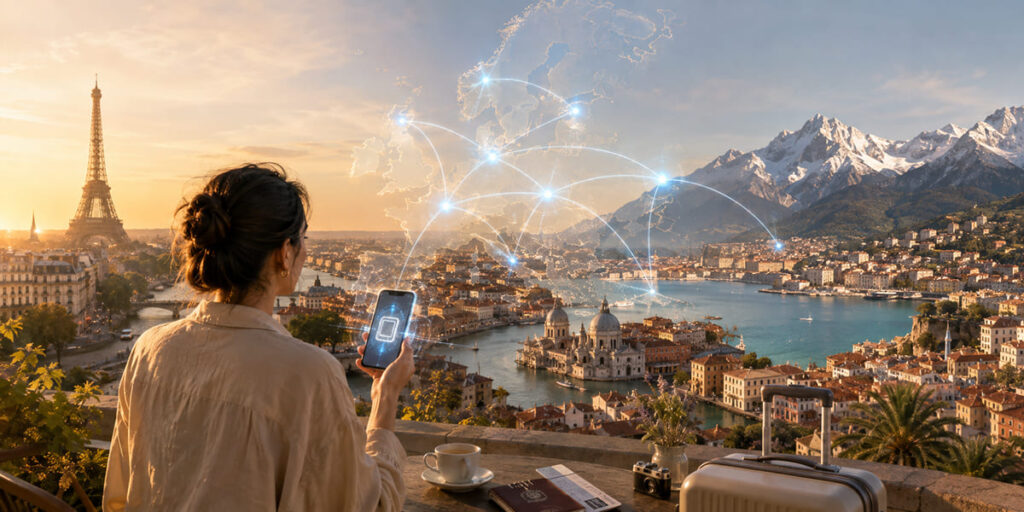
The short version: if you’re an EU resident visiting the seven EU and EEA destinations here, buy nothing. Your plan already works.
For everyone else and for anyone slotting Edinburgh or Interlaken into a European trip a travel eSIM installed before you fly is the simplest fix available. An eSIM Europe plan covers multiple countries on one install, which suits exactly the kind of multi-stop route this list encourages: Porto to Barcelona to Paris on budget flights, or Tallinn and Helsinki on either end of the same ferry.
If you need a number people can actually ring a restaurant confirming the booking, a rental car desk, an SMS code from a service that refuses international numbers look at an eSIM with data and voice calls rather than a data only plan.
Check your handset before you buy anything, though. Not every recent phone supports eSIM, and our eSIM compatible devices list has the specifics.
FAQs
1. What are the best places to visit in Europe?
Depends entirely on what you want from the trip. First-time visitors are well served by Paris, Rome and Barcelona. For landscape, Lofoten and Interlaken. For quieter, better-value city breaks, Porto and Tallinn. Hallstatt and Santorini are stunning and both carry genuine crowd problems worth planning around.
2. When is the best time to visit Europe?
Late spring (April to June) and early autumn (September to October) hit the sweet spot for most of the continent mild weather, thinner crowds, lower prices. July and August bring heat and peak crowds across southern Europe. Northern destinations invert this: for Lofoten, summer is the accessible season.
3. How many days do you need in Europe?
Ten to fourteen covers two or three destinations at a pace you’ll enjoy. Squeezing in more than one city per three days tends to mean seeing a lot of train stations.
4. Which European destinations are cheapest?
Portugal, Estonia and much of Central and Eastern Europe offer markedly better value than Switzerland, Norway or the Nordics generally. Interlaken is the most expensive destination on this list by a wide margin.
5. Which European destinations are most crowded?
Hallstatt and Santorini are the two here with real over tourism problems. Both remain worth visiting timing is the whole trick. Stay overnight in Hallstatt, and don’t watch the sunset from Oia in peak season.
6. Does my phone work in Europe?
For EU residents, yes Roam Like at Home covers the EU plus Norway, Iceland and Liechtenstein at domestic rates. The UK and Switzerland sit outside it. Anyone travelling from outside the EU is roaming everywhere and should check their carrier’s rates or buy a travel eSIM.
7. Do I need a special phone to use an eSIM?
You need an eSIM capable handset, and “recent” doesn’t guarantee it. Most iPhones from the XS onward, Pixel from the 3, and Galaxy S20 and later support it, along with most flagship Androids but plenty of mid-range and budget models don’t, and some carrier-locked phones won’t take a third-party profile. Dial *#06#; an EID number alongside your IMEI means you’re set.
8. Can one eSIM cover several European countries?
Yes, regional plans exist for precisely this. Check the country list on the specific plan before buying, since coverage varies between plans that look near-identical and confirm the UK and Switzerland are included if either is on your route.
9. Is it better to fly or take the train between European cities?
Rail generally runs under about four hours, and on any city-centre-to-city-centre route. Budget flights win on longer hops like Porto to Tallinn. Rail also sidesteps airport transfer time, which people underestimate almost universally.
Planning Your Trip
Pick two or three of these rather than six. Book the timed-entry sights first the Colosseum, the Sagrada Família, the Louvre because they’ll dictate your dates whether you plan for that or not. Check whether your destinations fall inside or outside EU roaming. And if you’re coming from outside the EU, sort your data before you fly rather than at an airport kiosk at midnight.
You can compare eSIM Europe plans by country and install before you leave.
Leave a Reply