
With more than 300 islands spread across two very different coasts, Thailand hands you an oddly difficult problem: not finding a good island, but choosing between them. The Andaman side to the west — Phuket, Phi Phi, Krabi, Lipe — trades in limestone cliffs and postcard water. The Gulf to the east — Samui, Phangan, Tao — leans toward diving, full-moon nights, and easygoing resorts. And every island tilts a slightly different way: scenery here, parties there, a honeymoon hush somewhere else entirely. So this guide starts with a quick at-a-glance comparison, then goes deeper on each island — what it’s genuinely best for, how you actually get there, and when to go — before covering island-hopping routes and the practical stuff that keeps a trip smooth.
Best Islands in Thailand at a Glance
Short on time? Here’s the whole shortlist in one place — each island matched to what it does best, so you can narrow it down in a minute and read the detail below.
| Island | Best for | Vibe | Getting there |
| Phuket | First-timers, variety, nightlife | Big island, everything at once | Direct flights (HKT) |
| Koh Phi Phi | Scenery, snorkeling, nightlife | Beautiful, busy, car-free | ~2h ferry from Phuket/Krabi |
| Koh Samui | Comfort, resorts, families | Polished, easygoing | Direct flights (USM) or ferry via Surat Thani |
| Koh Phangan | Parties, backpackers, yoga | Lively south, quiet north | Ferry from Samui/Surat Thani |
| Koh Tao | Diving & snorkeling on a budget | Relaxed, backpacker | Ferry from Samui/Chumphon |
| Koh Lipe | Beach perfection, snorkeling | Tiny, remote, stunning | Speedboat from Pak Bara |
| Koh Lanta | Families, slow travel, couples | Long beaches, mellow | Ferry/van from Krabi |
The Best Islands in Thailand
Phuket
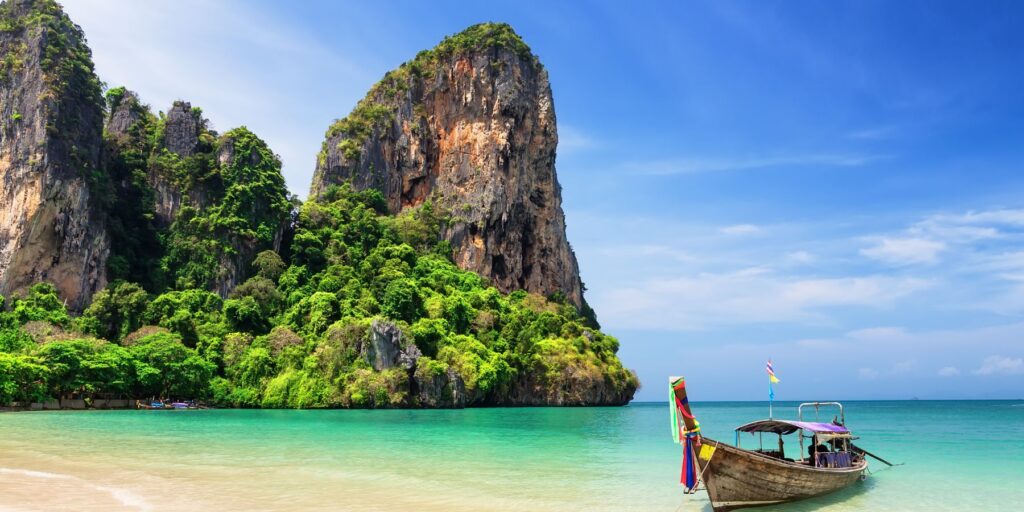
Thailand’s biggest island tries to be all things to all travelers, and mostly succeeds — beaches, nightlife, an atmospheric Old Town, and an international airport, which is why it’s the natural landing pad for a first trip. Patong is the loud, neon heart of the nightlife; Kata and Karon dial it down; families tend to drift to the quieter southwest coast. It’s also the launch point for day trips to Phi Phi and Phang Nga Bay. Getting there: direct international flights into Phuket (HKT). Best for: first-timers, variety, and anyone who wants an island with hospitals, every grade of hotel, and easy onward travel.
Koh Samui
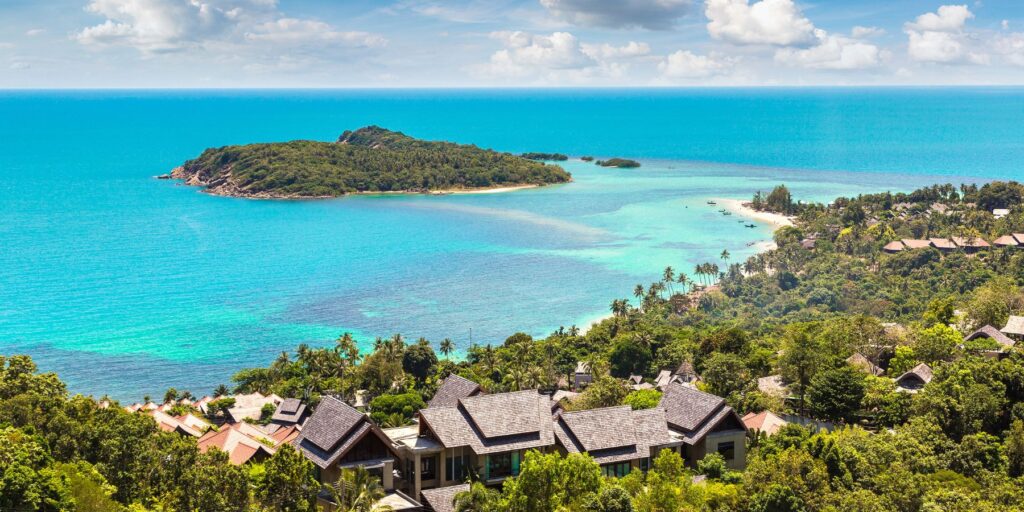
Samui is the Gulf’s comfortable, resort-forward option — the place to come when you’d rather not rough it. Chaweng and Lamai are the busy, hotel-lined beaches; Choeng Mon and Maenam skew family-friendly. Its own airport and fast ferries make it a natural base for hopping over to Phangan and Tao. Getting there: direct flights from Bangkok (USM), or ferry via Surat Thani. Best for: families and couples who want polish over backpacker grit.
Koh Phangan
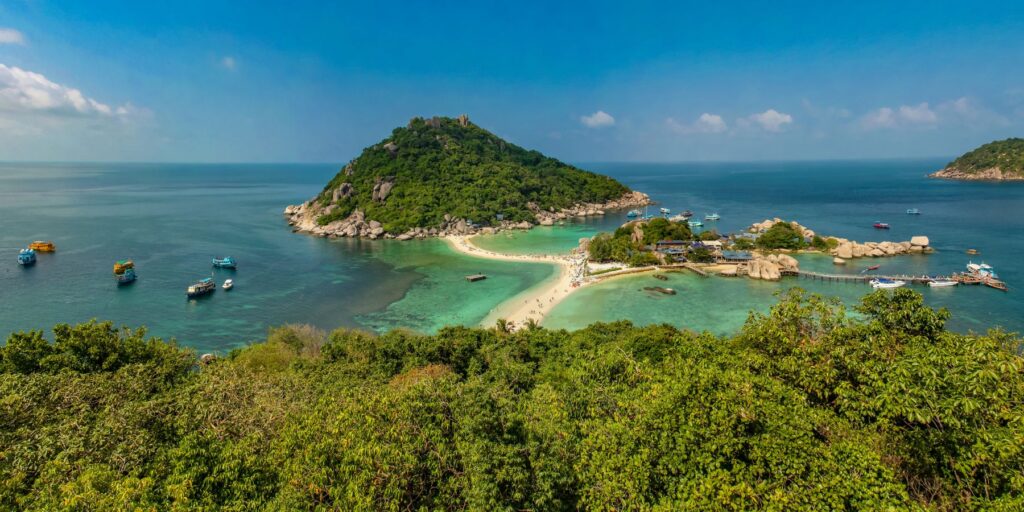
Everyone knows Phangan for the Full Moon Party on Haad Rin — but reduce the island to that and you miss most of it. There’s a jungly interior, genuinely quiet northern bays like Chaloklum and Bottle Beach, yoga retreats, and solid diving out at Sail Rock. It flips between party central and real calm depending on which shore you pick. Getting there: ferry from Koh Samui or Surat Thani. Best for: backpackers and partygoers — and couples who stay north. (Check the Full Moon dates before you book.)
Koh Phi Phi

It’s really two islands: inhabited Phi Phi Don and uninhabited Phi Phi Leh, home to the famous Maya Bay. The scenery does the heavy lifting — towering limestone karsts, impossibly turquoise coves — and the nightlife around Tonsai keeps pace; accommodation tops out at midrange hotels and beach bungalows rather than sprawling luxury resorts. One thing to know: Maya Bay reopened after its restoration closure but now runs on visiting rules — capped numbers, and swimming restricted at times — to protect the reef.
Koh Tao
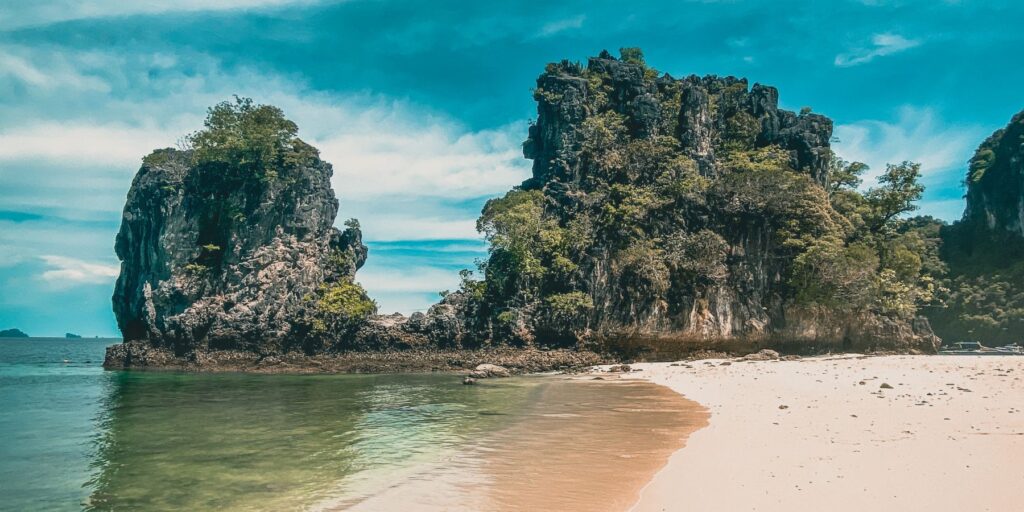
Small, unhurried, and quite possibly the cheapest place on earth to get scuba-certified — the shoreline around Sairee Beach is wall-to-wall dive schools, and the water is glassy. Diving’s at its best roughly March–May; January–March is the busy stretch, and September–October can churn the seas up. Expect budget hostels and midrange resorts; genuine luxury is scarce. Getting there: ferry from Koh Samui or Chumphon. Best for: divers and snorkelers watching their budget.
Koh Lipe
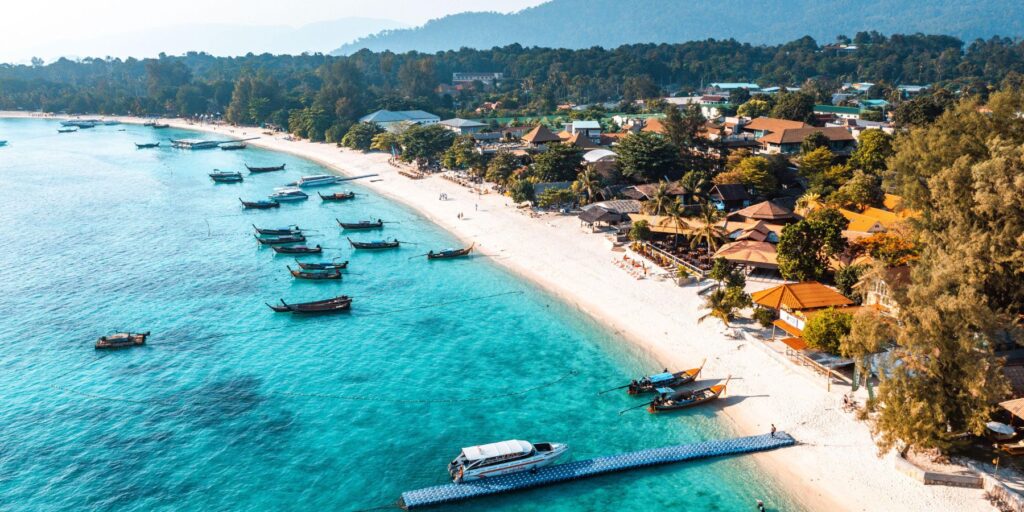
A tiny gem down near the Malaysian border, with some of the whitest sand and clearest water in the country — the “Maldives of Thailand” tag is overused, but here it’s earned. You can snorkel straight off Sunrise and Pattaya beaches (a marine reserve sits just offshore), kayak the shallows, or day-trip to Koh Adang and Koh Rawi for a hike. Getting there: speedboat from Pak Bara — it takes real effort to reach, which is a big part of why it’s stayed special. Best for: beach perfection and snorkeling.
Koh Lanta
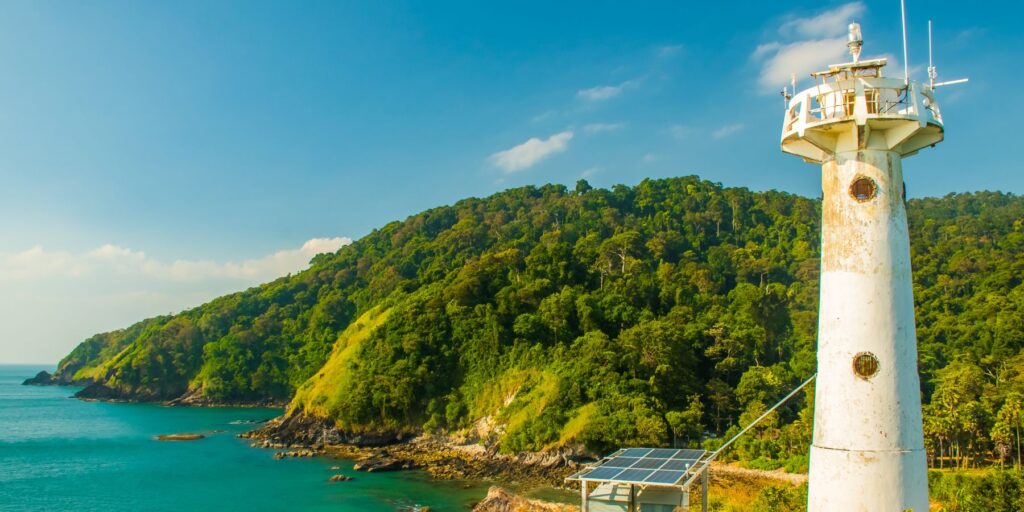
This is the island for people who found the others too much. Long, uncrowded west-coast beaches, a genuinely slow pace, sunset restaurants right on the sand, and just enough to see — the old town’s stilt houses, the national-park lighthouse — to fill unhurried days. It also makes a mellow base for day trips out to Koh Rok and Koh Haa. Getting there: ferry or van from Krabi. Best for: families, couples, and slow travel.
Which Thai Island Is Right for You?
Still torn? Match the island to the kind of trip you’re taking:
- Couples & honeymooners: Koh Lanta, Koh Yao Noi, or Koh Mak for quiet sunsets; Koh Lipe for the dreamy beach; Koh Samui for upscale resorts.
- Families: Koh Samui and Phuket for kid-friendly beaches and amenities; Koh Lanta for calm, shallow, safe water. Give the heaviest party islands a miss in high season.
- Divers & snorkelers: Koh Tao and Koh Phi Phi for world-class diving; Koh Lipe or the Similan Islands (from Phuket) for snorkeling.
- Budget travelers: the less-developed islands — Koh Phangan outside Full Moon dates, Koh Lanta, Koh Chang, the Trang Islands — stretch your money furthest. Samui and Phuket bite hardest in peak season.
Best Island-Hopping Routes
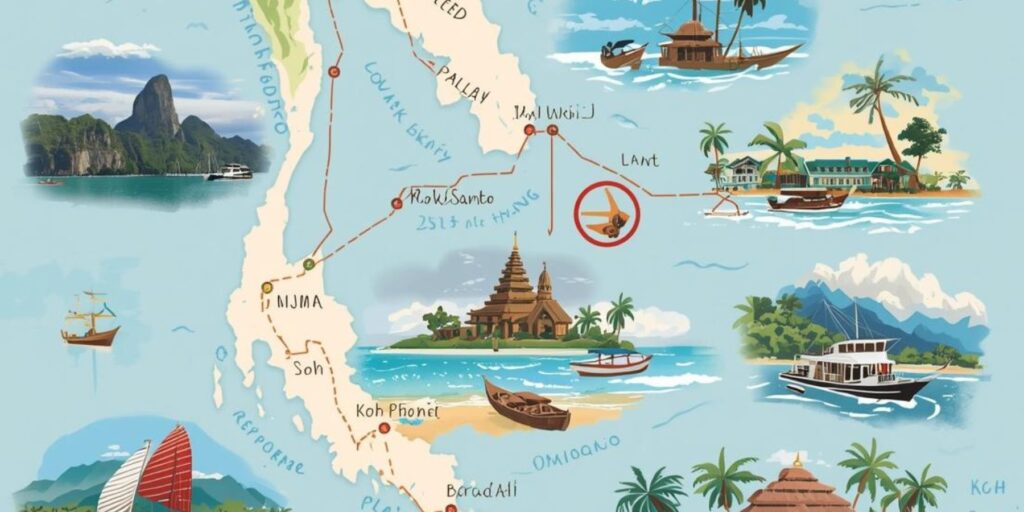
Because the islands cluster by coast, most trips settle into one of two routes:
- Andaman route: Phuket → Koh Phi Phi → Koh Lanta → Koh Lipe. The classic multi-day run — Phuket (2–3 nights), ferry to Phi Phi (2 nights), south to Koh Lanta, and finally Koh Lipe (1–2 nights). Each leg is a few hours by ferry or speedboat, and the islands get quieter and prettier as you go.
- Gulf route: Koh Samui → Koh Phangan → Koh Tao. These three sit within easy reach of each other — Samui to unwind on Chaweng, a ferry to Phangan to party or just wander, a ferry to Tao to dive, then back to Samui or the mainland. Four days does it comfortably; with 7–10, people often bolt on Chiang Mai up north or loop out to Koh Chang.
Popular Island Tours You Can Book
If you’d rather someone else handle the boats, a few day trips come up again and again:
- Koh Phi Phi & Maya Bay: by speedboat from Phuket or Krabi — Maya Bay (yes, the one from The Beach, now with visitor limits), snorkeling off Phi Phi Leh, and time ashore on Phi Phi Don.
- James Bond Island: from Phuket or Krabi into Phang Nga Bay — the improbable karst of Khao Phing Kan, plus sea-canoeing through caves and hidden lagoons.
- Similan Islands snorkeling: a national-park day trip from Phuket, with about the clearest water and best reefs the Andaman has to offer.
Best Time to Visit
Here’s the quirk that trips people up: Thailand’s two coasts run on opposite monsoons, so the “best time” depends entirely on where you’re pointed.
- Andaman coast (Phuket, Krabi, Phi Phi, Lipe): December–March is the sweet spot — dry, sunny, calm seas, and peak season. April–June turns fiercely hot; July–October is monsoon, wettest around September–October.
- Gulf coast (Samui, Phangan, Tao): roughly January–April is best. The Gulf keeps its own calendar, though — its wettest stretch is October–December, which means when the Andaman is washed out in autumn, the Gulf can still deliver (and the reverse holds too).
The practical takeaway: you can find good island weather in Thailand almost any month of the year. You just switch coasts to chase it.
Travel Tips, Including Staying Connected
A handful of things that keep an island trip running smoothly:
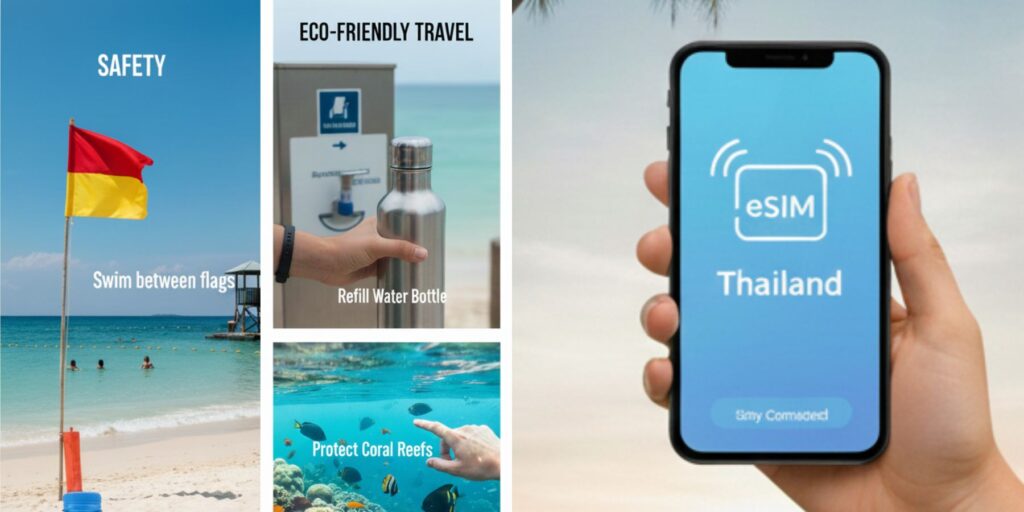
- Mind the water and the sand. Swim between the flags — the currents can be deceptively strong — use reef-safe sunscreen, agree beach-chair prices before you sit down to dodge the occasional scam, and stick to bottled or filtered water.
- Tread lightly on the reefs. Skip single-use plastics, carry a refillable bottle, never stand on coral, and give the wildlife room. Some islands, Koh Tao especially, take conservation seriously, and it shows in the water.
- Sort your connection before you start hopping. Signal genuinely varies out here — strong on Phuket and Samui, patchier on remote spots like Koh Lipe and the little day-trip islands — so it pays to land already online rather than hunting for Wi-Fi at the pier. An eSIM Thailand plan installs from a QR code before you fly and keeps your maps, ferry schedules, and booking apps alive as you move island to island, with no roaming bill waiting at home.
Plan Your Island Trip
Whichever islands make your shortlist — the scenery-and-nightlife rush of Phi Phi, the easy diving off Koh Tao, or the slow sand of Koh Lanta — a bit of planning is what turns a good trip into a smooth one. And if you’re the type to keep moving and don’t want your data quietly running out three islands in, it’s worth checking whether an esim with unlimited data fits your trip before you go.
FAQs
1. What’s the best island in Thailand for first-time travelers?
Phuket is the easiest place to start — an international airport, hospitals, hotels at every price, and quick day trips to Phi Phi and Phang Nga Bay make it simple to navigate. Koh Samui runs a close second for a comfortable, resort-style first visit.
2. Which island in Thailand is the most beautiful?
For sheer beach-and-water beauty, Koh Lipe usually takes it — powder-white sand and clear, shallow turquoise water. For dramatic scenery, Koh Phi Phi’s limestone cliffs are hard to beat.
3. Which Thai islands are best for couples or a honeymoon?
Koh Lanta for slow days and sunset dinners on the sand, Koh Lipe for a dreamy beach, and Koh Samui or Koh Yao Noi for upscale, quiet resorts.
4. What are the cheapest islands to visit in Thailand?
Less-developed islands like Koh Phangan (outside Full Moon dates), Koh Lanta, Koh Chang, and the Trang Islands tend to cost less, and travelling in shoulder season trims prices further. Samui and Phuket are the priciest at peak.
5. Which Thai islands are best for snorkeling and diving?
Koh Tao is the budget-diving capital and Koh Phi Phi has world-class dive sites; for snorkeling, Koh Lipe and the Similan Islands (from Phuket) are the standouts.
6. When is the best time to visit Thailand’s islands?
Aim for December–March on the Andaman coast (Phuket, Phi Phi, Lipe) and January–April on the Gulf (Samui, Phangan, Tao). Because the coasts have opposite rainy seasons, there’s almost always a good island in season somewhere.
Leave a Reply