
Here’s the short version, because it’s the thing everyone actually wants to know: the best time to visit Greece is late April to mid-June or September to mid-October. Warm, settled weather, a sea you can swim in, a fraction of the July–August crowds, and prices that haven’t been marked up for peak season. High summer is gorgeous, but it’s hot, heaving, and dear. Winter is the cheapest stretch of all — just know that a lot of the islands more or less close up shop.
That’s the verdict. The rest of this guide is the detail behind it: what each season really feels like on the ground, the weather and sea temperatures through the year, when the big festivals land, the right timing for whatever you came to do, and how to pull the whole thing off cheaply. Empty beaches, long days among ancient ruins, or the lowest fare on the board — there’s a month built for each.
The Best Time to Visit Greece, in One Line
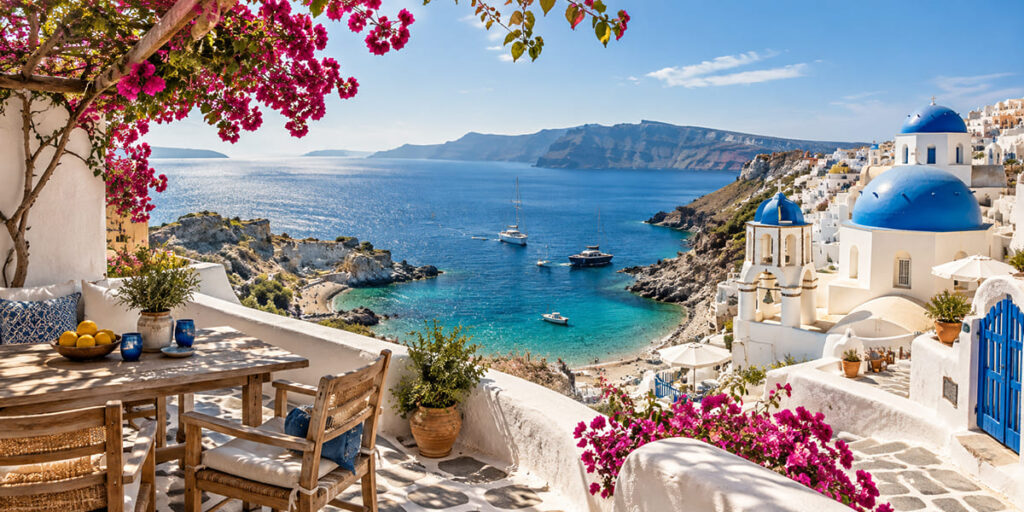
For most people, the sweet spot is the shoulder seasons — late April to mid-June and September to mid-October. The weather is warm without being punishing, the sea is swimmable by late spring and still holding its heat come autumn, the crowds stay manageable, and prices sit comfortably below peak. Set on long beach days and late nights out? High summer delivers — book early and go in with eyes open. And if the budget is the whole point of the exercise, the quiet winter months undercut everything else.
Greece Season by Season
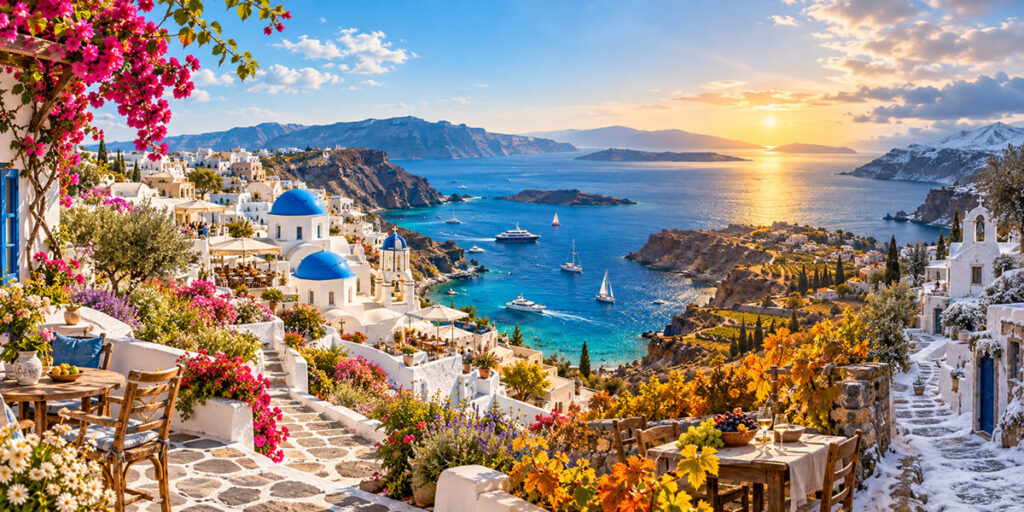
Here’s the year at a glance — weather, sea temperature, crowds, and relative cost side by side.
| Season | Months | Typical daytime temp | Sea temp | Crowds | Cost | Best for |
| Spring | Apr – mid-Jun | 18–28°C / 64–82°F | Cool, warming to ~20°C by June | Light, building | Low–moderate | Sightseeing, hiking, early beaches, wildflowers |
| Summer | mid-Jun – Aug | 28–35°C / 82–95°F | Warm, 24–26°C | Peak | Highest | Beaches, island-hopping, nightlife |
| Autumn | Sep – Oct | 20–29°C / 68–84°F | Warmest of all, ~24–25°C | Easing | Moderate, dropping | Warm-sea swims, sightseeing, wine harvest |
| Winter | Nov – Mar | 8–16°C / 46–61°F | Cold | Very light | Lowest | City breaks, budget trips, Crete/Athens |
- Spring (April to mid-June) is the season a lot of Greece regulars quietly guard as their favourite. The islands shake off winter, ferries return to full schedules, the hills turn green and flower, and you can actually walk a hillside of ruins without wilting. The sea is bracing in April, but it warms fast, and by June it’s inviting.
- Summer (mid-June to August) is peak everything — heat, crowds, prices, all at once. This is the postcard Greece of hot afternoons and warm water, and it’s wonderful, but Athens turns into a furnace and the headline islands like Santorini get genuinely shoulder-to-shoulder. If you’re coming now, book months out.
- Autumn (September to October) might be the smartest window of the lot, especially for swimmers. A whole summer of sun leaves the sea at its warmest, the crowds fall away after the first week of September, and prices drift down with them. Early-to-mid October is the last of the dependable warmth before it tips over.
- Winter (November to March) is quiet, atmospheric, and cheap. The catch is that plenty of island hotels and tavernas shut for the season — so this is the time for the cities. Athens, Thessaloniki, and Crete stay busy year-round and hand you the lowest prices you’ll find anywhere on the calendar.
Festivals & Cultural Timing
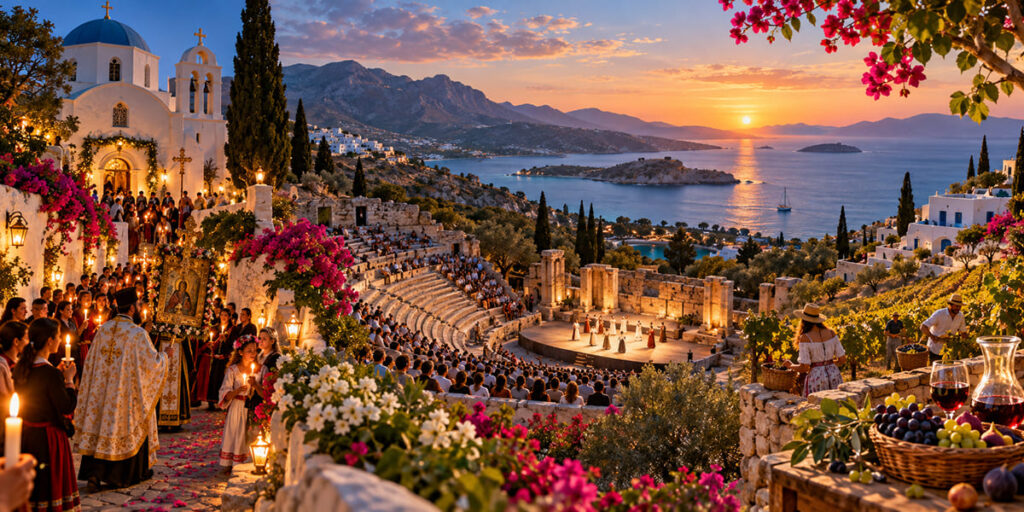
Line a trip up with the right festival and a good holiday turns into one you’ll be talking about for years. A few of the big ones worth planning around:
- Orthodox Easter — the heart of the Greek calendar, all candlelit midnight processions and long table feasts. The date shifts every year and often lands on a different weekend from Western Easter, so check it against your travel dates. Expect some closures and a lot of Greeks on the move.
- May Day (1 May) — spring flower festivals and a public holiday.
- Athens & Epidaurus Festival (summer) — ancient drama staged where it was meant to be seen, at the Odeon of Herodes Atticus and the theatre at Epidaurus, usually across June to August.
- Dormition of the Virgin (15 August) — one of the biggest holidays of the year. Transport and rooms book out and some shops shut, so build your plans around it rather than into it.
- Autumn grape harvest (September) — wine-country celebrations across the mainland and islands.
Best Time to Visit Greece by Activity
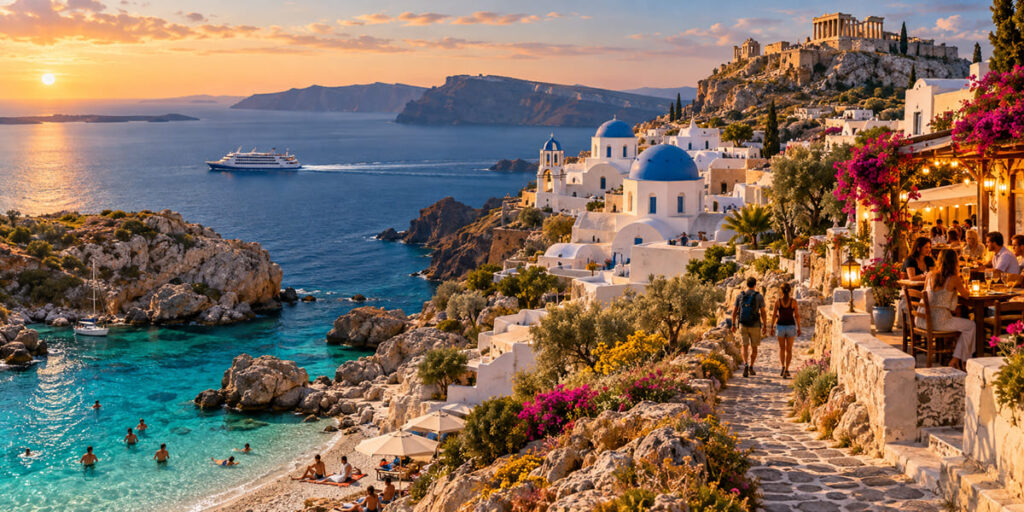
Ask five travellers for the “best” month and you’ll get five answers — because it really does come down to what you’re there to do:
- Beaches & swimming: July to September for the warmest water, with September the quiet winner — the sea is still warm but the crowds have gone home. Crete and Rhodes stay swimmable later into autumn than the Cyclades do.
- Island-hopping: late May to September, when the ferries run at full tilt. If you’re prone to seasickness, dodge the windiest Meltemi weeks (more on that below).
- Sightseeing & ancient sites: April–May and October, when you can climb the Acropolis or wander Delphi without the midday heat beating you back.
- Hiking: spring for wildflowers and mild air, or autumn for its stable, cooler days.
- Nightlife: July and August, when Mykonos and the party islands hit full volume.
The Cheapest Time to Visit Greece
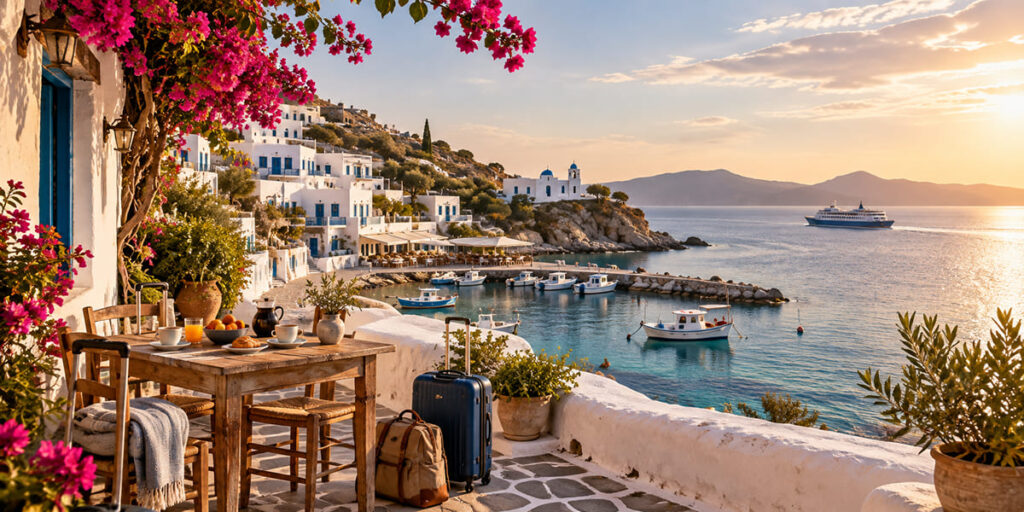
If price is the deciding factor, the off-season (November to March) is where the rock-bottom rates live — while the shoulder months (April–May, October) give you the best trade-off between a cheap trip and a pleasant one. Either way, a few habits keep the total down:
- Travel in the shoulder or off-season. Flights and rooms drop well below the summer peak, and April, May, and October still hand you good weather. Our guide to the best places to visit in October sets Greece alongside the other autumn sweet-spot trips.
- Base yourself somewhere that’s kind to a budget. Athens, Thessaloniki, Crete’s inland villages, and Paros all deliver — guesthouses, home-cooked tavernas, and a stack of free or near-free sights, including much of the area around the Acropolis.
- Lean on public transport and book early. Buses, the metro, and ferries beat taxis hands down, and reserving your rooms and sailings ahead locks in the lower fares.
- Put several countries on one plan. If Greece is one leg of a wider trip, an eSIM Europe plan keeps you online across the whole route without buying a new SIM at every border.
Meltemi Winds & Ferry Seasons

Two practical things the glossy guides tend to skip. The first is the Meltemi — a strong, dry north wind that sweeps the Aegean, mostly from mid-July through August. It takes the edge off the heat and polishes the sky to a hard blue, but it also kicks up the sea, turns exposed beaches into a sandblasting, and now and then delays or cancels ferries, the Cyclades especially. For island-hoppers and anyone who gets queasy on the water, it’s worth building into the plan.
The second is that ferries run on a season. Schedules are at their fullest and most frequent from roughly late May to September; come winter, a lot of island routes thin to a couple of sailings a week or stop altogether. If your whole trip hinges on hopping from island to island, the shoulder-to-summer window is the safe one.
Staying Connected in Greece

Whenever you end up going, you’ll want data the moment you land — for maps, ferry times, a dinner reservation, or translating a taverna menu that’s chalked up in Greek. Rather than queuing for a local SIM or gambling on roaming, a Greece eSIM lets you sort it before you fly: install the plan, scan the QR code, and you’re online the second you reach Athens or step off onto an island.
And if you’re the type who navigates by phone and shares photos all day — or you’re bouncing between several islands — an eSIM with unlimited data means you’re not rationing megabytes while you find your way through an unfamiliar harbour town.
FAQs
1. What is the best time to visit Greece?
For most travellers, late April to mid-June and September to mid-October. You get warm weather, a swimmable sea, thinner crowds than peak summer, and lower prices. July and August are hottest and busiest; winter is cheapest but quieter, with many island resorts closed.
2. What is the best month to visit Greece?
September is hard to beat — the sea is at its warmest after summer, the crowds have eased, and prices are on the way down. May is the pick if you’d rather have greener landscapes and cooler weather for sightseeing.
3. What is the cheapest time to go to Greece?
The off-season, roughly November to March, has the lowest flight and hotel prices — though many island hotels and restaurants close, so cities like Athens, Thessaloniki, and Crete make the better winter bases. For cheap and pleasant, aim for April, May, or October.
4. What is the worst time to visit Greece?
If heat and crowds aren’t your thing, July and August — temperatures peak, the popular islands pack out, and prices top out with them. Book well ahead if you have to travel then, and keep an eye on the mid-July to August Meltemi winds affecting ferries.
4. Is the sea warm enough to swim in Greece in the shoulder season?
By late spring it’s swimmable and warming; in autumn it’s at its warmest, often comfortable well into October. Crete and Rhodes hold their warmth later in the year than the Cyclades.
5. Do you need an eSIM for Greece?
Not strictly — but it’s the easiest way to stay online. A travel eSIM spares you the airport SIM queue and the roaming bill: set it up at home and you land already connected for maps, ferry times, and bookings.
Leave a Reply